Malvern EastProject Repton , 2025
“The key thing we were looking for was the consistency in the pricing that we received, having the right team to be able to problem solve when an issue arose, they did it in a very calm and measured manner. They're a great team and we worked so well together, had we done the design with Envy it would have saved us 6 months minimum”
Australia's Cost of Adding a Second Story Explained

Thinking about adding a second storey to your home? It's a big project, and the first question on everyone's mind is always about the cost. In Australia, you can expect to invest somewhere between $430,000 and $750,000, though it's not uncommon for complex projects to climb higher.
This is a significant investment, but it's one that completely transforms your home by adding valuable living space without increasing its footprint. The final price tag really comes down to the size of your project, how complex the design is, and the quality of materials you choose.
Understanding the Initial Cost of a Second Storey
When you decide to build up instead of out, you're signing up for more than just adding a few extra rooms. This is a major structural overhaul of your home, and the cost reflects that complexity. It’s not like a simple ground-floor extension; this involves tearing off the heart of your home's protection—the roof—and engineering a brand-new structure on top of an old one.
Things like strengthening the existing foundation and reinforcing load-bearing walls are non-negotiable parts of the job, and they add a hefty sum to the initial budget. As we move through 2025, the Australian construction market is still feeling the effects of post-COVID pricing, which has pushed up the cost of both labour and materials.
For a clearer idea, a basic addition with one or two bedrooms and a bathroom will likely fall at the lower end of that price range. But if you’re dreaming bigger with multiple bedrooms, ensuites, balconies, and significant changes to the ground floor layout, your costs can easily soar past the $750,000 mark. You can explore these factors in more detail in this comprehensive Australian renovation guide.
Key Budget Components at a Glance
To really get a handle on where all that money goes, it helps to see how the total budget is typically carved up. Every project is different, of course, but the costs generally fall into a few major categories. Looking at these percentages makes it clear why things like professional fees and heavy-duty structural work take such a big bite out of the budget right from the start.
Here’s a rough guide to how your funds will likely be allocated across the different parts of the project.
Estimated Budget Breakdown for a Second Storey Addition
Cost Category | Estimated Percentage of Total Budget |
Structural Engineering & Foundation Work | 20% - 25% |
Framing, Roofing & External Cladding | 25% - 30% |
Interior Fit-Out (Plumbing, Electrical, Finishes) | 20% - 25% |
Professional Fees (Architect, Permits, Surveyor) | 10% - 15% |
Site Costs (Scaffolding, Crane Hire, Access) | 10% - 15% |
This table gives you a bird's-eye view, showing that the core structural work and the actual build itself will consume the lion's share of your budget. Planning carefully for each of these areas is the key to keeping your project on track financially.
Why Building Up Costs More Per Square Metre
It’s a common trap to simply compare the square metre cost of a ground-floor extension to a second-storey addition. That's an apples-and-oranges mistake, and it can seriously derail your budget from the get-go.
Think of it this way: a ground-floor extension is like adding a new room onto the side of your house. A second-storey addition, on the other hand, is more like performing open-heart surgery on your home.
The whole process is far more complex than just adding new rooms on top of old ones. It involves deconstructing and then reconstructing the most critical parts of your home’s structure, all while managing the challenges of working at height. This built-in complexity is precisely why the cost of adding a second story is so much higher per square metre.
The Structural Reality of Building Vertically
Before a single new stud can be put in place, your existing home needs a thorough check-up to see if it can even bear the massive weight of a whole new level. This is where a huge chunk of your initial budget will go.
A structural engineer has to figure out if your home's original foundations and ground-floor frame are up to the task. Most of the time, they aren't. This kicks off a series of major, non-negotiable structural works that need to happen long before you see the new floor taking shape.
This reinforcement work often involves:
- Foundation Underpinning: Essentially beefing up the existing footings to stop the house from sinking or shifting under the extra load.
- Reinforcing Load-Bearing Walls: This could mean adding steel beams or extra timber inside the ground-floor walls to safely transfer the new weight down to the foundation.
- New Structural Columns: Installing posts and beams that run right through the ground floor to provide direct support for the level above.
You can't build a strong new structure on a weak base. This initial investment in reinforcing your home's "skeleton" is a critical safety measure that adds thousands to the budget, but it’s an invisible cost not reflected in the final square metre count of the new living space.
This foundational work is expensive and labour-intensive, which is a big reason why going vertical comes with a premium price tag. You can get a more detailed breakdown of how different construction elements impact your budget in our guide on understanding building costs per square metre.
Logistics and Site Demands
With a ground-floor extension, materials and tradies can get to the worksite pretty easily. Building upwards? That's a whole different ball game with its own set of logistical nightmares. The entire worksite is elevated, which immediately makes every single task more complicated.
First, the existing roof has to come off completely. This exposes your home's interior to the weather, meaning extensive and careful weatherproofing is needed—a delicate and disruptive part of the project that requires speed and precision.
Then there are the added costs from site requirements that just aren't a factor for ground-level work. Scaffolding has to be erected around the entire house to create a safe working platform. And for lifting heavy materials like steel beams, frames, and roof trusses, you'll often need to hire a crane for several days. That’s another significant cost right there.
The specialist nature of this work is reflected in industry benchmarks across Australia. The latest data shows that second-storey extensions typically cost between $4,300 and $6,500 per square metre. For comparison, single-storey additions are considerably cheaper. This price gap really highlights the premium you pay for the engineering, access equipment, and specialized labour needed to build up.
What Really Drives the Cost of Your Second-Storey Addition?
When you’re trying to understand the total cost of adding a second story, it helps to look under the bonnet. The final price tag isn't just one big number; it's made up of dozens of smaller costs that all come together. Think of it like a recipe – the final dish depends on the quality and quantity of each ingredient.
For a major renovation like this, the costs are typically split into three main categories: the materials, the labour, and all the professional services and paperwork that happen behind the scenes.
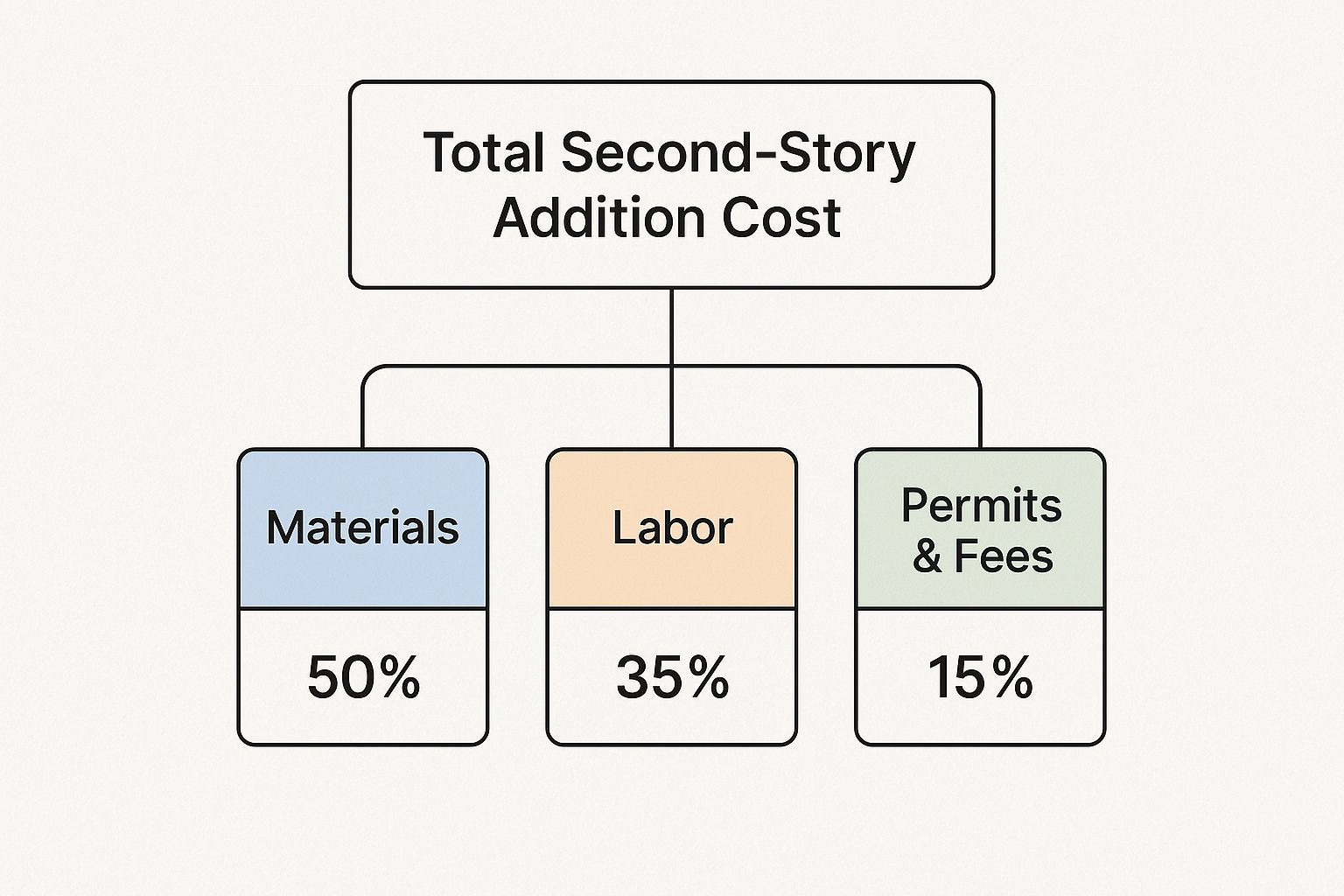
As you can see, materials and the skilled tradespeople doing the work take up the lion's share of the budget. But underestimating that smaller slice for permits and professional fees is a classic rookie error that can lead to serious budget blowouts.
Let's break down what's involved in each.
Materials: The Building Blocks of Your Budget
Materials will chew up around 50% of your total project cost. This makes the choices you make here the single biggest factor influencing where your final bill lands. This isn't just about the big-ticket items; it covers everything from the steel beams holding it all up to the doorknobs you'll use every day.
It's helpful to think of your materials list in two parts. First, you have the "bones" of the structure—the non-negotiable stuff needed to make it safe and sound.
- Structural Steel and Timber: This is the skeleton of your new floor, and it has to be strong.
- Roofing Materials: Whether you go for classic tiles or modern Colorbond steel, this choice affects both the look and the budget.
- Windows and External Cladding: These are your home’s shield against the weather and play a huge role in its street appeal.
- Insulation and Plasterboard: Absolutely essential for energy efficiency and turning a shell into liveable rooms.
The second part of the list is where your personal style—and spending—really shines through. This is all about the interior finishes. You can keep things modest with standard, builder-grade carpet and tiles, or you can let your imagination run wild with imported marble, custom cabinetry, and designer tapware that can easily add tens of thousands to the project.
Labour: The Hands That Build Your Home
Next up is labour, which accounts for roughly 35% of the total cost. This is what you pay for the expertise and sheer hard work needed to turn a set of drawings into a real, physical space. Adding a second storey isn't a weekend job for a handyman; it demands a finely tuned orchestra of licensed, insured, and specialized trades.
Building up is a whole different ball game to renovating on the ground. The complexity of working at height, integrating with the existing structure, and making sure everything is completely watertight means you’re paying for a higher level of skill and risk management.
Your project will require a whole team of pros, each with their own specific job:
- Carpenters for the frame, flooring, and all the structural timber work.
- Roofers for the crucial task of installing and sealing the new roof.
- Plumbers and Electricians to run all the new services for bathrooms, lights, and power points.
- Plasterers and Painters who create those smooth, finished interior walls.
- Scaffolders and Crane Operators—the specialists needed for safe access and lifting heavy materials.
The rates for these trades can vary wildly depending on your location, their experience, and how busy the market is. This is a big reason why quotes can look so different from one city to the next.
Permits, Fees, and Professional Services
That last 15% of your budget goes towards the professional services and administrative hurdles required to get your project moving legally and safely. These are often called 'soft costs' because you can't touch them like a brick or a window, but they are absolutely critical.
This slice of the pie covers all the vital prep work. Before a single hammer is swung, your property needs a thorough assessment. Getting a proper site survey for construction is the first step and is fundamental to accurate planning and avoiding nasty surprises down the track.
The key costs you'll find in this category include:
- Architect or Building Designer Fees: For turning your vision into detailed blueprints.
- Structural Engineer Fees: To ensure your existing home can handle the load and to design the necessary reinforcements.
- Council Application and Permit Fees: The cost of getting the official green light to build.
- Surveyor Fees: To accurately map your property boundaries and levels.
- Building Certifier Fees: For mandatory inspections at key stages to make sure everything is built to code.
It might be tempting to skimp on these costs, but they are non-negotiable. They form the foundation of a well-planned, legally compliant, and structurally sound second-storey addition.
How Your Location Shapes the Final Price Tag
The cost of building a second storey isn't a flat rate across Australia. Much like the price of a coffee changes from a quiet country town to a bustling city centre, your postcode plays a huge part in the final cost of your project. These geographical factors can cause the price to swing dramatically from one state, or even one suburb, to the next.
This price difference isn't random; it's all driven by the simple economics of supply and demand. In major cities like Sydney and Melbourne, there's fierce competition for skilled tradies, trickier logistical challenges, and tougher council regulations. All these things push the total project cost upwards.
Getting your head around these regional market pressures is crucial for setting a realistic budget. A project on a tight, inner-city block will almost always have a higher price tag than the exact same build in a regional area with more space and fewer access headaches.
Metropolitan Versus Regional Pricing
The biggest price jump you'll see is between the major cities and regional towns. Building in a dense urban jungle comes with its own set of challenges, and these translate directly into higher costs for your second-storey addition.
Just think about site access for a moment. On a spacious regional block, trucks and materials can usually get to the site without a fuss. But on a narrow inner-city street? You might suddenly need traffic management plans, smaller delivery trucks, and more manual labour just to get materials from the kerb to your front door.
Here are some of the key things that create this price gap:
- Labour Rates: Good tradies are in high demand in the cities, which means their rates are naturally higher.
- Council Fees: City councils often have more complex requirements and charge more for permits and inspections.
- Site Access: Tight blocks, busy streets, and heritage overlays in cities add layers of complexity and cost.
- Material Delivery: Simply getting materials to an urban site can be more expensive due to traffic and access issues.
At its heart, the price difference really comes down to competition and complexity. In a major city, builders, suppliers, and councils are all dealing with a higher volume of work and stricter conditions, and those costs inevitably get passed on to the homeowner.
A Tale of Two Cities: Price Comparison
To really see how much location matters, let's look at some real-world examples. We're not talking about a few thousand dollars here; the difference can easily run into six figures.
In Melbourne's inner suburbs, for instance, a second-storey project kicks off at around $400,000 and can easily push past $750,000. If you head over to Perth, a similar quality addition might range from $350,000 to over $700,000. This wide range reflects not just the project's size but also the intense market pressures of building in these capital cities.
This "metropolitan premium" is a direct result of higher costs for qualified builders, the potential need for traffic management on suburban blocks, and the headache of navigating a complex web of local council rules. You can learn more about navigating these requirements by reading our guide on understanding building regulations for extensions.
Bottom line? Homeowners in major Australian cities need to budget significantly more than their regional counterparts for a comparable build. It's absolutely essential to get quotes from local builders who live and breathe the specific cost landscape of your area to get a truly accurate financial picture.
Smart Budgeting and How to Avoid Hidden Costs
A great second-storey addition is one that doesn't blow the budget. Honestly, the financial planning is every bit as important as the architectural drawings, yet this is where so many projects go off the rails. Managing the cost of adding a second story successfully is all about having a proactive game plan to dodge the usual money traps.
It all begins with the quotes you get from builders. A simple 'estimate' is just that—a rough guess that could easily balloon. You need to push for a detailed, itemized quote.
This nitty-gritty detail is your best defence against scope creep and those shocking "surprise" invoices. Even better, get a fixed-price contract. This locks in the cost for all the work you've agreed on, giving you a massive advantage when it comes to financial peace of mind.
The Contingency Fund Your Project Must Have
Let's be realistic: no matter how perfectly you plan, renovations of this size always throw a few curveballs. Your builder might open up a wall and find dodgy old wiring, the council could suddenly demand a new report, or you might just fall in love with a tile that's way over budget.
This is where a contingency fund saves the day. It’s a separate stash of cash, earmarked purely for the unexpected.
As a rule of thumb, the industry standard is to set aside 15-20% of your total contract price for contingency. So, for a $500,000 project, you'll want an extra $75,000 to $100,000 in the bank. It sounds like a lot, but this buffer is what stops a minor hiccup from spiralling into a full-blown financial disaster.
Think of it as your project's insurance policy. You hope you never have to use it, but you'll be incredibly glad it's there if you do.
Decoding Builder Quotes and Inclusions
When you’ve got a few quotes in hand, it’s vital to make sure you're comparing apples with apples. The cheapest quote on paper can be incredibly tempting, but it might be missing crucial items that will sting you later as expensive "variations."
Before you sign on the dotted line, you need to have a very frank conversation with your builder about what’s in and what’s out. To get a feel for the numbers before you even speak to anyone, a good renovation cost calculator can give you a solid starting point for your budget.
Here are the non-negotiable questions to ask your builder:
- Are all council permits and fees included? This means application fees, inspection costs, and payments to the certifier.
- What are the 'prime cost' (PC) items? These are budget allowances for things you'll choose later, like taps, toilets, and tiles. Are the allowances realistic for the quality you're after?
- Is site clean-up and rubbish removal covered? This can be a surprisingly big cost if it's not factored in from the beginning.
- What specific materials and brands have been quoted? Get it in writing to prevent cheaper, lower-quality products from being swapped in.
Staying in control of your finances comes down to two things: clear communication and tracking every single dollar. By truly understanding your contract, preparing for the unexpected, and asking the right questions upfront, you can keep your project on track without draining your bank account.
So, Does a Second-Storey Addition Actually Make Financial Sense?
After looking at the significant upfront costs, we get to the real heart of the matter: is adding a second storey a smart financial move? It’s not just about the immediate hit to your bank account; you need to look at the long-term return on your investment and weigh it against all the other benefits, financial and otherwise.
Adding a decent amount of square footage, especially when it includes extra bedrooms and bathrooms, will almost certainly boost your property's market value. This is especially true in the land-scarce suburbs you find all over Australia. When you can't build out, building up is often the best way to turn your home into a much more valuable asset. That vertical expansion can be what separates a standard family house from a premium property in a sought-after neighbourhood.
Crunching the Numbers on Your Return
A second storey doesn't just give you more room to live; it can completely shift your home's appeal in the market. Think about it: turning a two-bedroom, one-bathroom bungalow into a four-bedroom, three-bathroom family home puts it into a completely different, much higher property bracket.
The financial upside is particularly strong where land values are through the roof. When the dirt your house sits on is the most expensive part of the equation, any money you spend to maximize the living space on that footprint usually pays off handsomely. It’s rare for any big renovation to get you back 100% of what you spent if you sell right away, but a well-executed second storey often gets very close, especially if the property market is on the up.
One of the biggest financial wins is dodging the "dead money" you lose when you move. Tally up the stamp duty, real estate agent fees, legal costs, and moving expenses, and you’ll find that relocating to a bigger place can easily cost you tens, or even hundreds, of thousands of dollars—cash you’ll never get back.
Don't Forget the Priceless Lifestyle Perks
Looking past the spreadsheets, adding a second storey delivers some powerful non-financial returns that are just as important, if not more so. For many families, the biggest victory is simply getting to stay in a neighbourhood they already love.
Just think about these lifestyle advantages:
- Keeping Your Community: Your kids can stay in their schools, you keep your local friends, and you don't have to leave the community you've built.
- Skipping the Chaos: Moving is notoriously one of the most stressful things you can do. Staying put means you avoid the massive headache of house hunting, packing up your life, and starting over somewhere new.
- A Space That's Truly Yours: You get to create a home that's designed perfectly for your family's needs, instead of trying to shoehorn your life into a house that was built for someone else.
In the end, deciding whether to build up is a mix of hard financial calculations and what you value personally. You have to weigh that hefty price tag not just against a potential jump in property value, but also against the priceless benefit of creating your perfect family home, right where you already are.
Got Questions? We've Got Answers
Thinking about adding a second storey is a huge step, and it's natural for a million questions to pop into your head. Let's tackle some of the most common ones we hear from homeowners, so you can get a clearer picture of what the journey really looks like.
How Long Does a Second Storey Addition Actually Take?
From the first conversation with a designer to finally putting furniture in your new rooms, you're generally looking at a timeframe of 9 to 12 months. It’s not a quick weekend project, that’s for sure.
The whole process really breaks down into two main chunks. First, you have the design and approval stage, which can easily eat up 3-4 months. This is all the behind-the-scenes work: drafting architectural plans, getting engineers to sign off, and waiting for the council to approve your DA. Once you've got the all-clear, the on-site construction can begin, which typically takes another 6 to 9 months, depending on the complexity of your build, the weather, and your builder’s workflow.
Can We Live in the House While You Build?
Honestly, it’s not a good idea. While it might seem like a way to save on rent, the reality of a second-storey build is incredibly disruptive. Imagine your entire roof being torn off – that’s day one. The noise, dust, and constant stream of tradies make it a pretty chaotic and frankly, unsafe, place to live.
For your own safety and peace of mind, nearly every builder will insist you move out during the most intensive parts of the build. Think of it this way: it’s impossible to keep your home watertight and secure when there’s no roof. It’s wise to factor in the cost of a short-term rental right into your main budget from the start.
How Can I Tell if My House Can Even Support a Second Storey?
This is the make-or-break question, and it's the very first thing you need to figure out. The only way to know for sure is to bring in the pros – an architect, a building designer, or a builder who specializes in this kind of work. They'll do an initial site inspection to see what's possible.
During this first look, they’ll usually:
- Dig up your original house plans to see how the house was put together.
- Inspect the foundations and the ground floor structure to see if they’re strong enough to hold up another level.
- Check all the local council rules for your area, like height limits and how much of your block you're allowed to build on.
After that initial assessment, a structural engineer will need to get involved. They're the ones who do the heavy-duty calculations to confirm your home’s existing strength and specify exactly what reinforcements are needed to carry the new load safely. Their report is essentially the structural backbone of your entire project.
Planning a second-storey addition is a complex journey, but you don't have to navigate it alone. At Envy Abode, we provide a fully integrated design and build service, managing every detail from architectural concepts to final construction. Let us help you create the extra space your family needs with craftsmanship that lasts. Start your design conversation with Envy Abode today.