Malvern EastProject Repton , 2025
“The key thing we were looking for was the consistency in the pricing that we received, having the right team to be able to problem solve when an issue arose, they did it in a very calm and measured manner. They're a great team and we worked so well together, had we done the design with Envy it would have saved us 6 months minimum”
Finding Luxury Home Builders in Melbourne

Building a custom home in Melbourne isn’t just a construction project; it’s the art of creating a personal sanctuary, a space that truly reflects your lifestyle and aspirations. It's a journey that calls for a partnership with elite builders who can take architectural drawings and transform them into a high-quality, tangible reality. From the iconic streets of Toorak to the serene coastlines, Melbourne's high-end property market is the perfect canvas for your vision.
Starting Your Custom Home Journey

Deciding to build your own home is one of the biggest investments you'll ever make. More than that, it's a deeply personal and creative process where your vision for living comes to life through meticulous design, superior craftsmanship, and a genuine collaboration with a team that gets it. This guide is here to give you a clear, no-nonsense overview of the whole process, so you can move forward with confidence.
Melbourne's luxury home scene has been booming. The city is a magnet for high-net-worth individuals and international investors, fuelling a market valued at over USD 25.19 billion. This isn't just about building houses; it's about a growing demand for bespoke homes that deliver on both comfort and architectural brilliance.
What’s Inside This Guide
We’ve laid this guide out to walk you through every critical stage, from the first spark of an idea to the day you get the keys. We’ll cover everything you need to know to make smart decisions and ensure the experience is as rewarding as the final result.
Here's a quick look at what we'll cover:
- Pinpointing Your Vision: We'll talk about how to translate your lifestyle into a solid design brief and set a realistic budget from the get-go.
- Finding Your Builder: A practical, step-by-step method for finding and vetting the best luxury home builders in Melbourne.
- The Red Tape: A rundown of the planning permissions and council requirements you'll encounter here in Melbourne.
- The Build Itself: We’ll break down the key milestones, from breaking ground to the final handover.
Honestly, the most crucial decision you will make is choosing the right builder. A true partner won’t just build your home; they’ll guide you through the complexities, making sure the final result is even better than you imagined, all while keeping a close eye on the budget.
When you partner with an expert custom home builder, the entire, often complex, process becomes a smooth and even enjoyable journey. That collaboration is the secret sauce that turns a great design into your dream home, ensuring every single detail is executed perfectly.
Defining Your Vision and Realistic Budget
Before you even think about picking up the phone to a luxury home builder in Melbourne, the best work you can do is right at home. It’s all about getting crystal clear on what you truly want and, just as importantly, what you can realistically invest. Think of your vision as the project's north star, and your budget as the fuel that will get you there without any nasty surprises.
This early stage is where you translate your lifestyle, your tastes, and your family's future into a design brief. It’s so much more than just a list of bedrooms and bathrooms; it's about imagining how you’ll actually live in the home. Do you love to entertain? Is a chef's kitchen with a huge butler's pantry an absolute non-negotiable? Maybe you’re dreaming of a seamless indoor-outdoor space that flows onto a beautifully landscaped garden and pool.
Translating Lifestyle into a Design Brief
Take some time to think about your daily routines—what makes life easier, what brings you joy? This bit of self-discovery is the absolute foundation of a genuinely custom home.
To get the ball rolling, ask yourself a few practical questions:
- Functionality: How will your family use this space in five or even ten years? Will you need a dedicated home office that’s properly sound-proofed, a kids' retreat, or perhaps a self-contained zone for multi-generational living?
- Aesthetics: What style are you drawn to? Is it the clean lines and natural light of minimalist modern architecture, or something more classic and opulent? Start collecting images—anything that captures the feeling you want your home to have.
- Site Specifics: Don't forget, your block of land is a major player in this story. A sloping site in Kew, for instance, might be perfect for a multi-level design with breathtaking views, whereas a flat block in Brighton opens up entirely different possibilities for the layout and garden.
A great design brief is a story about your life. It tells us not just what you want, but why you want it. That clarity is gold—it empowers your builder and architect to create a home that’s a true extension of you.
Getting this thinking done early saves a world of pain and costly changes down the track. It means your first conversations with builders will be sharp, focused, and incredibly productive.
Understanding the Financial Landscape
Setting a realistic budget is every bit as crucial as defining your vision. In Melbourne's high-end market, construction costs are a mix of a few key things: the complexity of the architecture, the conditions of your site, and, of course, the calibre of materials and finishes you choose.
For example, a design that demands extensive excavation on a tricky Toorak site will have a completely different cost base than a more straightforward build on a level block. Likewise, opting for imported Italian marble, fully custom joinery, and high-end smart home automation will naturally shift the final figure much more than using quality, locally sourced materials and standard fittings.
It’s important to have a ballpark idea of the investment required. Custom builders in Melbourne are typically quoting between $5,500 and $9,500 per square metre for bespoke homes. That figure moves up or down based on how intricate the design is and the level of finishes you select. This premium isn't just for show; it reflects the superior craftsmanship, project management, and completely personalised service that comes with luxury construction.
To give you an idea of how that investment might be allocated, here’s a typical breakdown.
Estimated Cost Breakdown for a Melbourne Luxury Home
This table offers a sample budget allocation for a high-end residential project, helping you see where the major costs lie.
Project Phase/Component | Estimated Percentage of Total Budget |
Foundation & Structure | 15% - 20% |
Exterior Finishes (Cladding, Roofing, Windows) | 15% - 20% |
Interior Finishes (Flooring, Plaster, Paint) | 10% - 15% |
Kitchen & Bathrooms (Joinery, Fixtures, Appliances) | 15% - 25% |
Electrical & Plumbing | 10% - 15% |
Landscaping, Driveway & External Works | 5% - 10% |
Preliminaries, Permits & Professional Fees | 10% - 15% |
Keep in mind these are estimates, and every custom project is unique. The final allocation will depend entirely on your specific design and selections.
Balancing Dreams with Financial Reality
With a clearer picture of both your vision and the potential costs, you can start bringing the two together. This is where prioritisation is your best friend.
You probably have a long wish list of dream features. Now’s the time to sort them into three simple categories:
- Must-Haves: These are the non-negotiables. The things that are fundamental to why you’re building this home in the first place.
- Nice-to-Haves: Features you'd absolutely love to include, but only if the budget comfortably allows for them.
- Future Plans: Things like a swimming pool or a major landscaping project that could potentially be tackled in a second stage down the road.
This structured thinking lets you walk into a meeting with a potential builder and have a transparent, informed conversation. When you come armed with a clear brief and a grounded budget, you’re not just a client—you’re a knowledgeable partner in creating your own home. It truly sets the stage for a collaborative process built on trust and shared goals. For an even deeper dive into the numbers, check out our guide on understanding building costs per square metre.
How To Find and Vet Melbourne’s Top Builders

Choosing your builder is without a doubt the most critical decision you'll make. A great builder is more than a contractor; they're your partner, your advocate, and the ultimate custodian of your vision. Get it right, and the journey is exciting. Get it wrong, and a dream project can quickly become a source of constant stress.
So, where do you even start looking for the best luxury home builders in Melbourne?
Forget just a quick Google search. While it's a place to begin, the real gems are usually found through more trusted channels. I always tell clients to start by looking at industry awards and publications.
Many of Melbourne’s top-tier builders are formally recognised for their craftsmanship. For instance, the MBV Excellence in Housing Awards is a great place to see who is consistently delivering exceptional work. It’s a curated list of Victoria’s most skilled builders, giving you a peek at who is truly leading the pack.
Where To Look For Elite Builders
Beyond the awards circuit, a few other old-school methods work wonders for creating an initial shortlist.
- Residential Publications: Flip through magazines or browse online journals that showcase Melbourne homes. See a home you love? Find out who built it. This is a brilliant way to align your aesthetic with a builder’s proven style.
- Professional Referrals: Ask building designers who they trust. These professionals are in the trenches every day and know exactly who delivers on quality, communicates clearly, and manages a budget without excuses.
- Drive the Neighbourhoods: Seriously. Take a drive through suburbs known for high-end homes—think Toorak, Brighton, or Kew. Look for the signage on impressive construction sites. It's a real-time list of builders active in the luxury space.
Your Vetting Checklist
Once you’ve narrowed it down to three to five builders, the real homework begins. This is where you move from admiring portfolios to verifying credentials. This step isn't optional; it's what protects your investment.
First, cover the fundamentals. Every legitimate builder in Victoria must be registered with the Building and Plumbing Commision (BPC) since July 2025. You can and should check their registration status online. It's a simple search that confirms they’re qualified to do the work.
Next up, insurance. A professional builder will have all their policies in order to protect you, their team, and your property.
Ask for their certificates of currency for:
- Public Liability Insurance
- Construction Works Insurance
- Domestic Building Insurance (DBI)
Never, ever engage a builder who hesitates to provide proof of these insurances. It’s a massive red flag. A transparent, professional builder will have these documents ready to go and will be happy to share them.
Key Questions For Your First Meeting
That initial meeting is your chance to get a feel for a builder's expertise, their communication style, and their overall process. You're not just hiring someone to build a house; you're starting a long-term relationship.
Go beyond "How much will it cost?". You need to ask questions that reveal how they operate. For a deeper dive, our guide on how to select the right builder has a comprehensive checklist.
But here are a few essentials to get you started:
- Project Experience: Ask, "Can you show me homes you've built that are similar in scale, style, and budget to ours?" You need to see that they have direct, relevant experience.
- Communication Protocol: "What does communication look like during the build? Will we have a dedicated project manager, and how often can we expect updates?" The best builders use project management software and schedule regular on-site meetings.
- Their Team: "Do you work with a consistent team of trades? How long have you been working with your key subcontractors?" A builder with long-standing relationships almost always delivers more consistent, high-quality work.
Seeing Is Believing
At the end of the day, the most powerful vetting tool is seeing their work in person and speaking with people who have already been through the process. A portfolio of glossy photos is one thing, but walking through a finished home tells the real story.
Ask a potential builder if you can visit one or two of their recently completed projects. Look closely at the details—the alignment of tiles, the quality of the paint finish, the feel of the joinery. These are the tell-tale signs of true craftsmanship.
Just as important is speaking directly with their past clients. A confident builder will happily provide references. When you call, ask about the entire experience. Were they responsive? How did they handle hiccups? And the million-dollar question: would they hire them again? That honest feedback is invaluable.
Navigating Design and Council Approvals
This is often where the dream meets reality—and where things can get complicated. Turning your big ideas into a set of council-approved plans is a journey in itself, and it’s where your vision has to navigate the maze of Melbourne's planning and building regulations.
Patience is key here, but so is having the right experts on your side. This stage is a multi-layered process involving architects, engineers, and someone with a rock-solid understanding of local council quirks. Getting this phase right from the start is non-negotiable for a smooth build, helping you dodge costly delays and ensuring your finished home is both stunning and 100% compliant.
From Schematic Design to Construction Documents
The design process isn't a one-and-done meeting. It’s an evolution, a series of stages that gradually add layers of detail and refinement to your initial concept. It all kicks off with schematic designs—think broad-stroke sketches that map out the general layout, shape, and flow of your home.
This first phase is purely about collaboration. Your architect gets to work translating your brief into a visual concept, while your builder chimes in with early feedback on what’s feasible and what it might cost. This simple step is brilliant for making sure the design doesn't run away from the budget.
From there, things get more detailed:
- Design Development: This is where the schematics get fleshed out. We're talking material selections, finalising where every window and door will go, and locking in the overall aesthetic.
- Construction Documentation: Now, the plans transform into highly technical drawings and specifications. These are the blueprints the builders and trades will actually use to construct your home, and they're also what gets submitted for permits.
Throughout this process, other specialists are brought into the fold. A structural engineer will make sure the design is solid and safe, while a landscape designer might start planning your outdoor spaces so they feel like a natural extension of the home’s architecture.
An integrated design-build model, where the home designer and builders are on the same team from day one, is a total game-changer. It ensures the design is not just beautiful but also practical and buildable within your budget. It closes that all-too-common gap between ambitious plans and what’s possible on the ground.
Understanding Melbourne's Planning Schemes
Before you can even think about a building permit, you’ll often need a planning permit. This is especially true in many of Melbourne's more established suburbs. This permit deals with how you use and develop your land and it’s assessed by your local council.
Here’s the tricky part: every council has its own planning scheme with specific rules about what you can and can't build. This is where things like heritage overlays, neighbourhood character guidelines, and site coverage restrictions become critically important. For instance, overlooking a significant heritage overlay in a suburb like Toorak or South Yarra could bring your entire project to a dead stop.
A seasoned luxury builder will have navigated these local nuances time and time again. They know how to spot potential red flags and can prepare a submission that proactively addresses council concerns, which can dramatically speed up the approval timeline.
The Building Approval Process
Once the planning permit is in the bag, the next hurdle is the building permit. This one is all about the technical side of the construction, making sure the plans comply with the National Construction Code (NCC) and other relevant Australian Standards.
This is a mandatory step that officially confirms your home will be safe, accessible, and structurally sound. A registered building surveyor issues this permit, but only after a painstaking review of the detailed construction documents from your building designer and engineers.
The secret to a smooth approval process? Meticulous documentation. Incomplete or inaccurate plans are the single biggest reason for delays. An experienced team ensures every 'i' is dotted and 't' is crossed before anything gets submitted, saving you weeks, if not months, of painful waiting. When you have an integrated team of professionals working under one roof, this coordination becomes effortless, making sure nothing falls through the cracks. This collaborative approach is a true hallmark of the top-tier luxury home builders in Melbourne.
The Construction Journey From Groundbreaking to Handover
With the plans locked in and permits approved, we get to the best part. This is where your vision finally starts to take shape, climbing out of the ground and transforming from a detailed blueprint into a breathtaking reality. The construction journey itself is a carefully choreographed dance of milestones, all managed by your builder to bring every last detail of your custom home to life.
Clear communication and regular site catch-ups are the lifeblood of a successful build. This isn't just another job site; it's your future home. A dedicated project manager from a top-tier firm will keep you in the loop with consistent updates, often using specialised software so you’re never left guessing. It’s this transparent partnership that really separates the best luxury home builders in Melbourne from the rest, turning what could be a complex process into a managed and genuinely exciting experience.
All the critical groundwork done during the initial design and approval stages is what paves the way for a smooth run on site, ensuring every box is ticked before the first sod is turned.
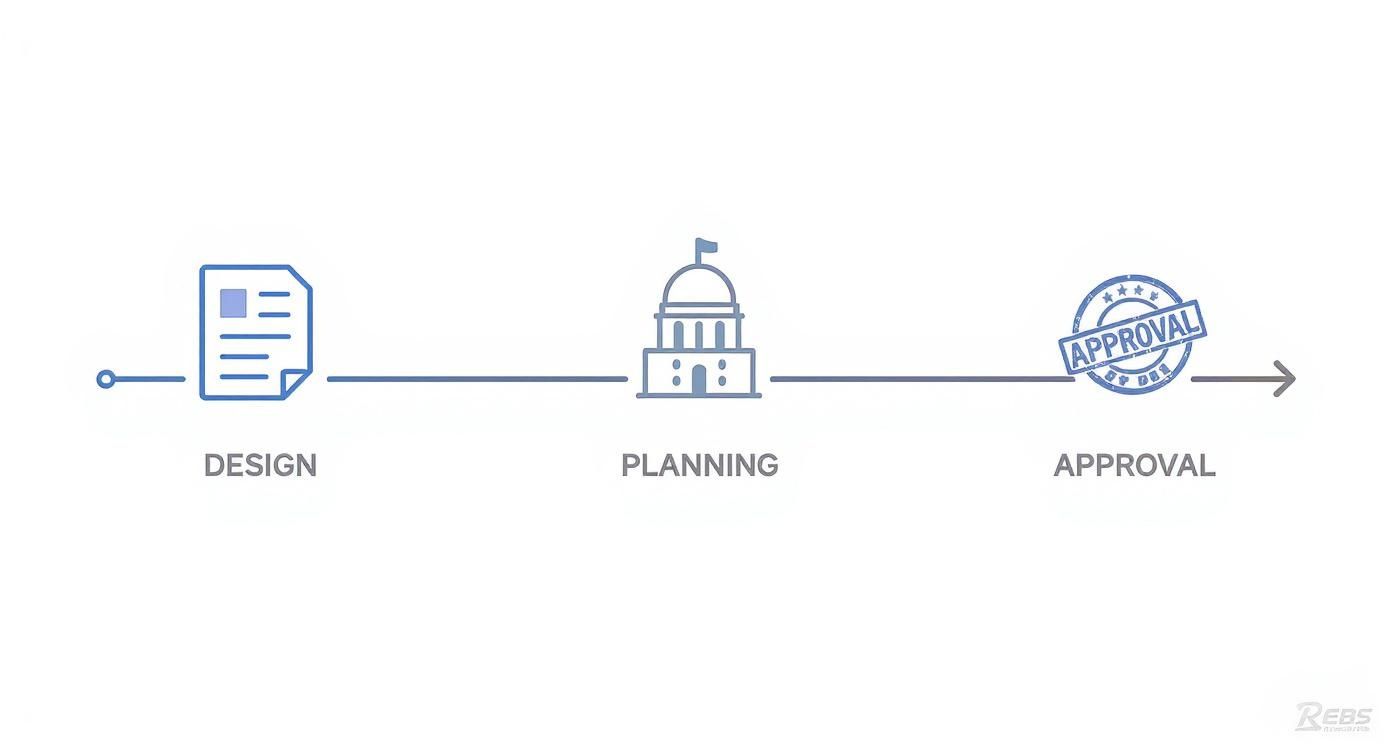
This visual timeline just goes to show how a structured approach before construction even begins is the key to preventing costly delays down the track.
Key Milestones on Site
Building a home unfolds in several distinct phases, each one setting the stage for the next. It all kicks off with preparing the site—clearing the land and precisely marking out the footprint of your new home. This is quickly followed by the excavation and the concrete pour for the slab or footings, which forms the solid base for everything to come.
Then comes the framing. This is a thrilling moment when you see the skeleton of your home go up, and the rooms and layout take shape for the very first time. Once the frame is up, the structure is wrapped, and the roof, windows, and external doors are installed. We call this reaching the "lock-up" stage. At this point, the building is secure and weatherproof, ready for all the intricate interior work to get underway.
A great project manager does more than just schedule trades; they are the ultimate quality controller on site. They anticipate challenges, solve problems before they escalate, and ensure that the craftsmanship in every corner of your home meets an exacting standard.
Next up is the interior fit-out. This is where all the services like plumbing, electrical, and data cabling are "roughed in". Plasterboard goes up, and suddenly you have real walls. The personality of your home truly starts to emerge as joinery is installed, tiles are laid, and the first coats of paint go on. For a more granular look, you can learn all about the complete house construction stages in our detailed guide.
Managing Variations and Quality Control
Even with the most meticulous plans, you might decide you want to make a change during the build. This is what we call a variation. Perhaps you've spotted a new style of tapware you absolutely love, or you decide to add an extra skylight to flood a room with more natural light.
A professional builder will have a clear, simple process for handling these requests:
- Formal Request: You’ll submit your change request in writing.
- Cost and Time Impact: The builder will come back to you with a detailed quote outlining the cost of the change and any effect it will have on the project timeline.
- Written Approval: No work on the variation kicks off until you have formally signed off on the changes and any associated costs.
This structured approach means there are no nasty budget surprises and keeps everything transparent. Alongside this, elite builders are constantly running rigorous quality control checks at every stage, from inspecting the steel reinforcement in the foundation to scrutinising the final paint finish.
The Final Steps to Getting Your Keys
As construction wraps up, you’ll be invited for a practical completion inspection. This is your chance to walk through the entire home with your builder and create a list of any minor defects that need attention—a small paint touch-up, a stiff door handle, or a slightly misaligned cabinet.
Once these items are sorted, the final payment is made, and the moment you’ve been dreaming of arrives: handover. You’ll be handed your keys, along with a comprehensive folder containing all warranties, manuals for your new appliances, and contact details for any future needs.
But the relationship with your builder doesn’t end there. Every new home in Victoria comes with a defects liability period. This is a set timeframe after handover where the builder is responsible for fixing any issues that might pop up as the house settles. It gives you complete peace of mind as you start this exciting new chapter in your beautifully finished luxury home.
Frequently Asked in Melbourne About Luxury Homes
Stepping into the world of custom home building is exciting, but it naturally brings up a lot of questions. It's a huge investment of both your time and money, so getting clear answers from the get-go is key to feeling confident.
We've put together some of the most common questions we hear from clients planning a high-end home in Melbourne. Think of this as your head start—arming you with the knowledge to ask the right questions and know what to expect on the journey ahead.
How Long Does It Take to Build a Luxury Home?
This is the big one, and the honest answer is: it depends. As a general guide, a custom luxury home in Melbourne can take anywhere from 12 to 24 months from the first design sketch to the day we hand you the keys.
But that's just a ballpark. Several things can shift the timeline:
- Design Complexity: An architectural masterpiece with one-of-a-kind features and tricky structural work will, of course, take longer than a more straightforward design.
- Site Conditions: Is your block of land on a steep slope or hard to get to? That can add weeks, sometimes even months, to the initial earthworks and foundation stages.
- Council Approvals: Navigating the planning and permit process can be a waiting game. A sharp, well-prepared application helps, but delays can still pop up, especially in areas with strict heritage overlays or zoning rules.
- Material Availability: When you're sourcing unique materials like a specific type of Italian marble or custom-fabricated windows from overseas, lead times can occasionally influence the schedule.
A builder who values your trust will give you a detailed project schedule right at the start. It should map out every key milestone, giving you a clear roadmap and managing expectations from day one.
What Is the Difference Between a Custom Builder and a Volume Builder?
This is a really important distinction to understand. A volume builder operates from a catalogue of pre-designed floor plans. They’re built for efficiency, which is why they can often deliver a home faster and at a lower price. Think of it as buying off the rack—you get a great product, but the customisation options are limited.
A custom luxury home builder, like us, does the complete opposite. We start with a blank canvas—your land and your vision—to create a home that is entirely unique.
Here’s a quick look at how they stack up:
Feature | Custom Luxury Builder | Volume Builder |
Design | Totally bespoke, one-off architectural design. | Pre-designed plans with limited modifications. |
Flexibility | Almost limitless flexibility in design, materials, and finishes. | Your choices come from a pre-selected menu. |
Quality | A laser focus on premium craftsmanship and high-end materials. | Standardised quality, often built to hit a price point. |
Client Involvement | A deeply collaborative partnership with you at the centre. | A more transactional process with fewer check-ins. |
Price Point | A higher investment that reflects the bespoke nature of the home. | Generally a more accessible, entry-level price. |
Choosing a custom builder isn’t just about building a house; it’s about commissioning a piece of architecture that’s a true extension of who you are.
Can I Use My Own Architect?
Absolutely. We often have clients come to us with plans they’ve already had drawn up by an architect they know and love. The best luxury home builders in Melbourne are masters of collaboration and have deep experience working with external design professionals.
In this situation, our job is to take those architectural drawings and execute them flawlessly. We'll work hand-in-glove with your architect throughout the build, making sure the final home is a faithful, high-quality realisation of their design intent. A strong partnership between builder and architect is the bedrock of a successful project.
How Can I Ensure My Project Stays on Budget?
Keeping the finances on track is a team effort. It all begins with setting a realistic, honest budget right at the start of the conversation.
Here are a few practical ways to manage the numbers and avoid nasty surprises:
- A Detailed Contract: Your fixed-price contract is your financial bible. It should spell out every single inclusion and exclusion, leaving no room for ambiguity.
- Build a Contingency Fund: This is non-negotiable. Always set aside a contingency—usually 5-10% of the total build cost—to cover any unexpected issues or those last-minute changes of heart.
- Minimise Variations: While we can accommodate changes, they are the number one reason budgets blow out. Try to lock in your big decisions during the design phase to avoid costly alterations once construction has started.
- Keep Talking: Regular budget meetings with your project manager are essential. They'll keep you constantly updated on where the spending is at, so you always feel in control.
Any builder worth their salt will prioritise financial transparency, providing clear paperwork for every cost and proactively finding solutions that respect your budget.
Ready to turn your vision into a master piece reality? The team at Envy Abode specialises in crafting bespoke luxury homes through a seamless design-build process, ensuring your journey is as exceptional as the final result. Let's start the conversation about your dream home today.