Malvern EastProject Repton , 2025
“The key thing we were looking for was the consistency in the pricing that we received, having the right team to be able to problem solve when an issue arose, they did it in a very calm and measured manner. They're a great team and we worked so well together, had we done the design with Envy it would have saved us 6 months minimum”
Dual Occupancy Homes in Hampton East

At its heart, a dual occupancy home is a single block of land that’s home to two separate, self-contained dwellings. It’s not just one house, but a clever way to unlock the true potential and value sitting in your own Hampton East backyard.
What Are Dual Occupancy Homes
Think of your property as an investment waiting for the right strategy. That's precisely what dual occupancy homes offer. It’s a powerful housing solution that lets you create two residences where there was once only one, turning your Hampton East property into a far more valuable asset. This isn't just about building; it's a strategic move for your land.
You can essentially double your living options to keep family close, generate a second income stream to pay down your mortgage faster, or simply build a high-value asset for your future. To get a complete picture, you can learn more about what a dual occupancy home is in our detailed guide. This kind of smart development is quickly reshaping suburbs like Hampton East, giving homeowners a flexible and financially savvy way to think about property.
Unlocking Your Property's Potential
The real magic of a dual occupancy arrangement is its sheer versatility. It's a practical answer to so many modern challenges, from housing affordability to the growing need for multigenerational living. For a homeowner in Hampton East, this translates into some serious benefits:
- Financial Gain: Imagine a steady rental income from the second dwelling. It can make a huge dent in your mortgage or even become a brand-new revenue stream.
- Family Proximity: Keep your loved ones close. You can give ageing parents or adult children their own independent space, all while maintaining everyone’s privacy.
- Increased Property Value: Developing a dual occupancy home doesn't just add a building; it substantially boosts the overall value and market appeal of your land.
A dual occupancy development transforms a single-use asset into a multi-functional one. It's about making your land work harder for you, whether your goal is financial freedom, family support, or long-term wealth creation.
Ultimately, this approach allows your property to adapt as your life changes, making it a forward-thinking investment in your Hampton East future.
Exploring Common Dual Occupancy Designs
Picking the right design for your dual occupancy home is one of the most important decisions you’ll make. It’s about more than just aesthetics; it shapes how you use your land, how you achieve your financial goals, and the lifestyle you create. Each design offers a different balance of privacy, cost, and suitability for various block sizes, especially in suburbs like Hampton East.
At its core, a dual occupancy project is about building two separate homes on a single parcel of land. Think of it as making one asset work twice as hard.
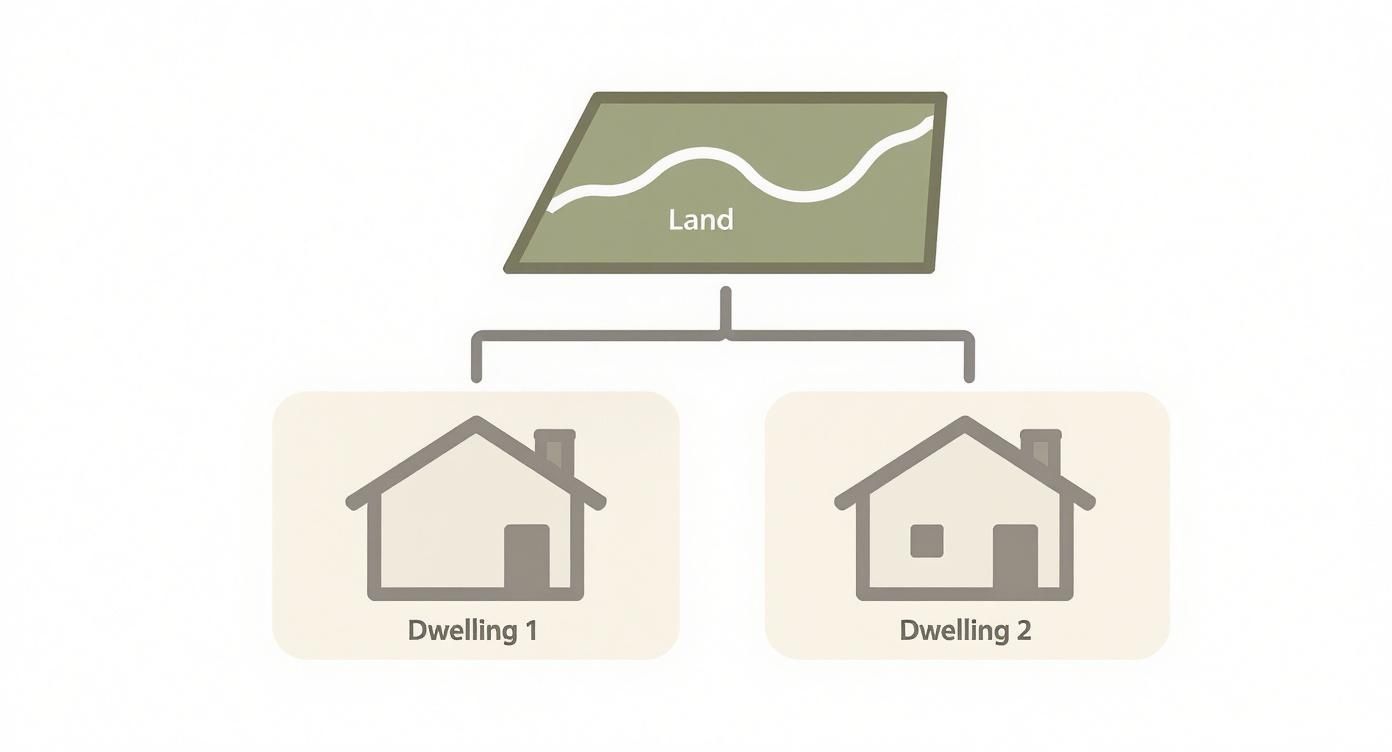
This simple concept unlocks so much potential. The most common ways to bring this to life are with side-by-side, detached, or stacked layouts. Let's break down what each one means for you.
To make things a bit clearer, here’s a quick comparison of the three main design types.
Comparing Dual Occupancy Home Designs
Design Type | Description | Best Suited For | Key Advantage |
Side-by-Side (Duplex) | Two homes connected by a common wall, usually as mirror images. | Wider blocks of land with good street frontage. | Cost-effective construction due to shared structures. |
Detached (Standalone) | Two completely separate houses on one title with no shared walls. | Deeper, larger blocks with ample backyard space. | Maximum privacy and a sense of independence. |
Stacked (Attached) | One dwelling built on top of the other, like a two-storey apartment. | Narrow or compact blocks where a wide footprint isn't possible. | Maximises living space on a small land footprint. |
As you can see, the shape and size of your Hampton East land will play a big part in guiding your decision. Now, let’s look at each one a little closer.
Side-by-Side Designs
Often known as a duplex, a side-by-side design is exactly what it sounds like: two homes attached by a central wall. They're typically mirror images of each other, each with its own front door and private garden space. This layout is a brilliant option for wider blocks, giving you two homes that feel completely separate and traditional.
It’s one of the most popular forms of dual occupancy homes for a reason. They blend into the neighbourhood seamlessly and are more cost-effective to build thanks to the shared wall and roof. If you’ve got plenty of street frontage in Hampton East, a side-by-side build offers a perfectly balanced solution for families and investors alike.
Detached or Standalone Designs
If privacy is at the top of your list, then a detached design is the way to go. This approach means building two completely separate, standalone houses on the one property title. No shared walls, no overlapping living spaces—just total independence for both residents.
You'll often see this as a standard house at the front of the block with a second, smaller dwelling (sometimes called a granny flat or secondary dwelling) tucked away in the backyard. It’s the perfect match for deeper blocks where you have enough room for two separate buildings while still leaving enough private open space to keep the council happy.
A detached dual occupancy provides the ultimate separation, making it perfect for multi-generational living where family members want to be close but not under the same roof. It also offers distinct rental appeal, as tenants get a completely private home.
Stacked or Attached Designs
What happens when your block is on the narrow side? In areas like Hampton East, where land can be tight, a stacked design is a seriously clever move. This layout places one home directly on top of the other, much like a two-storey apartment block where each residence gets its own floor.
This vertical thinking maximises living area on a much smaller footprint, making it a fantastic solution for tricky or constrained sites. It's a modern, efficient way to achieve dual occupancy without needing a huge, sprawling property.
For more ideas on how to make the most of your space, you can explore various dual living home designs that suit all kinds of properties. Ultimately, each design serves a different purpose, ensuring there's a practical and stylish option for just about any block of land in Hampton East.
The Upside of Dual Occupancy Living
Building a dual occupancy home isn’t just another construction project. It’s a savvy financial move that can completely reshape your future and elevate your lifestyle. Think of it as turning a single property into a powerful, multifaceted asset—especially in sought-after suburbs like Hampton East, where every square metre counts.
It’s this unique blend of financial upside and personal flexibility that makes dual occupancy so compelling.
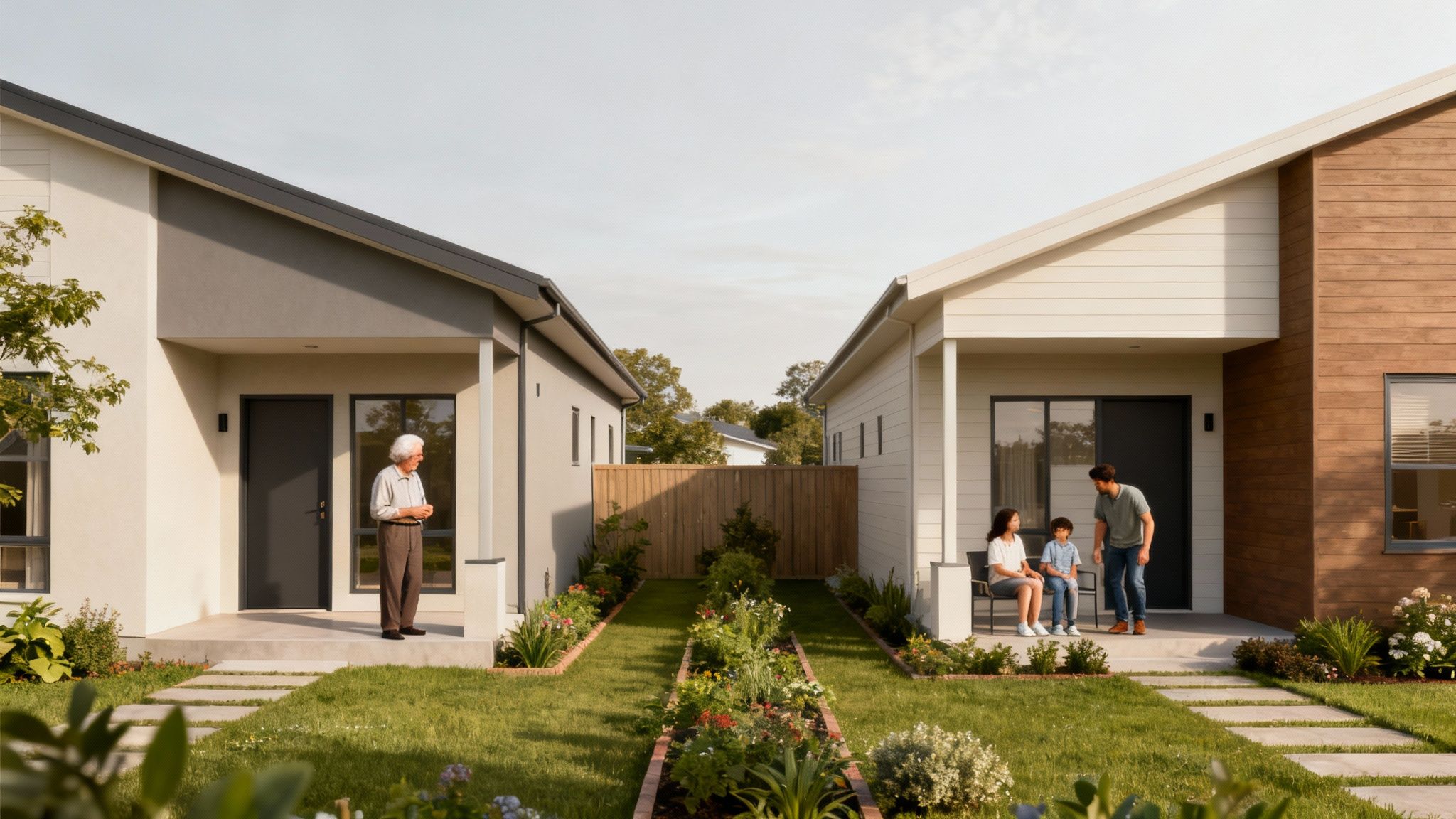
For many of our clients in Hampton East, the immediate draw is the financial boost. By creating a second, self-contained dwelling on your block, you unlock a brand-new stream of rental income. This extra cash flow can make a serious dent in your mortgage, fast-track your path to financial freedom, or simply become a reliable source of passive income to build wealth over the long haul.
Keeping Family Close (But Not Too Close)
Beyond the bottom line, dual occupancy homes are a practical and heartfelt answer to the rise of multigenerational living. It’s the perfect setup for families who want to stay connected without giving up their privacy and independence.
This arrangement is a game-changer for:
- Ageing Parents: You can offer your parents a safe, comfortable home right next door, giving them the independence they cherish with the peace of mind that family support is just steps away.
- Adult Children: Give your kids a real head start in a notoriously tough property market. They get an affordable, separate living space on the family block while they save for their own place.
This isn't just a niche idea; it's a trend sweeping across Australia. In fact, demand is soaring, with construction approvals for duplexes jumping by 20% year-on-year. This boom reflects a bigger shift in how we think about family life and smart property investment. You can read more about the rising demand for dual living homes and what’s driving it.
A dual occupancy home isn’t just about building another house. It’s about creating a flexible, supportive environment that adapts to your family’s changing needs for decades to come.
Making Your Land Work Smarter
Ultimately, the core benefit of dual occupancy homes is about getting the absolute most out of your land. Instead of one house on one block, you create two high-value assets. This instantly increases the property's overall worth and turns it into a much more powerful investment. In an area like Hampton East, it’s one of the smartest things you can do with your block.
By adding that second dwelling, you’re effectively doubling the utility and income potential of your property. Our guide on renovations that increase home value dives into how strategic additions can dramatically boost your asset's worth, and a dual occupancy project is one of the most impactful moves you can make.
Navigating Council Approvals in Hampton East
The path from a dual occupancy dream to a built reality always runs through your local council. For anyone in Hampton East, that means working with Bayside Council. While the approvals process can seem intimidating, getting your head around the local rules is the single best thing you can do for a smooth, successful project.
It’s less about finding loopholes and more about presenting a thoughtful design that ticks all the right boxes from day one.
This is where the real groundwork happens. The council’s job is to make sure new developments, like dual occupancy homes, are a positive addition to the neighbourhood. They’ll look closely at how your proposal fits into the existing streetscape, carefully balancing your vision with the broader community’s character.
Key Considerations for Bayside Council
To get the green light, your plans need to line up with several core planning principles. Think of them as the council’s checklist for good development. A planner will be scrutinising your project against each of these points:
- Neighbourhood Character: Does the design feel like it belongs? It needs to complement the style, scale, and general vibe of the other homes on your street.
- Site Coverage: How much of the block will your buildings cover? Councils have strict limits to prevent overdevelopment and ensure there’s still room for green space.
- Overshadowing and Overlooking: Your new home can't throw neighbouring properties into darkness or create a direct line of sight into their private spaces.
- Parking Provisions: You must provide enough off-street parking for both homes. This is non-negotiable, as it prevents clogging up local streets.
Getting even one of these wrong can lead to serious delays or an outright rejection. That's why putting together a detailed, professional application is so vital for your Hampton East project.
The Role of a Town Planner
You can lodge an application yourself, but bringing a professional town planner on board can be a game-changer. These experts live and breathe the Bayside Planning Scheme and ResCode; they speak the council's language. Their involvement can make the whole process feel infinitely smoother.
A great town planner sees potential problems before they even come up. They prepare a submission that addresses every concern, framing your project in the best possible light and saving you a world of time, money, and stress.
Dual occupancy homes have seen a massive surge in popularity across Australia, and it’s easy to see why in cities like Melbourne where land is so valuable. They’re a smart way to get more out of a single block, whether for family or for generating rental income. The trick is to find a design that feels premium to live in while also making sense as an investment.
An expert can help you balance all these moving parts, making sure your project hits your goals and satisfies the council. If you’re trying to get a clearer sense of the road ahead, our insights on town planning in Melbourne break down what the journey really involves, helping you tackle your Hampton East project with confidence.
Getting to Grips with the Full Project Cost
Nailing down a realistic budget is the absolute bedrock of a successful dual occupancy project in Hampton East. While the builder’s quote for the physical construction is obviously the biggest ticket item, it’s just one piece of a much larger financial puzzle. If you want to avoid nasty surprises down the track, you need to account for the full spectrum of costs right from day one.
Think of it like planning a big road trip. The price of the car is the main purchase, sure, but you also have to factor in fuel, insurance, rego, and a buffer for any unexpected repairs. It’s the same with a dual occupancy build; there are a bunch of "soft costs" that are absolutely essential for getting your project from an idea to a finished home.
These are the costs you’ll be paying long before a single shovel hits the dirt, and they're what paves the way for a smooth journey through planning and approvals in Hampton East.
More Than Just the Builder's Quote
That initial construction estimate covers the bricks and mortar—all the materials and labour for the new homes. But a hefty chunk of your budget needs to be set aside for professional services and council fees. These aren’t optional extras; they're the non-negotiable costs required to get your project legally approved and ready to build.
Here’s a quick rundown of the key costs you need to have on your radar:
- Design and Drafting Services: This is for the architectural plans for your dual occupancy homes. It’s about turning your vision into a detailed blueprint that builders can quote on and the council can assess.
- Town Planning Fees: Bringing a town planner on board is a smart move. They live and breathe council requirements and can help you navigate Bayside Council’s specific rules far more efficiently.
- Council Application Fees: Every development application has a fee that you pay directly to the local council for them to review and process your plans.
- Land Surveyor Reports: You’ll need a licensed surveyor to produce detailed reports on your property—things like boundaries, topography, and existing features. These are critical for an accurate design.
You have to look at the budget for a dual occupancy home holistically. Forgetting the 'soft costs'—which can easily make up 10-15% of the total project budget—is one of the most common and expensive mistakes we see Hampton East homeowners make.
Don't Forget Connection and Subdivision Costs
Once you’ve got the core professional fees sorted, there are other major expenses tied to servicing the new dwelling and finalising the property’s legal setup. These costs can vary a lot depending on your specific block and what you plan to do with the properties long-term.
Here are the other key expenses to plan for:
- Engineering Costs: You’ll need structural, civil, and soil engineers to make sure the building is sound and the site drains correctly.
- Utility Connections: The second home needs its own connections for water, electricity, gas, and sewerage. The fees for these can be pretty substantial.
- Subdivision Fees: If the plan is to sell the two homes separately, you’ll need to formally subdivide the property. This is a separate application process with the council and Land Use Victoria, which comes with its own legal and administrative fees.
By creating a detailed checklist that includes every single one of these items, you can build a budget that’s actually realistic. This kind of clarity doesn't just save you from financial stress; it puts you in a much stronger position to get the right finance and move forward with total confidence.
Thinking about the future of your property in Hampton East? In a property market that’s always shifting, a dual occupancy home isn't just a building project—it's one of the smartest moves you can make.
It’s a savvy response to the real-world pressures we’re all facing, from housing affordability to the need for more flexible living spaces for our families. This is about more than just construction; it’s about creating a powerful, high-value asset that works for you.
This approach brings some serious perks. Think financial freedom from a steady rental income, or bringing the family closer together with a multigenerational setup. You're essentially unlocking the full potential of your land, turning a single block into a versatile powerhouse.
The return to multigenerational living is a huge driver here. With housing costs on the rise, it's no surprise that as of 2023, a staggering one in five Australians were living in this kind of household. We've actually explored this trend in more detail in our article on the return of multigenerational living.
Building a dual occupancy home is about so much more than adding another structure to your block. It’s an investment in a flexible asset that can adapt as your life changes, bolsters your financial security, and meets the real needs of a modern world. It’s about securing your family’s future, on your own terms.
Got Questions About Dual Occupancy? You're Not Alone.
Even the most well-prepared homeowner has questions when diving into a dual occupancy project. It’s a big undertaking, and getting clear, straightforward answers is the best way to feel confident about the road ahead.
Let’s tackle some of the most common queries we get from clients thinking about building in Hampton East.
How Long Does a Dual Occupancy Build Take?
From the first sketch to the final handover, you’re typically looking at a timeline of 12 to 18 months. It's a marathon, not a sprint, and it breaks down into a few key stages.
First up is the design and documentation phase, which usually takes about 2-4 months. Then comes the council planning and approval process for Hampton East, which can stretch anywhere from 4-6 months. This is often the wildcard in the timeline. Once you’ve got the green light, the actual construction generally takes another 6-12 months to complete.
Can I Subdivide My Block After Building?
Absolutely. In fact, it’s one of the most popular strategies for our clients in Hampton East. Subdividing your block creates two separate property titles, giving you the freedom to sell one or both homes independently and maximise your return on investment.
It's worth remembering that subdivision is a separate legal process from getting your building permit. It requires its own application to Bayside Council and Land Use Victoria, so it’s crucial to mention this goal to your town planner right from the start.
Knowing you want to subdivide can influence early design decisions, so getting it on the table early makes for a much smoother journey.
How Much Yard Space Do I Need?
Local councils have specific rules about how much outdoor space each home needs. This is officially known as ‘private open space’, and it’s a non-negotiable part of the Victorian Residential Code (ResCode). The goal is to make sure every home has a decent outdoor area for residents to enjoy.
For instance, Bayside Council might require a total of 80 square metres of private open space for each dwelling. They often get even more specific, mandating that a certain portion of that space must be directly accessible from the main living area. Your architect will need to skillfully weave these requirements into the design to ensure your dual occupancy homes get council approval without a hitch.
Ready to unlock the potential of your Hampton East property? The expert team at Envy Abode specialises in designing and building custom dual occupancy homes that maximise value and lifestyle. Visit us online to start your journey.