Malvern EastProject Repton , 2025
“The key thing we were looking for was the consistency in the pricing that we received, having the right team to be able to problem solve when an issue arose, they did it in a very calm and measured manner. They're a great team and we worked so well together, had we done the design with Envy it would have saved us 6 months minimum”
Finding Home Builders in Melbourne

So, you're ready to build a custom home. It’s an exciting time, but the single most important decision you'll make isn't about floor plans or finishes—it's choosing the right builder. Finding the perfect fit among Melbourne's many highly-skilled home builders will set the tone for the entire project, from the first sketch to the day you get the keys.
Starting Your Melbourne Custom Home Journey
Building your own home in Melbourne is more than just a construction project; it’s a creative partnership. The city’s property landscape is incredibly diverse, from the narrow blocks in inner-city suburbs to the sprawling estates in the outer east, and each one comes with its own set of challenges and opportunities. This guide is designed to help you look past the glossy brochures and find a builder who truly gets it.
A great builder’s value isn't just in their portfolio of finished homes. It’s in their process. You'll find it in their clear communication, their meticulous project management, and a track record of delivering what they promised, on time and on budget.
Why Melbourne's Building Scene Is So Unique
Melbourne has long been the powerhouse of Australia's home building industry. Victoria consistently leads the nation in new house construction, which shows you just how strong the demand is here. The national industry is valued at over $90 billion, and Victoria’s huge slice of that pie means there are countless projects happening at any given time. This vibrant market gives you plenty of choice, but it also makes doing your homework absolutely essential.
A successful build needs a team that understands more than just bricks and mortar. They need to know the ins and outs of Melbourne's suburbs, navigate the maze of council regulations, and handle tricky site conditions. When you're looking for a custom home builder, you need someone who can turn your vision into a home that’s beautiful, functional, and fully compliant.
Ultimately, you’re looking for an advocate—a builder who guides you through every decision with clarity and expertise. That’s the key to a stress-free experience and a home that truly feels like it was made for you.
This guide will give you a clear roadmap to follow. It’s here to help you feel confident in picking a builder who can bring your dream to life, showing you what to look for, the right questions to ask, and how to build a partnership based on trust and incredible craftsmanship.
Defining Your Vision and Realistic Budget
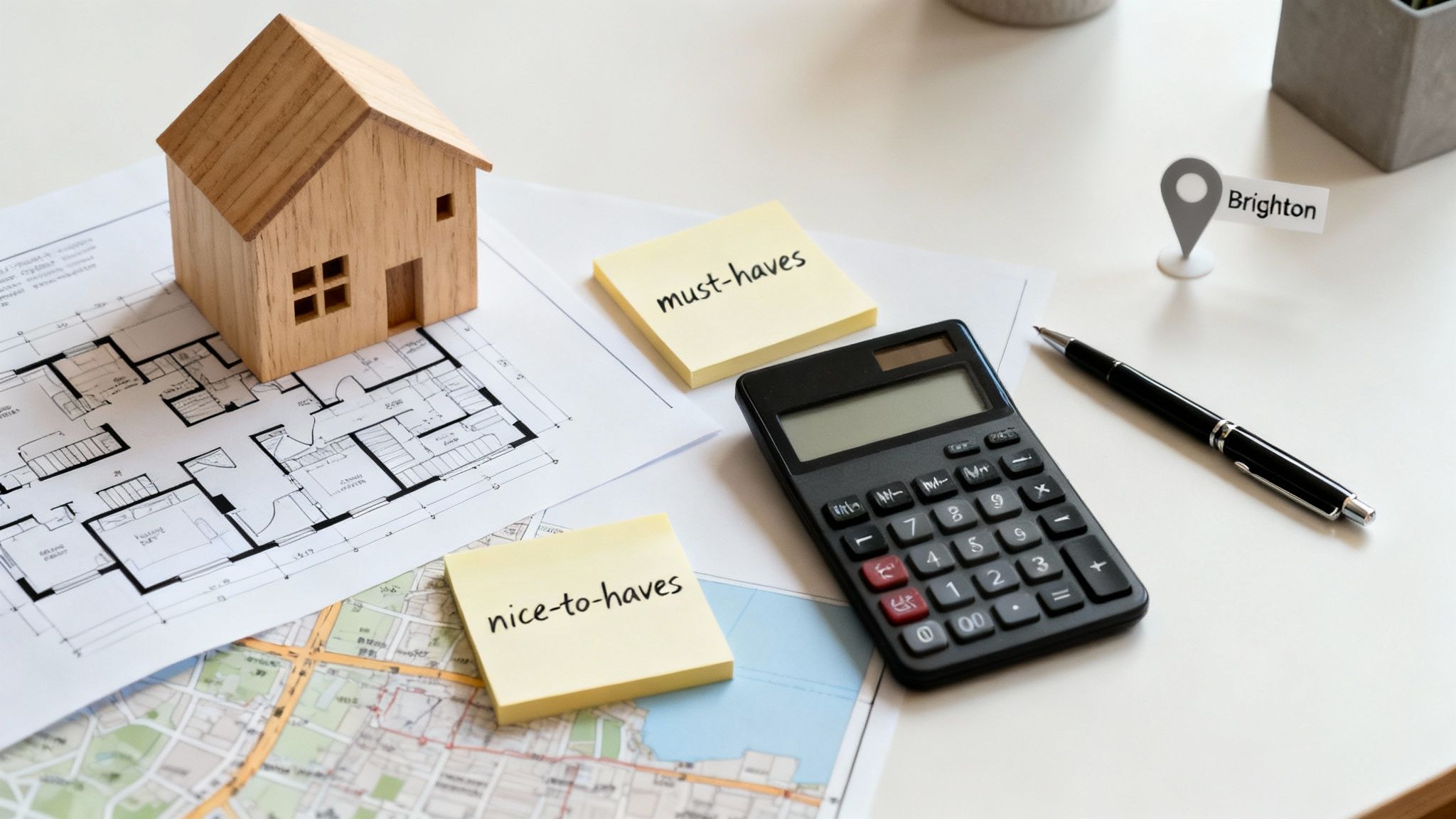
Before you even think about picking up the phone to call builders, the most important work happens right at your kitchen table. This is where you translate those daydreams of your perfect home into a tangible, concrete brief. Getting this part right is the absolute foundation of a successful project, ensuring your first conversations with builders are focused, productive, and grounded in reality.
It all kicks off with a detailed wish list. Think deeply about how your family lives today, but more importantly, how you want to live in the future. What are your daily routines? Your hobbies? What will life look like in five or ten years? This simple exercise helps you move past vague ideas and start nailing down what truly matters.
Creating Your Project Brief
The real goal here is to draw a clear line in the sand between your absolute must-haves and the nice-to-have extras. This clarity is worth its weight in gold when the time comes to balance your grand vision with your budget.
1. Your Must-Haves
These are the non-negotiables. The elements your home simply must have to work for you and your family.
- For example: You might need four bedrooms all on the upper level, an open-plan kitchen that flows directly into an alfresco entertaining area, and a dedicated home office that gets plenty of natural light.
2. Your Nice-to-Haves
This is the fun stuff—the features you'd love to include if the budget stretches that far. They often include high-end finishes or specialty rooms that add a touch of luxury.
- For example: A butler’s pantry for hidden prep space, a sleek, temperature-controlled wine cellar, the quiet warmth of in-floor hydronic heating, or a sparkling swimming pool.
Thinking about this distinction early on prevents a world of disappointment down the track. It gives a builder a clear hierarchy of your priorities, which allows them to give you much more accurate costings from the get-go.
Establishing a Realistic All-Inclusive Budget
That number you have in mind for the actual construction? It’s just one piece of the puzzle. A truly realistic budget has to account for every single expense, from council application fees to the final landscaping. Overlooking these peripheral costs is one of the most common—and painful—mistakes people make.
An experienced builder can certainly guide you, but you should walk into that first meeting with a comprehensive list. For a really detailed look, our guide on the cost of building a house in Melbourne is an excellent resource to get you started.
Your all-inclusive budget should make room for:
- Design and Consultant Fees: This covers your designer, engineers, surveyors, and energy raters.
- Council and Permit Fees: These can vary dramatically between different Melbourne councils.
- Site Works and Preparation: Think demolition of an existing house, excavation, and connecting all the essential services.
- Construction Costs: This is the main event—the build itself, including all labour and materials.
- Prime Cost & Provisional Sums: These are allowances for items you haven't chosen yet (like tapware) or work that can’t be precisely priced upfront (like hitting unexpected rock during excavation).
- External Works: Landscaping, driveways, fencing, and pools all need to be factored in.
- Contingency Fund: This is non-negotiable. You need a buffer of 10-15% of the total project cost to cover any unforeseen issues.
Think of your budget as the complete financial story of your project, from the first sketch to the final handover. And remember, a contingency fund isn't for upgrading your benchtops; it's a critical safety net for the unknowns that inevitably pop up during a complex build.
A Real-World Melbourne Example
Let’s say you’re planning a build in a Bayside suburb like Brighton. Right away, local factors come into play. The land value is high, and your builder immediately needs to investigate soil reports for the area’s sandy composition, which could mean specialised (and more expensive) slab engineering is required.
On top of that, the Bayside City Council has its own strict planning regulations and design codes that will influence everything from your building’s height to the materials you can use. Is the site access tight? That could bump up labour and delivery costs. A seasoned Melbourne builder knows to anticipate these suburb-specific challenges, building them into the budget from day one to prevent nasty surprises. This is precisely the kind of local expertise you’re paying for.
How to Properly Vet Melbourne Home Builders
With a clear vision for your dream home and a budget you’re comfortable with, it’s time to find the right team to bring it all to life. This is where your due diligence really begins, separating the truly exceptional home builders in Melbourne from the rest. The goal isn’t just to find someone with the right skills, but to build a shortlist of professionals who you connect with, trust, and can communicate with openly.
A quick Google search is a decent starting point, but the most credible builders are almost always members of peak industry bodies. Checking with organisations like the Housing Industry Association (HIA) and Master Builders Victoria (MBAV) is a great way to find builders who are held to a higher standard of professionalism and ethical conduct.
Digging Into Portfolios and Past Work
Once you’ve got a few names, it’s time to put on your detective hat. A builder's portfolio is their visual resume, and it needs to speak directly to the kind of home you want to create. Look past the glossy, perfectly staged photos and scrutinise the details.
Is their work consistently high-quality? Do they have a distinct architectural style, or can they adapt to different designs, from ultra-modern to classic heritage? Most importantly, does their experience match the scale and complexity of your vision? If you're planning an intricate, architect-designed home, a builder who mostly works on standard project homes probably isn't the right fit.
This is also a good opportunity to get even clearer on what you're looking for. Our detailed guide on how to select a builder offers a much deeper look into how to match a builder’s specific skills with your project’s demands.
Verifying Credentials Is Non-Negotiable
Never, ever take a builder’s credentials at face value. In Victoria, every legitimate professional builder must be registered with the Victorian Building Authority (VBA). You can check this online in minutes, and it’s your first line of defence against unqualified or dodgy operators.
Your essential checklist should include:
- Builder Registration: Jump on the VBA public register to confirm their license is current and see if there are any disciplinary actions against them.
- Domestic Building Insurance (DBI): This is mandatory for any project over $16,000. It’s your safety net if the builder dies, disappears, or becomes insolvent.
- Public Liability Insurance: This covers any accidents or damage to property during construction. Ask to see a copy of their Certificate of Currency.
A true professional will have zero issues providing these documents. If you get any pushback or hear a string of excuses, take it as a massive red flag and walk away.
Talking to Past Clients
This is the step that gives you the insights you just can't find online. A reputable builder should be more than happy to give you a list of references. When you get them on the phone, go deeper than a simple, "Were you happy?"
Ask targeted questions that reveal what it’s really like to work with them:
- How was their communication? Were you always in the loop about progress and any bumps in the road?
- Did they stick to the timeline and budget? If not, how did they explain and manage the changes?
- How did they handle unexpected problems or variations to the plan? Were they flexible and solution-focused?
- What was their follow-up service like after handover? Did they come back to fix any minor defects promptly?
The answers will paint a much clearer picture of the real client experience and show you how a builder handles pressure—a far better measure of character than any polished sales pitch.
Comparing Builder Types in Melbourne
To narrow your search, it helps to understand the different kinds of builders operating in Melbourne. Each one is geared towards different projects, budgets, and levels of client involvement.
The Melbourne market is incredibly active—with over 220,000 dwellings under construction across Australia at any given time, according to the Australian Bureau of Statistics—so choosing the right type of builder is the key to a smooth journey.
Here's a quick comparison to help you find your best fit.
Comparing Builder Types in Melbourne
Understand the key differences between volume, custom, and boutique builders to select the right fit for your project's scope, budget, and desired level of personalisation.
Builder Type | Best For | Typical Price Point | Design Flexibility | Client Involvement |
Volume Builder | Standardised designs on typical blocks; budget-focused projects. | $ | Low (limited to pre-set plans and finishes). | Minimal (decisions made upfront). |
Custom Design-Build Firm | Unique, architecturally driven homes; integrated design and construction process. | $$$ | High (fully bespoke designs tailored to the client and site). | High (collaborative partnership throughout). |
Boutique Contractor | High-end renovations, complex extensions, or small-scale custom homes. | $$ - $$$ | Moderate to High (often work with external architects). | Moderate to High. |
This table should give you a solid starting point for identifying which category of builder aligns best with your aspirations for your new home.
From Blueprint to Building Site: Navigating Approvals and Groundwork
This is where the magic really begins. All that time spent finalising your brief and locking down the budget now starts to take shape as your vision moves from paper to the real world. The pre-construction phase can feel a bit daunting with all its paperwork and technical details, but a great builder makes it a smooth, transparent process.
Having a builder with an in-house design team is a huge advantage here. It creates a seamless experience because the people who designed your home are the same people who know exactly how to build it, bridging the gap between creative vision and practical construction. This kind of integrated approach is worth its weight in gold when you're dealing with Melbourne's notoriously complex planning rules. Every council has its own quirks, and a builder who knows the local landscape can see potential roadblocks a mile away, saving you from frustrating delays.
The journey from design to starting on-site follows a clear path, as you can see below.
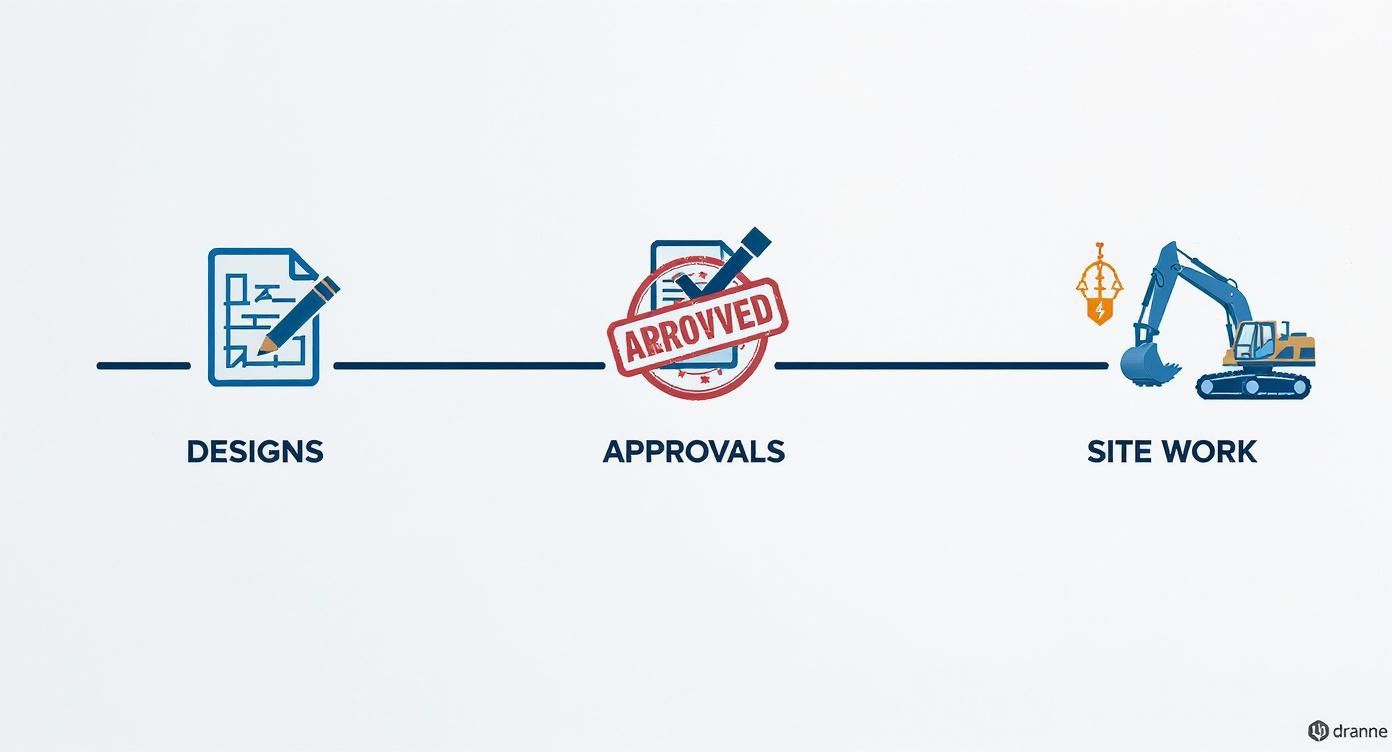
As this shows, the design, approvals, and site prep stages are all linked. Getting each one right is crucial for setting up a smooth and efficient build once the crew arrives on site.
Getting the Green Light from Melbourne Councils
Getting all your permits in order is a massive milestone. It's not just a single building permit, either. Depending on your design and location, you might first need a town planning permit or development approval, especially if you’re pushing the envelope with your design or your property falls under special planning controls.
For instance, suburbs like Hawthorn or Albert Park are often covered by heritage overlays. This adds a whole other layer of rules about the design and what materials you can use. A builder who has built in these areas before will know exactly what the council is looking for, which makes the application process so much easier. We take a deeper dive into this in our guide to the building plan approval process.
This approvals stage is a big deal in Melbourne's home building scene. Keeping your project on track means finding a builder who is an expert at navigating these council processes.
Tackling Melbourne’s Unique Site Challenges
Before a single shovel hits the dirt, your builder needs to understand your block of land inside and out. Melbourne's diverse geography throws up all sorts of challenges, and if they aren't tackled right at the start, they can cause major budget blowouts and even structural issues later on.
A detailed site survey and soil test are absolutely non-negotiable. These reports give your builder and engineer the critical information they need to design the right foundations for your home.
Here are a few common site issues we see around Melbourne:
- Reactive Clay Soils: Found all over the city, these soils swell up when wet and shrink when they dry out. This movement can wreak havoc on a standard foundation, so it needs to be engineered specifically to handle it.
- Sloping Blocks: While they can offer incredible views, especially out in the eastern suburbs, sloping sites mean more complex earthworks, retaining walls, and specialised foundations—all adding to the cost.
- Tight Inner-City Access: Trying to build on a narrow block in Richmond or Fitzroy is a logistical puzzle. A savvy builder will have a meticulous plan for getting machinery in, coordinating material deliveries, and managing traffic to keep disruptions to a minimum.
A truly proactive builder doesn't just wait for problems to pop up—they plan for them. Their initial assessment should give you a clear strategy for managing your site's specific conditions, and this should be reflected in your contract and budget from day one.
Think about it this way: you're building in an area known for highly reactive soil. A top-tier builder will insist on a geotechnical report from the get-go. They'll then walk you through that report and explain exactly why a more robust (and yes, more expensive) waffle pod slab or bored pier system is essential. This kind of upfront honesty prevents that horrible "surprise" cost variation for foundation upgrades months down the track. It’s what separates the true professionals from the rest and is a hallmark of the best home builders in Melbourne.
Getting the Paperwork Right: Contracts and Timelines
When that building contract lands on your table, it's a big moment. This isn't just a formality; it's the entire legal roadmap for your dream home, spelling out every single responsibility, timeframe, and cost. A solid, well-put-together contract from one of Melbourne’s top-tier home builders is your best friend in this process, providing total clarity and protecting everyone involved. It’s truly the foundation of a great builder-client partnership.
Most quality builders in Victoria will use a standard contract from an industry body like the Housing Industry Association (HIA) or the Master Builders Association of Victoria (MBAV). These are designed to be fair and comprehensive, but let's be honest, they can be full of dense legal-speak. Taking the time to really get your head around it is non-negotiable before you pick up a pen.
What to Look For in Your Building Contract
First things first: never let anyone pressure you into signing on the spot. A professional builder will actively encourage you to take it away, sleep on it, and most importantly, have it reviewed by a solicitor who knows their way around construction law. They’re experts at spotting weird clauses or vague language that could cause headaches later.
When you're going through it, keep an eye out for these key areas:
- Progress Payments: Your contract should break down payments into stages tied to real, tangible milestones—think slab down, frame up, lock-up, and so on. This is crucial. It means you only pay for work that’s actually been completed. Just check that the payment percentages feel right for the amount of work done at each step.
- Variations: This is the formal process for making changes once the build is underway. If you decide to add an extra window or upgrade your benchtops, it needs to be documented in a written "variation order." This little piece of paper will outline the cost and any change to the schedule, protecting you from off-the-cuff decisions that blow the budget.
- Provisional Sums (PS) and Prime Costs (PC): A PS is basically an educated guess—an allowance for work that’s impossible to quote with 100% accuracy upfront, like excavation where you might hit unexpected rock. A PC is an allowance for an item you haven't chosen yet, like your taps or kitchen appliances. The contract needs to clearly state these allowances and explain how the final costs will be locked in.
Remember, a good contract isn't one-sided. It’s built to be fair, creating a clear and legally binding framework that cuts down on misunderstandings and gives everyone a clear path forward if disagreements pop up.
Nailing Down a Realistic Construction Timeline
Along with the costs, the construction timeline is one of the most critical parts of your contract. A seasoned builder won’t just give you a vague completion date; they’ll provide a detailed schedule that maps out every phase of the project, from scraping the site clear to handing over the keys.
But it’s so important to be realistic. Building a custom home is a massive undertaking, and things can happen. Melbourne's four-seasons-in-one-day weather, unexpected delays in material shipments, or even a backlog with council inspections can all throw a spanner in the works. A transparent builder knows this and will build a little bit of contingency into their timeline from the get-go.
A Typical Timeline for a Custom Build in Melbourne
So you can get a feel for the flow of a project, here’s what a standard construction schedule for a luxury home in Melbourne often looks like. Of course, every project is different, but this gives you a pretty solid idea.
Stage | Key Activities | Estimated Duration |
Site Establishment & Base Stage | Site clear, temporary fencing, excavation, underground plumbing and electrical, slab pour. | 4-6 Weeks |
Frame Stage | Wall frames and roof trusses are erected. | 3-5 Weeks |
Lock-Up Stage | External doors, windows, and roofing are installed, making the home secure. | 4-6 Weeks |
Fixing Stage (Rough-In) | Internal linings (plasterboard), insulation, plumbing, and electrical wiring are installed. | 5-8 Weeks |
Finishing Stage | Kitchen cabinetry, tiling, painting, flooring, and final fit-off of fixtures and appliances. | 8-12 Weeks |
Completion & Handover | Final inspections, defect rectification, professional clean, and the official handover of keys. | 2-4 Weeks |
This kind of structured plan is what sets the best home builders in Melbourne apart. They don't just pull a date out of thin air; they map out a clear, stage-by-stage plan and keep you in the loop if things need to shift. That level of transparency is what keeps you feeling confident and in control, never left wondering what’s happening on-site. The contract you sign should absolutely reflect this professionalism.
Your Questions Answered: Building a Home in Melbourne
Embarking on a custom home build is a massive undertaking, and it's completely natural to have a head full of questions. Getting clear, straight answers is the first step to feeling confident and in control of the entire journey.
Here, we’ll tackle some of the most common queries we hear from clients. Think of it as a solid foundation of knowledge to have in your back pocket before you even think about signing a contract with a builder.
How Long Does It Really Take to Build a Custom Home in Melbourne?
This is usually the first thing people ask, and the honest answer is: it depends. The timeline for any custom home hinges on its size, the complexity of the design, and any unique challenges your block of land might present.
It’s best to think of the project in two distinct phases:
- Pre-Construction: This is the planning and paperwork stage. It covers everything from detailed design development to securing all the necessary council permits and approvals. You should realistically set aside 4-6 months for this.
- Construction: Once we break ground, the build itself for a high-end custom home will typically take between 12 and 18 months. Things like basements, complex structural engineering, or a site with tricky access can nudge this timeline out a bit.
A true professional will never just pluck a date out of thin air. They should provide a detailed, stage-by-stage construction schedule in your contract, giving you clear milestones to track progress against. That level of transparency is the hallmark of a well-run build.
What’s the Difference Between a Fixed-Price and a Cost-Plus Contract?
Understanding your contract is absolutely critical for your budget. The two most common models you’ll come across with home builders in Melbourne are quite different in how they handle the project's finances.
A fixed-price contract is exactly what it sounds like. It locks in the total cost of the build before any work starts. This gives you fantastic budget certainty and peace of mind, as the builder wears the risk of any price hikes on materials or labour. The only trade-off is a little less flexibility for making spontaneous changes.
On the other hand, a cost-plus contract is more of an open-book arrangement. You pay the actual cost of all labour and materials, plus an agreed-upon margin for the builder's overhead and profit. While it’s completely transparent, you’re the one who carries the financial risk if costs blow out. For this reason, most high-end custom projects in Melbourne use a fixed-price model, with a very clear, documented process for pricing any variations you request.
How Do I Make Changes During the Build?
It’s almost a given that you’ll want to tweak something once you see your home taking shape. Maybe it’s moving a wall, or perhaps upgrading your tapware. Managing these changes properly is the key to keeping everything on track and on budget.
Your building contract must have a specific clause for "variations," and the process should be straightforward and always in writing.
- You formally request a change.
- The builder provides a written quote detailing the cost and any impact on the timeline.
- Work on that change only begins after you’ve reviewed and signed the official variation order.
Following this process protects everyone. It ensures every decision is documented, which prevents misunderstandings and horrible surprise costs on your final invoice. Never, ever agree to a change based on a verbal chat alone.
What Insurance Should My Builder Have in Victoria?
Thankfully, Victoria has strong consumer protection laws for anyone building a home. A registered builder is legally required to hold specific insurances to protect your investment.
The big one is Domestic Building Insurance (DBI), which is mandatory for any project valued over $16,000. This is your safety net. It provides cover if your builder dies, disappears, or becomes insolvent before finishing your home. Your builder must give you a certificate for this policy before you hand over a deposit.
They must also hold current public liability insurance to cover accidents or property damage during construction. And finally, all their work is covered by statutory warranties, including a 10-year warranty for major structural defects, which gives you real long-term peace of mind.
At Envy Abode, we believe a transparent, collaborative, and well-managed process is the only way to build an exceptional home. Our integrated design and build team is here to guide you through every question and decision, ensuring your vision is brought to life with precision and care. To learn more about our bespoke approach to luxury home building, explore our services at https://envyabode.com.au.