Malvern EastProject Repton , 2025
“The key thing we were looking for was the consistency in the pricing that we received, having the right team to be able to problem solve when an issue arose, they did it in a very calm and measured manner. They're a great team and we worked so well together, had we done the design with Envy it would have saved us 6 months minimum”
Luxury custom home builders Melbourne: Your definitive guide

Building a custom home isn't just about putting up walls and a roof; it's about creating a space that's a true extension of who you are. When you partner with one of the best luxury custom home builders Melbourne has to offer, you’re translating a personal vision into a physical reality. This is a journey that goes far beyond standard blueprints, focusing instead on collaboration, impeccable craftsmanship, and an almost obsessive attention to detail.
Starting Your Melbourne Luxury Home Journey
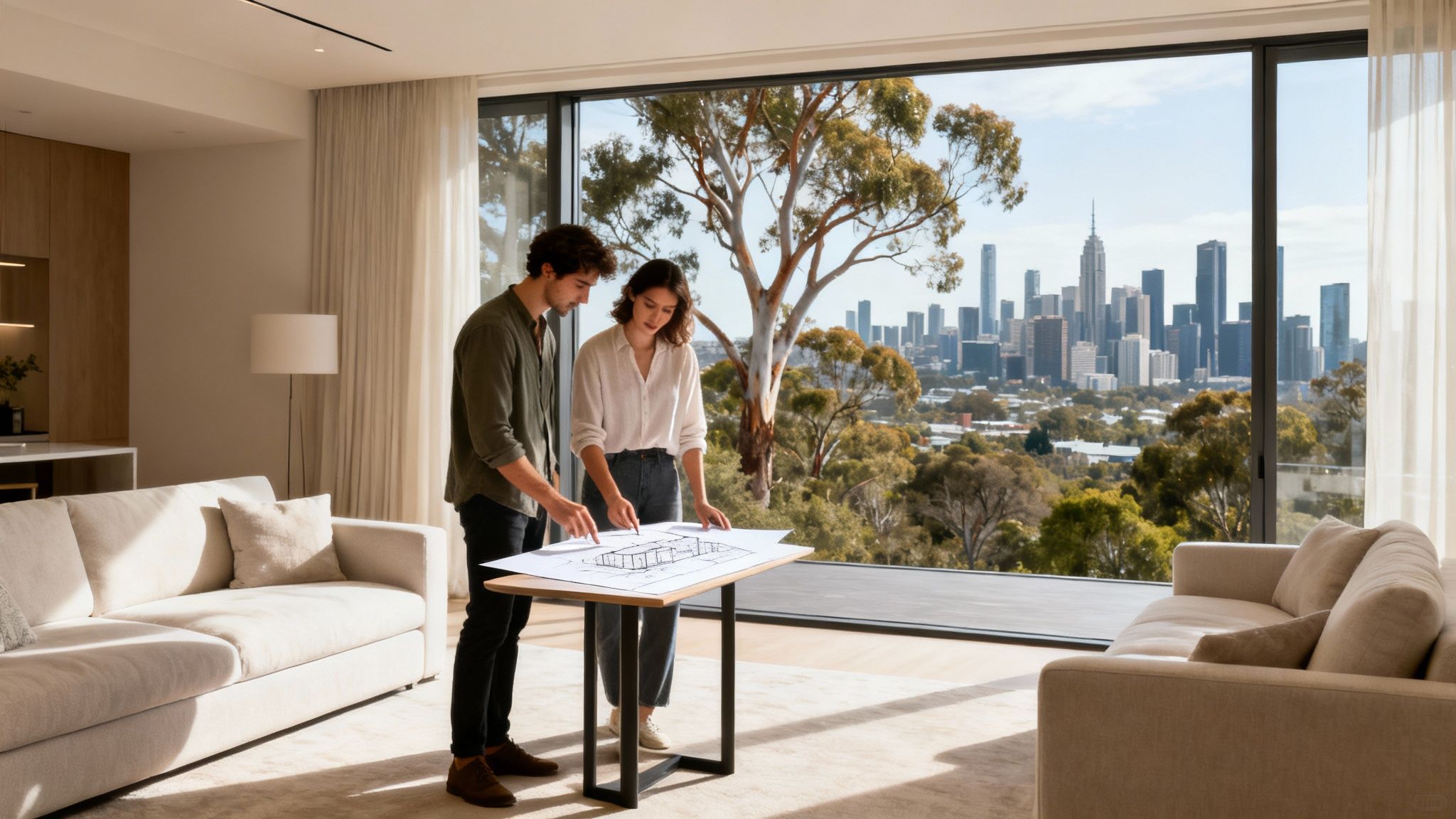
Creating a bespoke residence is easily one of the most significant and rewarding investments you'll ever make. But it doesn't start with bricks and mortar. It starts with a conversation—a deep dive into your daily rhythms, your aspirations, and what truly makes a house feel like home to you.
A genuine luxury build is defined by so much more than its final appearance. It’s about the substance behind the style: the design integrity, the precision of the craftsmanship, and the quality of the materials you can both see and feel. The process is deeply personal, which means you need a builder who listens intently and can translate your abstract ideas into a functional, beautiful living environment.
Defining What Luxury Means To You
The word "luxury" is incredibly personal. For one client, it might be a state-of-the-art chef’s kitchen designed for grand-scale entertaining. For another, it could be a serene, spa-like bathroom retreat or a seamless flow between indoor and outdoor living spaces.
Before you even think about finding a builder, take some time to define your own version of luxury. Think about these key areas:
- Lifestyle Integration: How will your new home support your daily activities, hobbies, and family life? Do you work from home? Entertain often? Need a quiet space to unwind?
- Aesthetic Vision: What architectural styles, materials, and finishes truly resonate with you? Start a mood board; collect images that inspire you.
- Technological Needs: Are smart home features, advanced security systems, or sustainable energy solutions a priority for you?
- Future Proofing: How should the home adapt to your family's needs over the next decade or more?
The initial phase is all about articulating your dreams. A great builder doesn’t just build what’s on the plans; they understand the ‘why’ behind your choices, ensuring the final home aligns perfectly with your life.
The Melbourne Market Context
Understanding the local market is key to setting realistic expectations. Melbourne’s property landscape is dynamic, with strong, consistent demand for high-end, family-oriented homes, largely driven by its world-class schools and cultural scene. This corner of the market is part of a broader Australian luxury residential sector projected to hit USD 25.19 billion by 2025. Even with minor market shifts, the city remains a prime location for significant residential investment.
Think of this guide as your roadmap, designed to give you the knowledge to navigate every stage with confidence. From clarifying your vision to making sense of contracts, we’ll provide the insights you need to select a partner who can bring your unique home to life.
To get organised from day one, our comprehensive building a custom home checklist is an excellent place to start.
Turning Your Vision Into A Buildable Plan
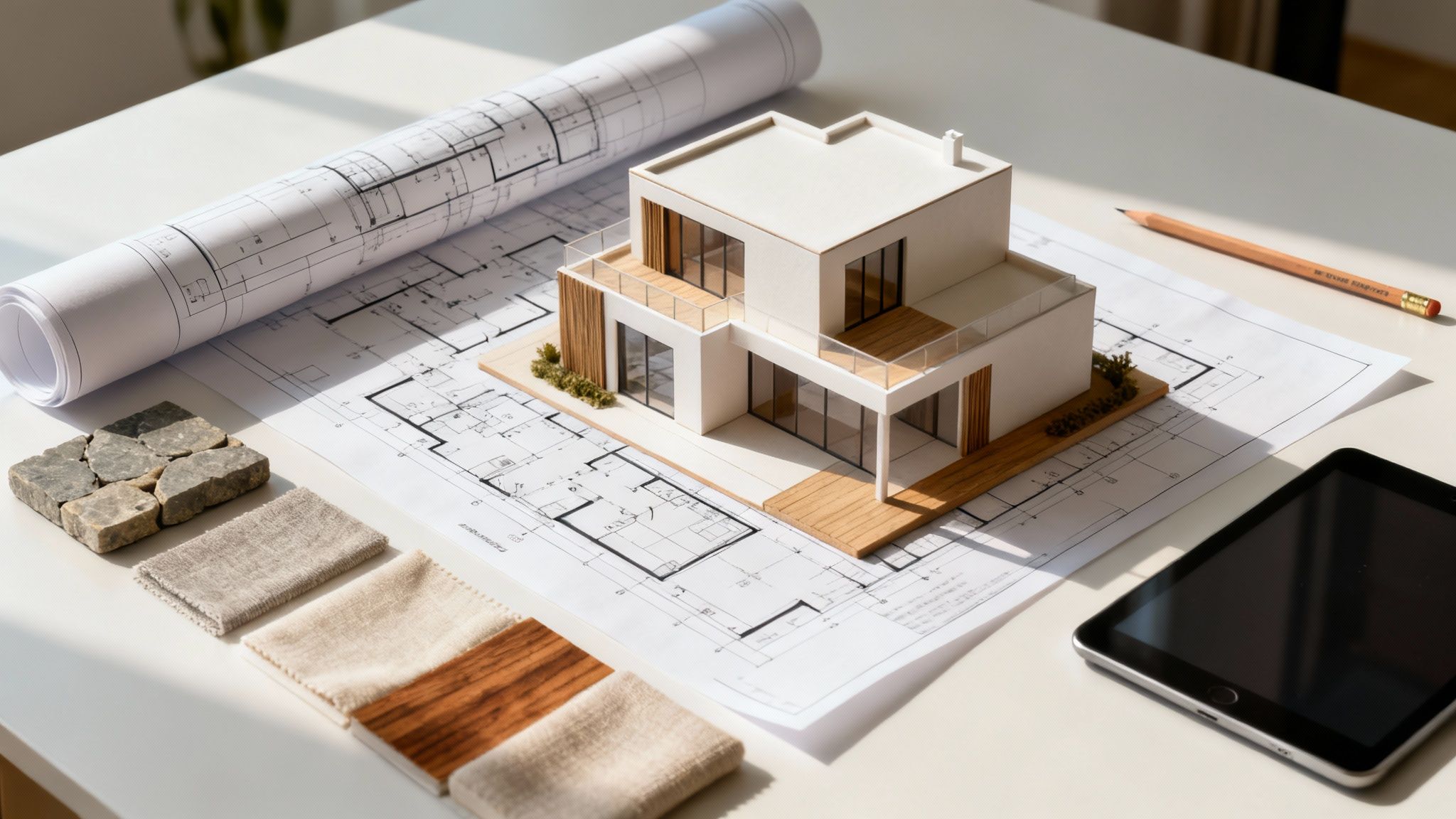
Before a single shovel ever breaks ground, the success of your new luxury home is already being decided. It all comes down to the clarity of your vision and the realism of your budget. This is the foundational stage where your lifestyle, dreams, and aspirations are translated into a practical, buildable plan—an architectural brief that will guide every single decision from here on out.
This isn't just about making a simple wish list. It’s a deep, thoughtful exploration of how you live today and, more importantly, how you want to live tomorrow. A premier builder doesn’t just build from a set of drawings; they build a home around your life.
Articulating Your Non-Negotiables
Every truly exceptional custom home is built on a foundation of "non-negotiables." These are the core features that will define your daily experience, the things that make a house feel like your home.
Think beyond pure aesthetics for a moment and consider function. Is family life centred around the kitchen? If so, a gourmet space with a butler's pantry and high-end appliances isn't just a want; it's an absolute must.
To get started, consider these prompts:
- Daily Routines: Where do you spend your mornings? Do you need a dedicated home office that’s genuinely separate from the main living areas, or is a luxurious master ensuite your place to unwind?
- Entertaining Style: Are you known for hosting large dinner parties or more intimate family gatherings? This decision will dictate the entire flow from your kitchen to the dining and outdoor areas.
- Future Needs: Will you need flexible spaces for ageing parents, adult children returning home, or perhaps a growing collection of art or wine?
- Personal Sanctuaries: What does a retreat look like for you? It could be a soundproofed home theatre, a quiet library, or simply a tranquil garden view from your bedroom.
This process of self-discovery is crucial. It gives your architect and designer the substance they need to craft a space that is uniquely and authentically yours. For a little inspiration, exploring our gallery of custom new home design projects can help you visualise how different features come together in a real-world setting.
A well-defined brief is your most powerful tool. It ensures every conversation with potential luxury custom home builders in Melbourne is focused, productive, and grounded in a shared understanding of your ultimate goals.
Developing A Realistic Financial Framework
A brilliant vision has to be paired with an equally clear budget. In luxury construction, the budget isn't just a number; it's a comprehensive financial plan that accounts for everything—from the beautiful finishes you can see to the hidden structural costs and council fees you can't.
Transparency here is paramount. Custom home builders in Melbourne operate in a completely different sphere from volume builders, who often price their work between $1,800 and $2,500 per square metre. In contrast, the bespoke nature of a true custom build typically starts from AUD $4,500 and can easily exceed AUD $9,500 per square metre, especially for complex sophisticated designs.
A robust budget for a luxury home needs to cover several key areas well beyond the basic construction cost.
Key Budget Components
- Hard Costs: This is the physical construction—all the labour, materials, foundations, framing, and roofing.
- Soft Costs: Think of these as the indirect costs. This includes architectural and engineering fees, council permits, soil tests, and land surveys.
- Finishes and Fixtures: You'll need specific allocations for everything from flooring and cabinetry to tapware and lighting. Premium materials and European appliances can significantly influence this part of the budget.
- External Works: Landscaping, driveways, swimming pools, and outdoor kitchens are often budgeted separately but are absolutely integral to the final result.
- Contingency Fund: This is non-negotiable. A contingency of 10-15% of the total build cost is the industry standard—a wise safety net to cover unforeseen site issues or those little upgrades you decide on during the build.
Having this financial clarity from day one is incredibly empowering. It allows you to engage with builders confidently, knowing exactly what is feasible. It transforms abstract dreams into a concrete project with a clear path forward, ensuring your finished home is not only breathtaking but also a sound, well-considered investment.
How To Find The Right Melbourne Luxury Builder
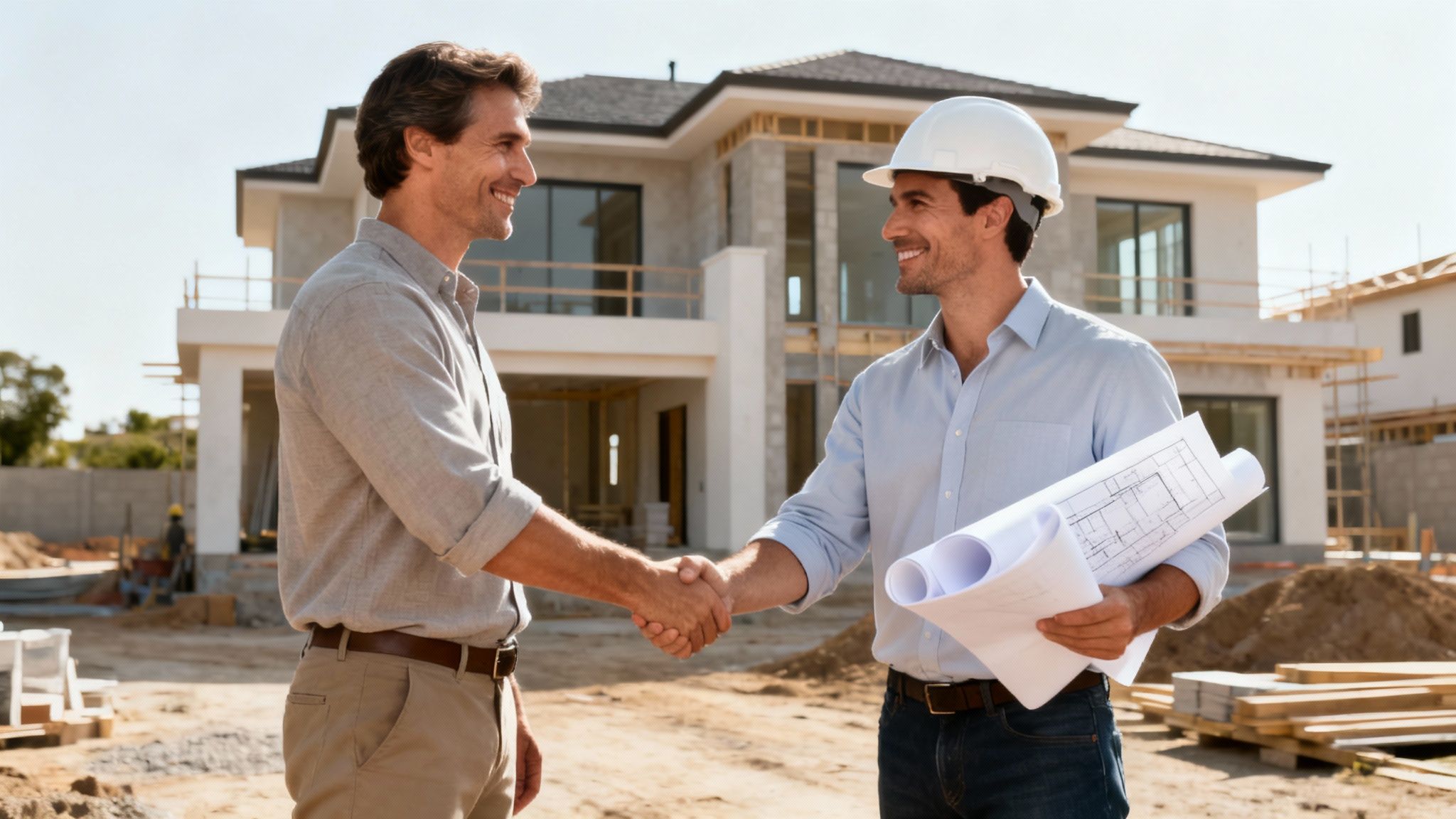
With your vision and budget sorted, you’ve arrived at the most crucial part of your journey: choosing the right builder. This single decision shapes everything that follows, from the daily experience on-site to the enduring quality of your finished home.
Melbourne has no shortage of builders, but the truly exceptional ones—the genuine luxury custom home builders Melbourne clients rave about—are set apart by more than just a slick portfolio. What really defines them is their process, their transparency, and the strength of the relationships they build.
Moving Beyond The Portfolio
A glossy gallery of stunning homes is a fantastic start, but it only tells you half the story. To properly vet a potential partner, you need to dig deeper into the substance of their business. This is about verifying the fundamentals that protect you and your investment.
Before you get carried away by beautiful designs, run through a practical checklist to confirm they’re legitimate and stable.
- Verify Licenses and Insurance: This one’s non-negotiable. Make sure they hold a current Domestic Builder Unlimited (DB-U) license with the Victorian Building Authority (VBA). You’ll also want to see copies of their Public Liability Insurance and Domestic Building Insurance (DBI), which is mandatory for any project over $16,000.
- Check Financial Stability: While you won’t see their full accounts, you can ask about their business history and the longevity of their team. A builder with deep, long-standing ties to trades and suppliers is a great sign of a stable, well-managed company.
- Review Their Process: Ask them to walk you through their project management system from start to finish. How do they communicate? What software do they use for updates and client approvals? A professional outfit will have a clear, structured process they can explain with ease.
The Power Of Real Conversations
Some of the most revealing insights you'll get won't come from the builder, but from the people who have already walked this path with them. A confident, high-quality builder will be more than happy to connect you with a few recent clients.
When you chat with these past clients, go beyond the simple "Were you happy?"
A builder's true character is revealed not when things go perfectly, but in how they communicate and solve problems when unexpected challenges arise. Speaking with past clients gives you a window into this crucial aspect of their service.
Get specific with your questions:
- How did the builder manage variations or changes during the build?
- Was the communication from their project manager clear, consistent, and proactive?
- How did the initial cost estimate stack up against the final budget?
- Were there any major delays? If so, how were they handled?
- How have they been with post-handover support for any minor touch-ups?
This kind of detailed feedback gives you a much richer picture of what it’s actually like to work with them. For a deeper dive, our guide on how to select a builder offers an even more comprehensive checklist.
Assessing Craftsmanship In Person
Photos can be flattering, but they don't always tell the whole truth. The only way to properly assess a builder’s commitment to quality is to see their work with your own eyes. This means visiting not just a completed home, but an active construction site too.
A walkthrough of a home completed 1-2 years ago shows you how the materials and craftsmanship have held up. Look closely at the details—the precision of the joinery, the alignment of tiles, the quality of the paint finish, and how seamlessly different materials meet.
Just as important is a visit to a live project. A busy site speaks volumes about a builder’s standards.
What To Look For On An Active Job Site
- Cleanliness and Organisation: A tidy, well-organised site is a strong sign of a professional, safety-conscious team that respects the project and your future home.
- Quality of Tradespeople: Take a look at the subcontractors. Do they seem skilled, professional, and engaged in their work? The best builders attract and keep the best trades in the city.
- Materials and Protection: Note the quality of the materials on-site. Are they stored correctly and protected from the weather? This shows a commitment to using everything in its best condition.
- Site Supervisor Engagement: Is the site supervisor present, knowledgeable, and actively managing what's happening? Their hands-on involvement is crucial for quality control.
Ultimately, choosing your builder is a decision that balances evidence, intuition, and trust. By doing this thorough due diligence, you shift from being impressed by a portfolio to being confident in a partner—one who has the proven expertise and integrity to bring your vision to life. This groundwork ensures your journey is built on a foundation of certainty from day one.
Navigating The Design And Approval Process
Getting a luxury custom home through Melbourne's council planning and approval maze is where a truly experienced builder earns their stripes. This part of the journey isn't about bricks and mortar; it’s about strategy, foresight, and a deep, nuanced understanding of local council intricacies. It’s the stage that can make or break a project timeline, and a builder’s expertise here is what shields you from incredibly frustrating and expensive delays.
The path from a beautiful set of architectural drawings to a stamped, approved building permit is lined with regulatory hurdles and a cast of consultants. While you’ll work closely with your architect or building designer to perfect the vision, it's your builder who really anchors the process. They're the ones coordinating the symphony of specialists—from structural engineers and soil testers to energy assessors—needed to tick every single box on a council’s checklist.
Understanding Melbourne Council Intricacies
Here's a truth about building in Melbourne: every council has its own personality and its own rulebook. What sails through planning in Boroondara might hit a wall in Stonnington or face a different set of questions in Bayside. A seasoned local builder knows these unwritten rules and anticipates the sticking points.
They’re already thinking about potential roadblocks related to:
- Heritage Overlays: These are a huge deal in suburbs like Kew, Albert Park, and Hawthorn. They put strict controls on everything from the look of your façade to the types of materials you can use. A builder with a portfolio full of homes in these areas knows exactly how to design a home that honours the past while delivering the best of modern luxury.
- Neighbourhood Character Guidelines: Many councils are fiercely protective of their local streetscape. This means your home's setbacks, roof pitch, and overall scale must be sympathetic to the surrounding properties. A good builder knows how to push the design envelope without pushing the council's buttons.
- Environmental Codes: The standards for energy efficiency, stormwater retention, and sustainable design are only getting stricter. Your builder needs to be completely across the latest requirements to ensure your plans are compliant from day one.
Navigating this red tape is an art. A builder who has spent years building strong relationships with local council planners and private certifiers can often smooth out the bumps, making the approval process far more predictable and saving you months of agonising uncertainty.
Maximising Potential On Challenging Blocks
Let's face it, finding a large, flat, easy-to-build-on block in Melbourne is becoming a rarity. Land prices have soared over the past decade, while the average block size has shrunk. This squeeze puts enormous pressure on designers and builders to get clever and extract value from every single square metre.
This is where a high-end luxury builder really shows their worth. They don't see a narrow or sloping site as a problem; they see it as a design challenge waiting for a brilliant solution.
Their expertise might translate into clever strategies like:
- Digging down to create basement levels for multi-car garages, state-of-the-art home cinemas, or stunning wine cellars.
- Designing around internal courtyards or light wells that flood the home with natural light, even on a tight site.
- Creating a seamless flow between open-plan living zones and beautifully landscaped outdoor areas, effectively blurring the lines between inside and out.
- Playing with vertical space, using soaring ceiling heights and clerestory windows to create a feeling of volume and airiness.
This kind of design intelligence turns site constraints into architectural opportunities, ensuring your finished home feels spacious, functional, and luxurious, no matter the footprint. The entire journey requires meticulous management, and it’s crucial to understand the sequence of events. To give you a clearer picture, we’ve put together a detailed guide on the complete building plan approval process.
Ultimately, a builder who can expertly pilot your project through the design and approval phase is more than just a contractor—they are your most important strategic partner. They provide the critical foresight to develop a design that not only captures your vision but is also buildable and approvable, setting the entire project up for success from the very start.
Making Sense of Contracts and Construction Stages
Once the creative energy of the design phase wraps up, you move into the practical world of contracts and construction. This is where the rubber really hits the road—where your vision starts taking physical shape. The bedrock of this entire process is a solid, transparent building contract. It’s more than just a piece of paper; it’s the formal agreement that protects everyone involved and lays out a clear roadmap for the build ahead.
For any high-end project in Melbourne, you’ll likely see a standard contract from either the Housing Industry Association (HIA) or Master Builders Victoria. These are comprehensive documents. They can look a bit daunting at first, but a great builder will sit down and walk you through every clause, making sure you’re completely comfortable before anything is signed.
Demystifying the Building Contract
A well-drafted contract does so much more than just lock in a price. It defines the full scope of work, sets clear expectations for communication, and outlines exactly how you’ll handle any surprises that pop up along the way. Think of it less as a restrictive legal document and more as a shared playbook for how you and your builder will work together.
Here are the key parts you absolutely need to get your head around:
- Payment Schedules: You’ll never be asked to pay for the entire home upfront. Instead, payments are tied to the completion of specific construction milestones, known as progress payments. This protects your cash flow and ensures the builder is paid as they deliver tangible results.
- Variations Clause: It’s almost a given that you'll want to make a change or upgrade something during the build. The variations clause details the formal process for this—how to request a change, how the cost is calculated and approved, and how it might affect the project timeline.
- Prime Cost and Provisional Sums: These are simply allowances for items you haven't finalised yet, like that specific Miele oven or the perfect slab of Calacatta marble you’re still sourcing. A Prime Cost (PC) item covers the supply cost of an item, while a Provisional Sum (PS) is an allowance for both supply and installation. It’s crucial these estimates are realistic to avoid budget blowouts down the track.
- Timeline and Extensions: The contract will nominate a completion date but will also include clauses for legitimate extensions. These cover things outside of anyone’s control, like weeks of torrential rain, unforeseen issues with the site, or council delays.
Your contract is the single source of truth for your entire project. Taking the time to review it thoroughly with your builder now, and asking questions about every little detail, is the best way to prevent misunderstandings and build a positive, collaborative relationship from day one.
Understanding the approvals timeline is just as vital. Getting from a beautiful set of architectural drawings to an actual building permit is a journey with multiple stages, and each has its own timeline.
Tracking Progress Through Key Construction Milestones
Once the contract is signed and the permits are approved, the real excitement begins. There’s nothing quite like watching your home rise from the ground. Knowing the sequence of events helps you appreciate the progress being made and ask the right questions at your site meetings.
While every custom home is different, the construction process follows a well-established order.
- Site Preparation and Base Stage: The journey kicks off with clearing the land, excavation, and laying all the in-ground plumbing and electrical conduits. This stage wraps up once the concrete slab is poured, which forms the literal foundation of your new home.
- Frame Stage: This is when the skeleton of your home goes up. You’ll see the wall frames and roof trusses erected, giving you the first real sense of the building's scale and the layout of the rooms. It’s a huge milestone.
- Lock-Up Stage: The home is made secure and weatherproof during this phase. External doors, windows, and the roof covering are all installed. At this point, the property can be "locked up," which protects the interior from the elements while work continues inside.
- Fixing Stage: Now, the internal personality starts to emerge. Plasterboard goes up, architraves and skirting boards are fitted, internal doors are hung, and all your beautiful cabinetry is put in place. The home really begins to feel like a collection of distinct, defined spaces.
- Completion and Handover: This is the final push where all the finishing touches are meticulously completed. Painting, tiling, plumbing and electrical fit-offs, and floor coverings are all finalised. After a thorough final inspection to ensure everything is perfect, you’ll do a final walkthrough and receive the keys to your magnificent new home.
Throughout this entire journey, open and regular communication with your project manager is absolutely key. A great builder will keep you in the loop with consistent updates, schedule regular site meetings, and be on hand to answer your questions. This collaborative spirit ensures the journey from contract to completion is not just smooth, but a genuinely enjoyable and exciting chapter in your life.
Your Custom Home Questions, Answered
Starting the journey of building a custom home is exciting, but it naturally comes with a lot of questions. That’s a good thing. Asking the right questions is the first step toward making brilliant decisions. We hear a lot of the same queries from our clients across Melbourne, so we’ve put together some straight-up answers to help you move forward with absolute confidence.
How Long Does It Take to Build a Custom Home in Melbourne?
This is usually the first thing people want to know, and the honest answer is: it really depends. A true luxury home isn't about speed; it's about getting every single detail right.
Realistically, you should plan for a timeline of 12 to 21 months from the very first design chat to the day we hand over the keys. For exceptionally complex designs or tricky sites, it can sometimes take a bit longer.
So, what influences this timeframe?
- Design Complexity: A multi-level home with a basement, a suspended pool, and intricate custom details will naturally take longer than a more straightforward, single-storey design.
- Council Approvals: This is often the biggest variable. Navigating planning permits, especially with a heritage overlay or tricky site constraints, can easily add months to the pre-construction phase. This is where partnering with experienced luxury custom home builders in Melbourne who know the local councils inside and out is a massive advantage.
- The Site Itself: Unearthing unexpected rock formations or dealing with a steep slope can extend the initial groundwork and foundation stages.
- Material Selections: If you’ve fallen in love with rare Italian marble or custom-made joinery from Europe, we need to factor in longer lead times to get it here and get it perfect.
What are the Main Factors That Drive Up the Cost?
While every home has a unique price tag, a few key elements consistently have the biggest say in the final budget. Knowing what these are from the start helps you make smart decisions on where to invest your money for the greatest impact.
The biggest cost drivers are almost always:
- Degree of Customisation: Think bespoke architectural features, curved walls, and complex structural engineering. These are more labour-intensive and require more specialised materials than standard designs.
- Quality of Finishes: This is where the budget can really shift. High-end choices like natural stone benchtops, imported Gaggenau appliances, solid European oak flooring, and designer tapware will of course have a different price point to more standard, high-quality alternatives.
- Site Complexity: A block that’s difficult to access or steeply sloped will mean higher costs for excavation, foundations, and scaffolding right from the get-go.
- Smart Home & Green Tech: Integrating home automation, solar power systems with battery storage, and high-performance, triple-glazed windows adds to the initial investment. The upside? They deliver long-term savings and a truly elevated living experience.
It’s so important to remember that a higher cost nearly always reflects a higher level of quality and durability. Investing in superior craftsmanship and materials from day one protects your investment for the future and ensures your home is built to last.
How Can I Make a Smaller Home Feel Luxurious?
Luxury isn't about sheer size—it’s about the quality of the space, the feel of the materials, and the intelligence of the design. You can create an unbelievably luxurious home on a more compact footprint by focusing on what truly matters.
It’s all about creating a feeling of light and volume. Think high ceilings and expansive, floor-to-ceiling windows. Prioritise exquisite finishes where they’ll have the most daily impact, like that stunning natural stone in the kitchen or the beautiful timber flooring underfoot.
And clever, custom-designed storage is non-negotiable. It’s the secret to maintaining that clean, uncluttered aesthetic that is the very essence of luxury living. A well-designed smaller home with premium materials and thoughtful flow will always feel more special than a bigger house built with a standard layout and basic finishes.
Ready to turn your vision into a stunning reality, without all the stress and uncertainty? The team at Envy Abode offers a complete end-to-end design and build service, managing every last detail with precision and care.
Let’s start the conversation about your dream home today. https://envyabode.com.au