Malvern EastProject Repton , 2025
“The key thing we were looking for was the consistency in the pricing that we received, having the right team to be able to problem solve when an issue arose, they did it in a very calm and measured manner. They're a great team and we worked so well together, had we done the design with Envy it would have saved us 6 months minimum”
Luxury Home Building Plans and Design

When you hear the term "luxury home building plans," it's easy to picture a simple set of architectural drawings. But honestly, they're so much more than that. Think of them as the blueprint for a bespoke lifestyle—a detailed script that maps out every single moment of your future experience within the home. This is where a patch of land begins its transformation into a personal sanctuary, one that truly reflects who you are, what you aspire to, and the rhythm of your daily life.
The Blueprint for a Bespoke Lifestyle
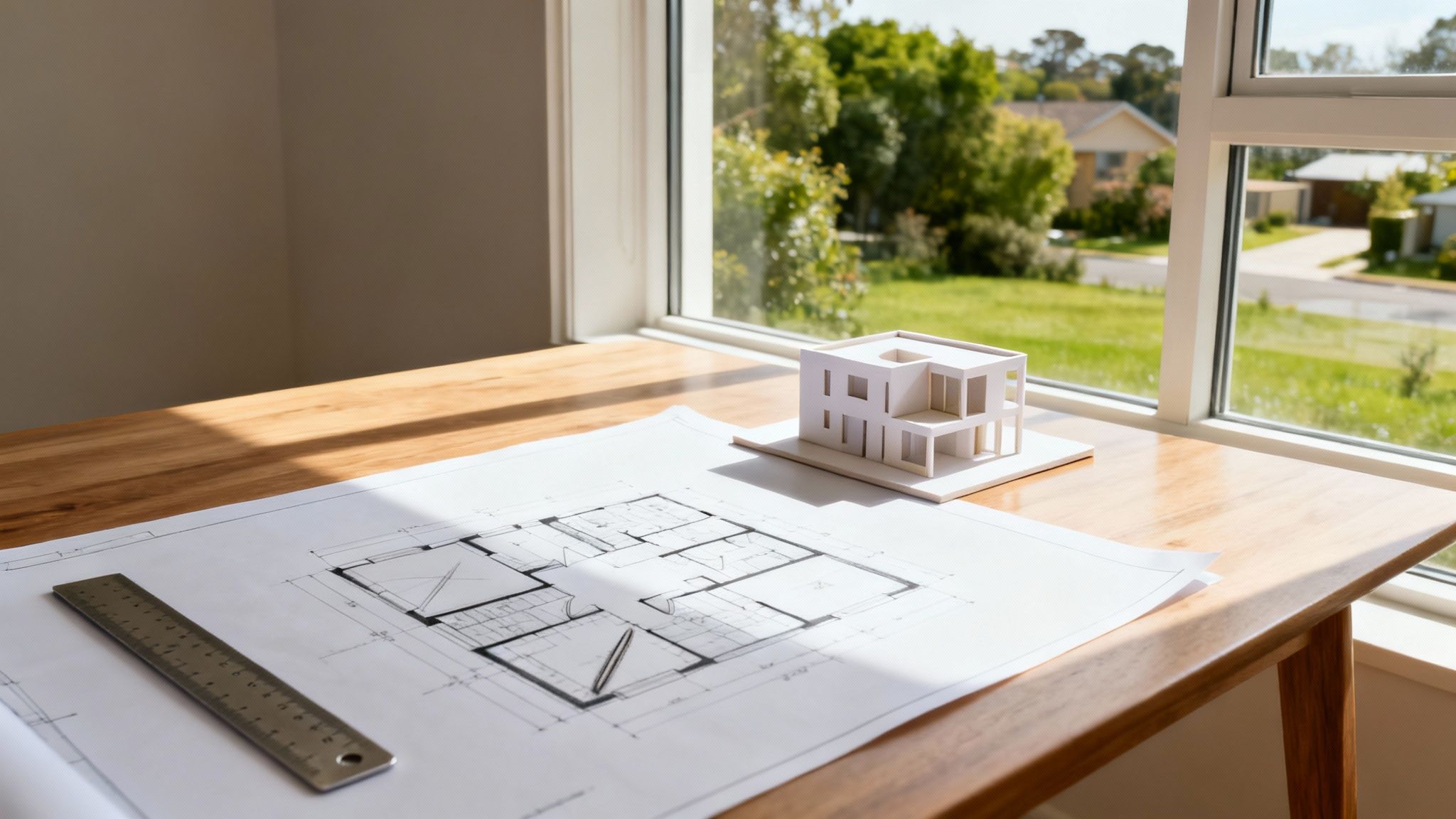
So, what really sets a luxury plan apart from a standard one? It’s like the difference between a car off the production line and a hand-built automobile. Both will get you from A to B, but one is meticulously crafted for a unique experience, tailored to the driver's exact specifications. A luxury home plan works on the very same principle.
Every line on the page is a deliberate, thoughtful choice. We're not just placing walls and doors; we're choreographing movement, curating emotion, and optimising functionality. This deep level of detail ensures the home is a perfect fit for its owners from the moment they first step inside.
More Than Just a Floor Plan
A true luxury building plan is a holistic document, bringing together multiple disciplines into a single, cohesive vision. It’s the meeting point where building design, interior design, and landscape artistry converge right from day one. This unified approach is crucial—it prevents that disjointed feeling you sometimes get when these elements are tacked on as afterthoughts.
The plan dictates everything, including:
- Spatial Flow: How you and your guests move seamlessly from a grand entrance to the more private, quiet retreats.
- Natural Light: The precise orientation of windows to capture the beautiful morning sun in suburbs like Brighton or that soft afternoon glow in Malvern.
- Lifestyle Integration: Carving out spaces that support your passions, whether that’s a dedicated home gym, a sunlit art studio, or an entertainer’s kitchen that flows effortlessly onto an alfresco dining area.
- Personal Identity: Making sure the finished home is a genuine, physical representation of your family’s values and unique style.
A bespoke home plan doesn't just show you where the rooms are; it tells the story of how you will live in them. It anticipates your needs and creates an environment that both supports and elevates your daily life.
Crafting Your Personal Sanctuary
Ultimately, the goal is to create your own personal sanctuary. Here in Melbourne’s established suburbs like Camberwell, Caulfield, and Glen Iris, this often means designing a home that feels both part of the community and like a private escape. The plans have to strike that perfect balance between street presence and seclusion, creating a true haven from the outside world.
From the very first chat to the final construction drawings, the entire process is a collaborative journey. Exploring the possibilities of a custom new home design is the first exciting step toward building a residence that isn’t just constructed, but thoughtfully composed just for you. This meticulous planning is the rock-solid foundation upon which an exceptional home is built, ensuring every last detail contributes to a life of comfort, elegance, and purpose.
The Pillars of an Elite Home Plan
While the big-picture vision for a home is thrilling, the real magic—and the mark of a truly high-end project—is found in the details of the building plan. These are the foundational pillars that elevate a home from being merely functional to genuinely exceptional. Think of them as the DNA of your home, a blueprint that guarantees every critical aspect is considered with meticulous care.
These pillars don't exist in isolation; they work together to create a complete, considered design. Each one adds a crucial layer to the living experience, from the home’s first impression on the street down to the invisible systems that keep it comfortable and efficient day in, day out.
Let’s break down the five non-negotiable elements that define an elite home plan.
Building Design Identity and Structural Integrity
First up is the home's building design identity. This is its personality, its character. It's the visual statement it makes from the kerb and the feeling it gives you when you step inside. In Melbourne’s finest suburbs, this could mean the classic elegance of French Provincial architecture you might see in Camberwell, or the bold, clean lines of Contemporary Minimalism that feel right at home in Brighton.
The plan needs to nail this style with absolute clarity, ensuring every detail—from the pitch of the roof to the proportion of the windows—is authentic and coherent. But beauty is nothing without strength. Beneath this aesthetic layer lies structural integrity. The plan must outline an engineering approach that is not only sound and built to last, but also supports the architectural vision, allowing for those breathtaking open spaces or dramatic cantilevers without a hint of compromise.
Intelligent Space and Flow
A luxury home plan is a masterclass in spatial choreography. It's about so much more than just room dimensions; it's about how you move through the home and how each space makes you feel. A great plan creates intuitive pathways that guide you effortlessly from one area to the next. It just works.
This comes down to expertly zoning different parts of the house for their purpose.
- Social Zones: Open-plan kitchens, living areas, and alfresco spaces are thoughtfully designed to encourage connection and make entertaining a breeze.
- Private Retreats: Bedrooms, studies, and quiet nooks are carefully positioned away from the main hubs to offer genuine seclusion and tranquillity.
- Seamless Transitions: A key marker of luxury design is the fluid connection between inside and out. We blur the lines with expansive glass doors, integrated courtyards, and continuous flooring that draws the eye and the foot outdoors.
A truly well-designed home anticipates your next move. The flow should feel so natural that you never have to think about it, creating an environment of pure, subconscious comfort.
Signature Materials and Finishes
Materials are the vocabulary of architectural design—they speak volumes about quality, permanence, and style. A high-end building plan doesn't just say "stone" or "timber"; it provides a detailed specification for signature materials sourced for their unique beauty, durability, and timeless appeal.
For instance, the plans for a home we’re designing in Caulfield might specify imported Italian marble for the kitchen benchtops or sustainably sourced Blackbutt timber for the flooring. Every finish, from the precise paint colours to the texture of the wall coverings, is chosen to build a cohesive and sophisticated palette. This level of detail is crucial to ensure the finished home perfectly matches the vision.
Integrated Home Systems
Look beyond the stunning surfaces, and you'll find a luxury home is powered by a network of sophisticated, integrated systems. This is the home's central nervous system, quietly managing comfort, safety, and convenience. A comprehensive luxury home building plan details these systems with precision, ensuring they are woven seamlessly into the structure from day one.
This covers a lot of ground:
- Advanced Climate Control: Multi-zoned heating, ventilation, and air conditioning (HVAC) systems that maintain the perfect temperature in different parts of the home, often managed with smart thermostats and air purification.
- Sophisticated Lighting Plans: Layered lighting schemes that include ambient, task, and accent lighting, all controllable by smart systems to create different moods at the touch of a button.
- High-Performance Plumbing: Plans that account for high-pressure water systems, instantaneous hot water, and premium water-saving fixtures throughout the home.
Future-Proof Technology and Sustainability
Finally, a truly elite plan doesn’t just build for today; it prepares the home for tomorrow. This means integrating smart home automation and sustainable design principles right into the architectural DNA. It’s about creating a home that is not only luxurious but also intelligent, efficient, and responsible for years to come.
This pillar focuses on the infrastructure for full home automation—controlling lights, security, blinds, and entertainment from a single, intuitive interface. It also prioritises energy efficiency through high-performance insulation, double or triple-glazed windows, and designing for the inclusion of solar energy and battery storage. In suburbs like Glen Iris and Malvern, where lifestyle and long-term value are paramount, these future-focused elements are no longer optional extras; they are fundamental.
Here's a quick summary of how these core components come together in a luxury building plan.
Core Components of a Luxury Building Plan
Element | Focus Area | Desired Outcome |
Architectural Identity | Cohesive style, aesthetics, and structural engineering. | A visually stunning home with a strong, authentic character and uncompromising structural integrity. |
Intelligent Space & Flow | Room zoning, movement pathways, and indoor-outdoor connections. | An intuitive, comfortable living experience where movement feels effortless and natural. |
Signature Materials | Curation of high-quality, durable, and beautiful finishes. | A sophisticated and timeless interior/exterior built with a palette of premium, specified materials. |
Integrated Systems | HVAC, lighting, plumbing, and electrical infrastructure. | A seamless, high-performance environment where comfort, convenience, and safety are automated. |
Future-Proofing | Smart home automation, energy efficiency, and sustainable tech. | An intelligent, adaptable, and responsible home that retains its value and relevance for decades. |
Each of these pillars is essential. When brought together by a skilled design and build team, they form the blueprint for a home that isn't just built, but masterfully crafted for an exceptional life.
Navigating Melbourne's Design and Approval Maze
Bringing a bold vision for a new home to life is an intricate dance of creativity, technical precision, and local know-how. A stunning concept is just the starting point; the real journey is guiding your luxury home building plans through a structured process that ensures every detail is perfect before a single shovel breaks ground.
This process isn't a maze to get lost in—it's a clear roadmap. Think of it as a series of deliberate stages, each building upon the last, taking your dream from initial sketches to fully detailed construction documents ready for Melbourne's best builders.
For homeowners in exclusive suburbs like Glen Iris or Camberwell, understanding these steps is the key to a smooth, predictable, and ultimately successful project.
The Design and Documentation Journey
The path from a simple idea to a permit-ready plan follows a well-defined sequence. It's a lot like refining a sculpture: you start with a rough block and progressively add finer and finer detail until the masterpiece is revealed. The journey involves several key checkpoints.
- Initial Consultation and Site Analysis: This is where we simply listen. We dive deep into your vision, lifestyle needs, and aesthetic tastes. At the same time, we get to know your block of land, analysing its orientation, topography, and existing vegetation to uncover both its opportunities and its constraints.
- Schematic Design: Now, the first visual concepts start to take shape. We develop preliminary floor plans and 3D sketches that translate our conversations into a tangible architectural form. It’s a highly collaborative phase focused on getting the big-picture layout and flow feeling just right.
- Design Development: Once we've nailed the core concept, we start refining it. This stage is all about selecting materials, finalising the placement of windows and doors, and really developing the home's unique character. We produce more detailed drawings that show exactly how the home will look and feel, inside and out.
- Construction Documentation: This is the most intensive phase, where we create the highly detailed, technical blueprints. These documents specify every single component of the build—from structural engineering details to electrical layouts and plumbing schematics—giving the council and your construction team absolute clarity.
Demystifying Council Approvals
With a complete set of documents in hand, the next hurdle is securing the necessary council approvals. In Melbourne, this is typically a two-part process, especially in areas with specific local planning policies like Brighton or Malvern.
It's crucial to understand the difference between a planning permit and a building permit. One approves the concept of what you want to build, while the other approves the method of how you'll build it safely and to code.
Navigating councils such as Boroondara (for Camberwell) or Bayside (for Brighton) requires deep local knowledge. Many properties in these suburbs fall under special regulations that can create major roadblocks if you don't know how to handle them.
Common challenges we see include:
- Heritage Overlays: These are rules designed to protect the historical character of a neighbourhood. Your plans must show that the new design respects and complements the existing heritage streetscape.
- Neighbourhood Character Guidelines: Councils have specific rules about building height, setbacks from property lines, and overall visual bulk to ensure new homes fit harmoniously within the local area.
- Significant Landscape Overlays: These protect important trees and vegetation, meaning your design often needs to work around and preserve the natural environment.
An experienced team anticipates these challenges from day one, integrating solutions directly into the design to avoid costly delays and council rejections. For a more detailed look into this critical phase, you can explore our guide to the building plan approval process. This kind of expert guidance ensures a much smoother path to council approval, turning potential roadblocks into successfully resolved details in your final plans.
Decoding Costs and Timelines for Your Luxury Build
Bringing your dream home from a set of luxury home building plans to a tangible reality comes down to two things: time and money. While it's tempting to look for a straightforward answer, the truth is that custom home projects in Melbourne's premium suburbs play by a different set of rules than standard builds.
Getting a realistic grasp of the commitments from day one is the secret to a confident and, dare I say, enjoyable building journey. When you understand what drives the budget and schedule, abstract numbers suddenly transform into a clear, achievable project plan.
Beyond the Square Metre Rate
One of the first questions we always get is about the cost per square metre. It's a useful benchmark for high-volume builds, but for a luxury custom home? It can be seriously misleading. It’s like trying to price a bespoke suit based only on the cost of the fabric—it completely ignores the artistry, the custom fit, and the hundreds of hours of skilled craftsmanship involved.
A simple square metre rate just can't capture the unique complexities of your vision. To get a true feel for your investment, we need to look at the factors that genuinely shape the final cost. We actually take a much closer look at this in our article on understanding building costs per sq metre.
Key Factors Driving Your Budget
There are a few core elements that will have a major say in the overall investment for your new home, whether it’s in Malvern or Camberwell. A transparent budget accounts for all of these right from the beginning.
- Site Complexity: Is your block sloped? Does it have tricky soil conditions or tight access? These site-specific challenges can significantly bump up the costs for preparation and foundations.
- Structural Choices: The building design is a massive cost driver. Things like huge open-plan spaces, dramatic cantilevers, or sweeping glass walls require more sophisticated—and more expensive—engineering.
- Calibre of Finishes: This is where luxury truly shows. The quality of materials you choose—from imported Italian stone and custom-made joinery to high-end European appliances—is a primary differentiator in luxury construction.
- Professional Fees: This bucket includes all the costs for architectural design, engineering, interior design, council applications, and project management. Think of these fees as an investment in expertise that saves you from costly missteps later on.
The appetite for these high-end features is definitely on the rise. The Australian luxury residential real estate market is projected to climb to USD 40.4 billion by 2034, fuelled by a growing number of people seeking homes that seamlessly integrate smart technology and sustainable design.
Mapping Out a Realistic Timeline
Just like the budget, the timeline for a luxury build is anything but standard. The main variable is customisation; every unique detail adds time to the design, approval, and construction phases. A well-managed project, however, follows a clear, logical sequence.
This graphic gives you a high-level look at the typical process for bringing a luxury home to life in Melbourne.
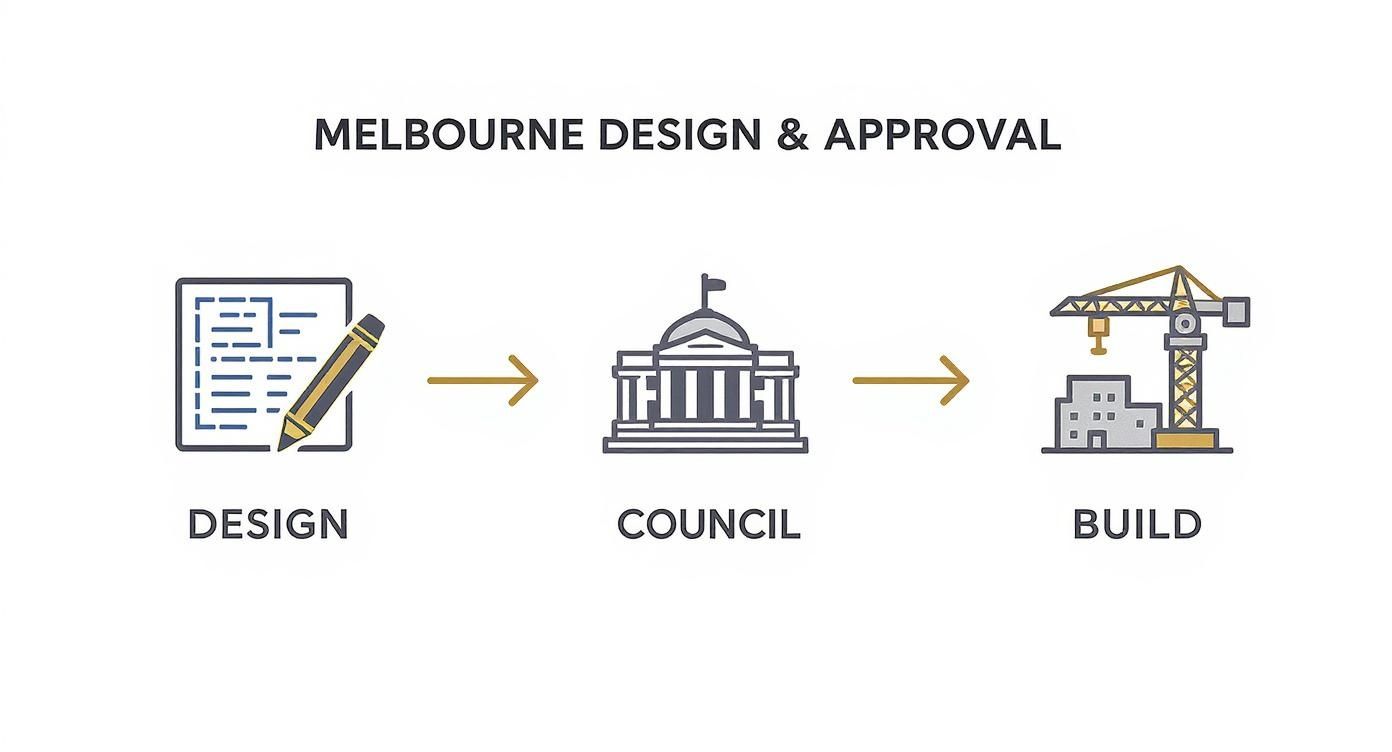
The journey from design to council approval and finally to construction is a multi-stage process where each step logically follows the last.
Understanding this process is key to setting achievable expectations. Patience during the early design and approval stages pays dividends with a smoother, more efficient construction phase.
A typical timeline for a custom home in a suburb like Brighton or Glen Iris can be broken down like this:
- Design and Documentation (4–8 months): This phase covers everything from the first spark of an idea to detailed construction drawings. The timeline here really depends on the complexity of the design and how decisive you are with your choices.
- Council Approvals (6–12+ months): As we mentioned, navigating council requirements can be a long game. Projects with extra layers of complexity, like heritage overlays, often take longer.
- Construction (12–24 months): The build itself is usually the longest phase. The timeframe is shaped by the size of the home, site conditions, the availability of materials, and the intricacy of the finishes.
By understanding these dynamics from the outset, you can approach your build with clarity and confidence, ensuring your luxury home building plans result in a home that is absolutely worth the investment of your time and resources.
Elevating Your Home with Custom Extensions
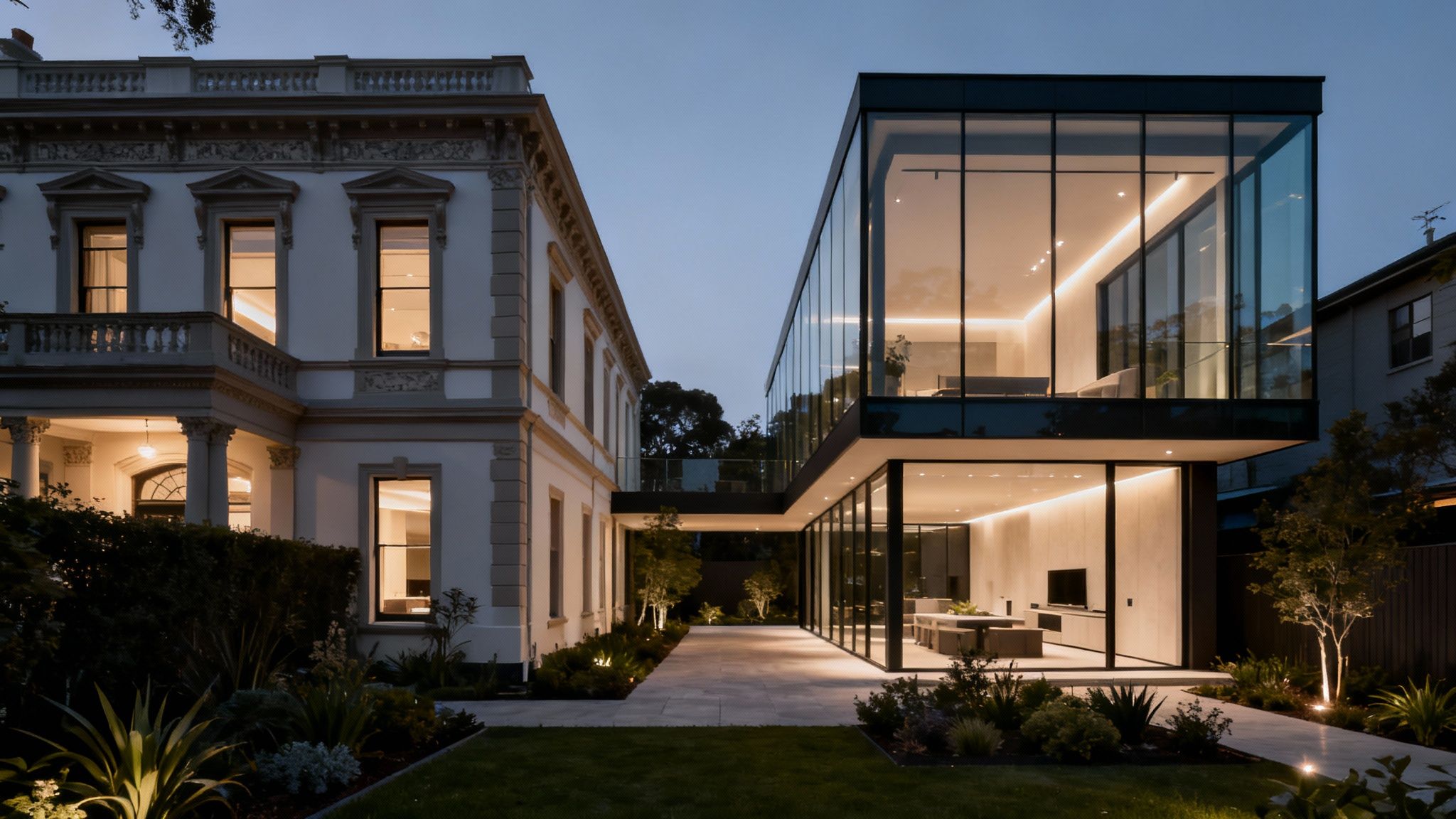
For so many homeowners in Melbourne’s beautiful, established suburbs, the dream isn’t about a blank slate. It’s about thoughtfully reimagining the home they already love. This is where luxury home building plans take a different turn, moving from brand-new builds to significant, artful home extensions.
In suburbs like Malvern and Camberwell, where period homes have an irreplaceable character, the goal is evolution, not erasure. The real challenge—and the art of it—is seamlessly blending modern living with the home's original soul. The result? A space that feels brand new, yet deeply familiar.
An extension is so much more than just tacking on extra rooms. It’s a chance to completely redefine how your home lives and breathes, unlocking its hidden potential and introducing a level of style and comfort that’s perfectly in sync with your life today.
Honouring Heritage While Introducing Modernity
One of the most delicate jobs in designing an extension for a period home is striking that perfect balance between old and new. A truly successful project feels like a natural continuation of the home’s story, not an awkward afterthought. And it all comes down to the design plans.
This means we meticulously study your home’s existing character—its rooflines, the proportions of its windows, the original materials used. The extension can then either complement these features with a sympathetic design or create a deliberate, yet respectful, contemporary contrast. Just imagine a classic Edwardian home in Glen Iris opening up to a stunning, glass-walled living space that perfectly frames the garden.
The aim is to create a beautiful dialogue between different eras.
- Material Continuity: Using similar brickwork or timber details to create a visual link between the new structure and the old.
- Design Contrast: Introducing modern materials like steel and glass to clearly define the new addition while still honouring the original home’s form.
- Seamless Flow: Designing interior transitions that feel completely intuitive, so moving from the original part of the house to the new extension feels effortless.
A thoughtfully designed extension doesn’t just add space; it enhances the entire property. By honouring the past while embracing the future, it creates a home with a rich, layered story.
Deciding Between an Extension and a Full Rebuild
So, how do you know if an extension is the right path for you? It's a huge decision that really hinges on a few key factors. Homeowners in areas like Brighton and Caulfield often face this choice, weighing the desire for a completely modern home against the value of their existing property and unbeatable location.
Getting clear on your priorities is the best way to move forward. Answering these questions will help guide your decision, making sure the final outcome aligns perfectly with your budget, lifestyle, and long-term vision.
Checklist: Extension vs. Rebuild
To help you decide, let's break it down:
- Original Character: Does your home have unique heritage features worth preserving? If the original charm is a major reason you love it, an extension is almost always the better choice. A rebuild would mean losing that history forever.
- Project Budget: Generally speaking, a major extension will have a lower total cost than a complete knockdown and rebuild. That said, complex extensions on older homes can sometimes uncover surprises, so having a healthy contingency fund is vital.
- Level of Disruption: While any construction is disruptive, you can often stay in your home during parts of an extension project. A full rebuild means moving out for the entire duration, which can easily be 12 to 24 months or more.
- Ultimate Goals: Are you looking to add a specific space, like a beautiful master suite or a larger, more functional kitchen? Or do you feel the entire layout of your home is fundamentally flawed? If your list of "must-haves" is extensive, a rebuild might actually be more efficient.
Ultimately, a meticulously planned extension can transform your home’s usability, aesthetic appeal, and market value. To see how we put these principles into practice, you can learn more about our approach to creating exceptional home extensions in Melbourne. It’s the perfect showcase of how the right luxury home building plans can elevate your existing property into the home you’ve always dreamed of.
Your Questions Answered: Luxury Home Plans
Stepping into the world of bespoke home building is exciting, but it naturally brings up a few questions. Getting your head around the key details is the first step to turning that grand vision into a real, tangible home. Here, we'll give you clear, straightforward answers to the queries we hear most often about luxury home building plans, so you can move forward with confidence.
Think of this as your go-to guide for the practical side of things. We’re covering the big topics—cost, who does what, and council timelines—to give you the solid foundation you need to get your project off the ground.
How Much Do Luxury Home Building Plans Cost in Melbourne?
This is usually the first question on everyone's mind, and for good reason. The plans themselves—which cover every architectural detail, engineering specification, and specialist report—are a serious investment in getting things right from day one. As a rule of thumb, you can expect these comprehensive documents to make up 5% to 15% of your home's total construction cost.
For a multi-million dollar build in a premier suburb like Brighton or Malvern, that means the cost for the plans alone could range anywhere from $50,000 to well over $200,000. It’s crucial to see this not just as a fee, but as an investment in the final outcome.
This upfront investment funds the incredible level of detail needed to ensure a flawless build and a smooth ride through council approvals. Honestly, investing in high-quality, thorough plans is the single best way to avoid expensive mistakes and variations down the track. It saves a lot of money and headaches in the long run.
What Is the Difference Between an Building Designer and a Design-Build Firm?
Getting this distinction right is key to choosing the perfect partner for your build. Traditionally, an building designer is your design specialist. They create the beautiful drawings, and once they're done, you take those plans and shop them around to different builders to get quotes. It means you're managing two separate relationships and hoping they communicate well.
A luxury design-build firm, like Envy Abode, brings everything under one roof. We integrate the design, approvals, and construction into a single, seamless service. You get one point of contact and total accountability from the first sketch right through to handover day.
This unified approach just works better. Here's why:
- No More Miscommunication: You have one team to talk to. This completely cuts out the "he said, she said" that can happen between separate design and construction companies.
- Real Budget Control: With the builder involved from the very beginning, we can give you real-time cost feedback as the design develops, making sure the plans and your budget stay perfectly aligned.
- Faster Timelines: Because we can overlap the design and pre-construction stages, we can often shorten the overall project timeline.
- The Vision is Guaranteed: The same team that designed your home is the team that builds it. This ensures every detail of the original vision is brought to life exactly as intended, without compromise.
How Long Does Council Approval Take in Areas Like Caulfield?
When it comes to council approvals in Melbourne’s most sought-after suburbs, patience is definitely a virtue. The timeline can change a lot depending on how complex your luxury home building plans are and which council you’re dealing with—like Glen Eira for Caulfield or Boroondara for Camberwell and Glen Iris.
For a fairly straightforward project, you could be looking at 6 to 9 months to get both your planning and building permits sorted. That's the best-case scenario.
However, many luxury builds come with unique challenges. If your design has to navigate heritage overlays, deal with significant trees, or if it runs into neighbourhood objections, the approval process could stretch out to between 12 and 18 months. This is where having local experts in your corner becomes invaluable. An experienced design-build firm with a deep understanding of local council rules is essential for getting through this process efficiently. We know how to anticipate the hurdles and put together a rock-solid application that minimises delays. That local knowledge can make all the difference.
Are you ready to transform your vision into an designer masterpiece? The journey to your dream home begins with a conversation. The team at Envy Abode specialises in creating bespoke luxury homes, seamless extensions, and transformative renovations across Melbourne's most desirable suburbs. We integrate design and construction to provide a flawless, stress-free experience from the first sketch to the final touch. Discover the difference that a unified, expert-led approach can make by exploring our services at https://envyabode.com.au.