Malvern EastProject Repton , 2025
“The key thing we were looking for was the consistency in the pricing that we received, having the right team to be able to problem solve when an issue arose, they did it in a very calm and measured manner. They're a great team and we worked so well together, had we done the design with Envy it would have saved us 6 months minimum”
A Guide to Passive Home Designs in Australia

So, what exactly is a Passive Home design? It’s not an architectural style, but a rigorous, science-based standard for creating homes that are incredibly energy-efficient, comfortable, and healthy.
The best way to think of it is like a high-performance thermos. It’s meticulously designed to maintain a stable internal temperature all year round with minimal energy needed. This approach gives you a home that’s not just sustainable but also delivers a far superior living experience.
Unlocking a New Standard of Living
At its core, a Passive Home is a building that stays comfortable with almost no active heating or cooling. Forget relying on power-hungry air conditioners and heaters. Instead, it uses natural elements and incredibly clever construction to regulate its own internal climate.
This isn't just a vague green concept; it’s a specific, measurable performance standard. The goal is to create a nearly airtight building "envelope" that works with the environment, not against it.
This level of performance is achieved by making five core principles work in perfect harmony. When combined, they dramatically slash energy consumption, creating a home that’s quiet, free from annoying draughts, and constantly filled with fresh, filtered air.
The Five Pillars of Passive Home Design
To really understand what makes these homes so special, you need to know about the five foundational principles. These aren't just suggestions; they're the non-negotiable building blocks that work together to achieve the Passive House standard.
Principle | Primary Goal | Benefit for Homeowners |
Superior Insulation | Create a continuous thermal barrier around the home's exterior. | Maintains a stable indoor temperature, dramatically reducing heat loss in winter and heat gain in summer. |
High-Performance Windows | Install triple-glazed (or high-spec double-glazed) windows with insulated frames. | Prevents temperature transfer, eliminates condensation, and enhances acoustic comfort by blocking outside noise. |
Airtight Building Envelope | Seal all joints and gaps in the building's outer shell to prevent air leakage. | Stops draughts, improves energy efficiency, and prevents moisture from getting into the building structure. |
Thermal Bridge-Free Design | Eliminate any elements that conduct heat through the building envelope. | Ensures the insulation layer is unbroken, preventing cold spots and potential mould growth. |
Mechanical Ventilation with Heat Recovery | Use a system (MVHR) that continuously supplies fresh, filtered air while recovering heat. | Provides exceptional indoor air quality, removes pollutants, and recovers up to 90% of the heat from exhaust air. |
When you see them laid out like this, it’s clear how each pillar supports the others to create a building that performs on a whole other level.
The Rise of High-Performance Homes
Across Australia, the demand for smarter, more resilient housing is exploding. Homeowners are looking for more than just shelter; they want sanctuaries that promote health, slash running costs, and offer genuine comfort through our increasingly extreme weather.
The adoption of Passive House designs reflects this shift. We've seen a dramatic surge in Australia, skyrocketing from just 75 certified projects in 2022 to an expected 350 by 2025—that’s a nearly fivefold increase.
This incredible growth is being driven by a growing awareness of the benefits, including needing up to 90% less energy for heating and cooling compared to a standard new build.
A passive home fundamentally redefines comfort. It's about creating a stable, healthy indoor environment that requires very little intervention, giving you a consistently pleasant space regardless of the weather outside.
Tailored for the Australian Climate
While the five principles of passive design are universal, how they're applied is anything but. Everything has to be adapted to the local climate.
Here in a place like Camberwell, that means designing a home that can repel the intense summer sun while capturing and retaining precious warmth during Melbourne’s cool winters. This is where expert customisation becomes non-negotiable. If you're curious about how these principles are put into practice, you might be interested in our deep dive into passive house designs.
The expert design team at Envy Abode can customise your passive home design to truly become a masterpiece, translating these rigorous scientific standards into luxurious, liveable spaces that reflect your personal style. It’s all about making sure the home not only performs perfectly but also feels uniquely yours, blending high-efficiency building science with bespoke architectural beauty.
The Five Core Principles Explained
Passive home design rests on five key principles that work together in perfect harmony. Think of them like a finely tuned orchestra—each element has a vital part to play, but it’s their combined performance that creates something truly special: a home that’s incredibly comfortable, healthy, and energy-efficient. It’s all about a scientific approach to building, focusing on a superior ‘building envelope’—the physical barrier between your comfortable indoor space and the world outside.
These aren’t just separate features you can pick and choose from; they are an integrated system engineered for peak performance. When expertly combined, they form the DNA of a passive home, ensuring it runs on minimal energy while delivering maximum comfort.
Let's unpack each of these core components.
Superior Insulation
The first and most important principle is a continuous blanket of high-quality insulation. Picture wrapping your home in a perfectly fitted, high-performance jacket that shields it from the elements. This insulation creates an unbroken thermal barrier around the entire home—the walls, the roof, and even the floor slab.
This isn’t just about stuffing more insulation in; it’s about creating a continuous layer free from gaps or weak points. This simple concept is what keeps the blistering heat out during a scorching Australian summer and traps precious warmth inside on a cold Melbourne winter's night. The result is a home with a remarkably stable indoor temperature, no matter what’s happening outside.
The following infographic shows how these core principles lead to key benefits like enhanced energy efficiency, comfort, and health.
As you can see, these principles aren’t just technical boxes to tick. They are the direct pathways to achieving a home that truly excels in both performance and liveability.
High-Performance Windows
In a standard home, windows are often the weakest link in your thermal defence, bleeding heat in winter and letting it pour in during summer. Passive home design tackles this head-on with high-performance windows, typically triple-glazed units set in insulated frames. These aren’t your average windows; they’re engineered to a much higher standard.
They feature special low-emissivity (Low-E) coatings that cleverly reflect heat, keeping it outside in summer and inside during winter. This technology, paired with well-insulated frames, stops temperature transfer in its tracks. Cold spots and annoying condensation near windows become a thing of the past. As a bonus, these advanced windows also provide fantastic acoustic insulation, creating a peaceful and quiet sanctuary inside.
Airtight Construction
A truly efficient home can't have leaks. The third principle is all about achieving an exceptionally airtight building envelope, which stops uncontrolled airflow between the inside and the outside. It’s a bit like a thermos—if the lid is loose, its contents won’t stay hot or cold for very long.
Meticulous sealing of every joint, seam, and penetration—from window frames to plumbing pipes—ensures that draughts are completely eliminated. This airtightness is crucial for energy efficiency and works hand-in-hand with the ventilation system to control indoor air quality.
Thermal Bridge-Free Design
Ever held a hot cup of tea and felt the heat travel up the metal spoon? That’s a thermal bridge—a shortcut for heat to bypass the insulation. In construction, these weak spots happen at corners, junctions, and where structural elements cut through the insulation layer. Passive home design is meticulously planned to get rid of these bridges.
By making sure the insulation layer is completely continuous and unbroken, we stop cold spots from forming on interior surfaces. This not only boosts energy efficiency but also makes the home feel more comfortable and prevents moisture build-up that can lead to mould. While it’s a cornerstone of Passive House certification, you can explore the fundamentals of harnessing the sun's energy in our article about what is passive solar design.
Mechanical Ventilation with Heat Recovery
Because a passive home is so airtight, it needs a dedicated system to bring in fresh, clean air. This is where the Mechanical Ventilation with Heat Recovery (MVHR) system comes in. It acts as the lungs of the home, constantly extracting stale, moist air from places like kitchens and bathrooms while supplying fresh, filtered air to living areas.
The "heat recovery" part is where the real magic happens. As the stale air is pushed out, it passes through a heat exchanger, transferring up to 90% of its warmth to the incoming fresh air. So, in winter, the fresh air is pre-warmed before it even enters your home. In summer, the opposite happens, and it’s pre-cooled. All this happens without wasting energy. This constant supply of filtered air creates a much healthier indoor environment, free from pollutants, dust, and allergens.
Benefits of a Passive Home in Australia
While the engineering behind passive home designs is impressive, the real story is about the remarkable lifestyle upgrades they offer, especially for those of us living in Australia’s diverse and often demanding climate. The advantages go far beyond simply lowering energy bills; they create a holistic living experience that elevates daily comfort, health, and peace of mind.
Think of it as an investment in a superior way of living.
Imagine a home that remains a comfortable sanctuary all year round. No more huddling around a heater in winter or desperately seeking relief from a noisy air conditioner during a sweltering summer heatwave. That’s the simple, beautiful reality of passive living.
Unmatched Thermal Comfort
The first thing you’ll notice is the incredible consistency of the indoor temperature. It’s a game-changer. Thanks to superior insulation, an airtight building envelope, and high-performance windows, a passive home does away with the draughts and cold spots that plague conventional houses.
This means you can enjoy every corner of your home, from the centre of the living room to the space right beside the windows, without feeling those uncomfortable temperature shifts. It’s a subtle luxury that makes a world of difference to your daily life.
Superior Indoor Air Quality
We’re all becoming more aware of the importance of clean air, especially during bushfire season or on high-pollen days. A passive home tackles this head-on with its Mechanical Ventilation with Heat Recovery (MVHR) system.
This clever system works quietly in the background, 24/7, to deliver a continuous supply of fresh, filtered air while extracting stale, moist air. It’s incredibly effective at removing:
- Pollutants and Allergens: Dust, pollen, and smoke particles are captured before they ever enter your living spaces.
- Excess Moisture: This prevents the build-up of humidity that can lead to mould and mildew issues.
- Volatile Organic Compounds (VOCs): Toxins from furniture, paints, and cleaning products are constantly flushed out.
The result is a healthy indoor environment that can bring significant relief to anyone with allergies or respiratory sensitivities.
A passive home is not just an efficient building; it's a wellness sanctuary. By controlling the air you breathe and the temperature you feel, it actively supports your family's health and wellbeing every single day.
A Sanctuary of Peace and Quiet
The very same features that make a passive home incredibly energy-efficient also make it exceptionally quiet. The combination of high-performance windows and thick, continuous insulation creates a powerful acoustic barrier against the outside world.
This sound insulation dramatically reduces noise from traffic, neighbours, and the general hustle and bustle of daily life. The result is a tranquil and serene indoor environment where you can truly relax and unwind. For those living in bustling Melbourne suburbs like Camberwell, this creates a welcome escape.
Remarkable Energy Efficiency and Savings
Of course, the financial benefits of a passive home are substantial and long-lasting. The entire design philosophy is built around minimising energy consumption, which translates directly into drastically lower utility bills.
In fact, certified Passive Houses in Australia can achieve a staggering 50 to 90% reduction in energy demand compared to homes built to minimum standards. Over a decade, this saves about 37.5 tonnes of carbon emissions, equivalent to the annual emissions of two standard Australian homes. You can find more details on this by exploring the research on passive home performance in Australia.
This level of efficiency not only saves you money month after month but also future-proofs your home against rising energy costs, providing financial security for years to come. Envy Abode has an expert design team; they can customise your passive home design to truly become a masterpiece of efficiency and style.
Customising Your Dream Passive Home
One of the biggest myths we hear about passive home designs is that they’re all cookie-cutter, boxy, and ultra-modern. Let’s be clear: that couldn’t be further from the truth.
Passive House is a strict performance standard, not an architectural style. It’s a crucial distinction because it means the clever science behind it can be worked into virtually any home design you can imagine.
This flexibility unlocks a world of creative freedom. So, whether you’re dreaming of a sleek contemporary masterpiece, a classic Hamptons-style retreat, or even a careful renovation of a heritage property, the principles of passive design can be seamlessly woven into the architectural fabric. It’s all about getting that superior performance without giving up on your personal style.
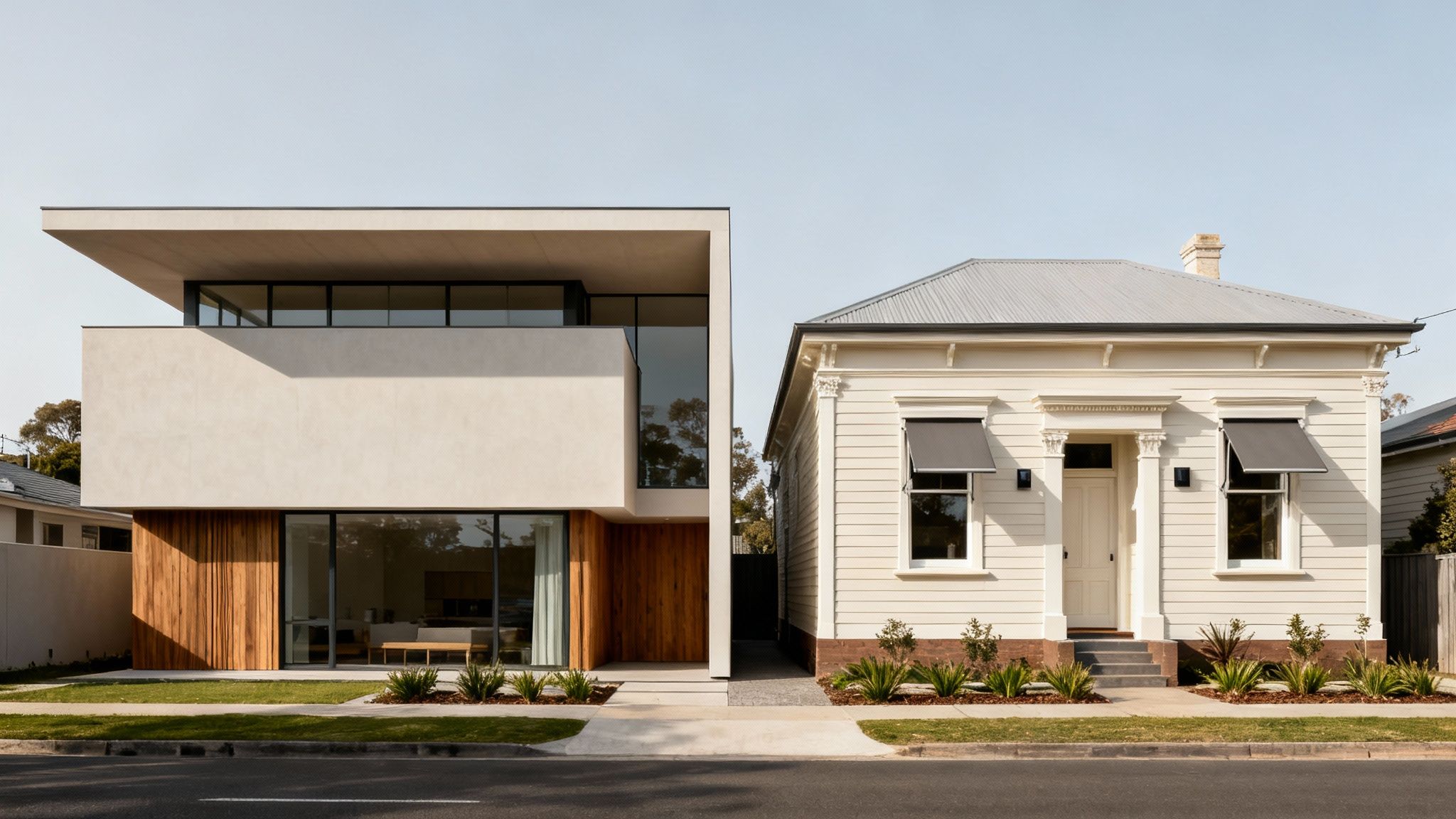
The trick is to think of the home as two things at once: a high-performance machine and a personalised work of art. These two goals aren't at odds with each other; they're actually two sides of the same coin in a truly well-designed home.
The Art of Bespoke Design
Pulling off this perfect blend of form and function takes a deep understanding of both building science and architectural artistry. This is where having an expert design team in your corner is non-negotiable. Here at Envy Abode, our Camberwell-based designers specialise in this very process, working closely with you to bring your unique vision to life within the robust passive design framework.
We don’t start with technical drawings. We start with you—your lifestyle, your tastes, and your aspirations. Our focus is on crafting spaces that feel completely yours, bringing in luxury finishes, creative layouts, and those distinct touches that really show off your personality.
"A true custom passive home should never feel like a compromise. It is the ultimate expression of personal style, elevated by a foundation of unparalleled comfort, health, and efficiency."
This bespoke approach means every single detail is considered, from the choice of interior materials to the way you move through your living spaces. It’s about ensuring the home doesn’t just perform brilliantly but also makes you feel inspired every single day.
Integrating Luxury with Performance
Marrying high-end finishes and custom layouts with the technical demands of a passive build is a sophisticated challenge. It calls for meticulous planning and creative problem-solving to make sure your aesthetic choices don’t accidentally compromise the building's high-performance shell.
Here’s how our team makes sure it all comes together seamlessly:
- Innovative Layouts: We design open, flowing spaces that maximise natural light and your connection to the outdoors, all while carefully managing solar gain and thermal efficiency.
- Luxury Finishes: From natural stone benchtops to bespoke joinery, we help you select materials that not only look incredible but also contribute to a healthy indoor environment by minimising nasty off-gassing.
- Architectural Features: Want expansive window walls or dramatic double-height ceilings? No problem. We engineer these features with high-performance components to maintain airtightness and thermal control without sacrificing the wow factor.
This obsessive attention to detail ensures that the performance-driven elements—like the continuous insulation and airtight seals—are working their magic invisibly behind beautiful surfaces and thoughtful design.
Your Vision Realised Without Compromise
Ultimately, the goal is to create a home that’s both a reflection of your dreams and a new benchmark for modern living. A passive home can be a bold architectural statement, a quiet family sanctuary, or a sophisticated space for entertaining. The style is completely up to you.
The Envy Abode team is here to prove that you don’t have to choose between stunning design and world-class energy efficiency. By working with a team that has deep expertise in both custom architecture and passive building science, you can feel confident your new home will be a true masterpiece. To see how this philosophy plays out in our work, you can learn more about our process for creating custom designed homes that truly stand out.
The end result is a home that’s not only beautiful but also resilient, incredibly comfortable, and exceptionally cheap to run. It's proof of what’s possible when brilliant building science is placed in the hands of creative designers who put the client’s vision first.
Planning Your Passive Home Project
Embarking on a passive home build is an exciting journey. You’re not just building a house; you’re creating a healthier, more comfortable, and incredibly energy-efficient lifestyle. But getting there requires a completely different mindset to a standard build—it all comes down to meticulous, upfront planning.
Unlike conventional construction, where you can often make changes on the fly, every decision in a passive home has a domino effect. The choices you make at the very beginning will directly impact the final performance of your home. A well-thought-out plan isn’t just about architectural drawings; it’s the strategic roadmap that ensures your home delivers on its promise of ultimate comfort and next-to-no running costs.
Starting with Site and Orientation
The very first piece of the puzzle is the land itself and how your home sits on it. This is where passive design truly begins, long before any foundations are poured. The goal is simple: work with the natural environment, not against it, to harness free energy from the sun.
For a climate like Melbourne’s, this means orienting your main living areas and largest windows to the north. Why? Because it allows the low-angled winter sun to stream deep into your home, providing beautiful, natural warmth when you need it most. In summer, when the sun is high in the sky, well-designed eaves or external shades block that harsh, direct heat. This simple, powerful strategy keeps your home cool without ever having to touch the air conditioning remote.
The orientation of your home is its first and most powerful tool for energy efficiency. A smart layout can dramatically reduce the energy needed for heating and cooling before a single wall is even built.
Assembling Your Expert Team
Building a passive home isn't a job for just any builder. It’s a highly specialised field that demands a deep understanding of building science. That’s why it’s absolutely critical to bring a certified passive home designer and builder on board right from the start. Their expertise is the key to flawlessly integrating the five core principles of passive design.
An experienced team, like the designers at Envy Abode, lives and breathes this stuff. They know the intricate science behind creating a high-performance home, from optimising material choices to ensuring the airtightness and thermal bridge-free details are executed to perfection. Getting them involved early helps you avoid costly mistakes and ensures your design vision becomes a reality without compromising on performance.
If you’re planning a project in a suburb like Camberwell, a local expert also brings invaluable knowledge of council regulations and microclimate considerations. To help you get organised, our comprehensive new home construction checklist offers a step-by-step guide to make sure no detail is missed during this crucial phase.
Budgeting for Long-Term Value
Let’s talk numbers. It’s true that a passive home build typically involves a higher upfront investment—often around 10-25% more than a standard build. This premium covers the high-performance components like triple-glazed windows, specialised ventilation systems, and the meticulous labour needed to achieve a completely airtight shell.
But it’s vital to see this not as an extra cost, but as an investment with a powerful long-term return. The payback comes from the radical reduction in your home’s running costs. With heating and cooling needs slashed by up to 90%, you’ll see massive savings on your energy bills, year after year.
This incredible efficiency also adds significant long-term value to your property, making it a sound financial asset that’s resilient to future energy price hikes. When you're planning your budget, shift the focus from the initial build price to the total cost of ownership over your home's lifespan. That's where the true value of a passive home shines.
Common Questions About Passive Home Designs
As more people discover the incredible comfort and efficiency of high-performance homes, it’s only natural that questions come up. The world of passive home design is built on a foundation of building science and specific standards, which can spark a lot of curiosity and even a few misconceptions.
We’ve put together this section to give you clear, straightforward answers to the most common questions we hear from clients. Our goal is to cut through the jargon and help you get a real feel for the practicalities and huge benefits of building to this exceptional standard.
Let's dive into some of the key topics that come up when planning a passive home.
Are Passive Homes More Expensive to Build in Australia?
This is usually the first question on everyone's mind, and for good reason. The short answer is yes, there's typically a higher upfront investment. Building a passive home in Australia can cost between 10% and 25% more than a standard home built to the bare minimum code.
So, where does that extra money go? It goes into the high-performance components that make the magic happen—things like triple-glazed windows, advanced ventilation systems with heat recovery, and a continuous blanket of superior insulation. It also covers the meticulous craftsmanship needed to achieve the strict airtightness and thermal bridge-free construction that are at the heart of the standard.
But thinking of this as just an 'extra cost' misses the bigger picture entirely. It's far more accurate to see it as a direct investment in quality, comfort, and your family's financial future.
The upfront investment in a passive home isn't just for better materials; it's a direct investment in drastically lower running costs, superior indoor air quality, and a resilient home that holds its value for decades.
The true financial story of a passive home unfolds over its lifetime. With heating and cooling costs slashed by up to 90%, the return on that initial investment comes back to you, year after year, in the form of massive savings on your energy bills. Plus, as these materials and building techniques become more common across Australia, we're seeing this upfront cost difference shrink every year.
Can You Open Windows in a Passive Home?
Absolutely! This is one of the biggest and most persistent myths out there, and we're happy to bust it. You can open the windows and doors in your passive home whenever you feel like it, just like you would in any other house.
The key difference is that you don't need to open them to get fresh air or to cool down. The hero of the story here is the Mechanical Ventilation with Heat Recovery (MVHR) system. It works silently in the background, continuously delivering fresh, filtered air to every room while removing stale, moist air.
This gives you the absolute best of both worlds:
- On a beautiful Melbourne day: Throw open the doors and let the breeze flow through.
- During a heatwave or a cold snap: Keep your home sealed and enjoy perfect, stable comfort inside, no matter what's happening outside.
- On days with poor air quality: When there's bushfire smoke, dust, or high pollen counts, you can rely on the MVHR system to provide clean, healthy air, protecting your family from outdoor pollutants.
So, while your home is designed to perform at its peak as a sealed system, you always have the freedom and flexibility to connect with the outdoors whenever you wish.
Does a Passive Home Limit My Architectural Style?
Not in the slightest. This is a crucial point to understand: Passive House is a performance standard, not an architectural style. Its five core principles—superior insulation, high-performance windows, complete airtightness, thermal bridge-free design, and balanced ventilation—can be applied to virtually any home design you can dream of.
Whether your vision is a sleek, contemporary structure, a charming traditional home, or even a modern extension on a heritage building, the science of passive design can be seamlessly woven in. The principles are incredibly flexible and are adapted by your design team to suit your unique taste and the specific conditions of your site.
This is where the skill of an expert design-and-build team becomes so important. A team like Envy Abode specialises in this exact challenge: integrating the strict technical requirements of the Passive House standard into a beautiful, bespoke home that is a true reflection of you. We make sure your custom home in a suburb like Camberwell is both a high-performance machine and a stunning piece of architecture, without ever compromising on your vision.
How Does Passive Design Handle Australian Summers?
Passive homes aren't just for cold climates; they are exceptionally good at handling the intense heat of Australian summers. The entire design philosophy is centred on creating a stable, comfortable indoor environment, which means it’s just as good at keeping unwanted heat out as it is at keeping warmth in.
It tackles summer heat with a multi-layered defence strategy.
- Rejecting Solar Gain: High-performance windows with special low-emissivity (Low-E) coatings act like a mirror to the sun's heat, reflecting it away from the glass before it can get inside.
- Strategic Shading: This is where smart design really shines. Properly sized eaves, awnings, or external blinds are designed to block the high-angled summer sun from hitting the windows in the first place.
- Superior Insulation: That continuous layer of insulation in the walls, roof, and floor acts as a powerful barrier, stopping the stifling ambient heat from soaking into your house.
- Airtight Construction: By creating a sealed building envelope, we stop hot, humid air from leaking in through gaps and cracks, which is a major source of discomfort and moisture in conventional homes.
Working together, these features prevent your home from overheating in the first place, allowing it to stay refreshingly cool and comfortable even during a long heatwave. The MVHR system continues to supply fresh air without you needing to open a window, guaranteeing you a cool, healthy sanctuary all summer long.
Ready to create a home that combines stunning aesthetics with world-class performance? Envy Abode has an expert design team; they can customise your passive home design to truly become a masterpiece. Visit us at Envy Abode to start your journey.