Malvern EastProject Repton , 2025
“The key thing we were looking for was the consistency in the pricing that we received, having the right team to be able to problem solve when an issue arose, they did it in a very calm and measured manner. They're a great team and we worked so well together, had we done the design with Envy it would have saved us 6 months minimum”
A Guide to the Procedure to Build a House in Malvern East

Building a custom home is a huge undertaking, and the procedure to build a house involves a lot more than just bricks and mortar. It’s a complex journey of design, approvals, and meticulous coordination, where unexpected hurdles can lead to expensive delays. There are so many procedures to building a house that you will want to engage an experienced registered builder to do it for you to avoid the many pitfalls that will end up costing you both time and money. The surest way to get it right? Partner with an expert who’s been through it all before.
Your Malvern East Home Building Journey Starts Here
Building your dream home in a sought-after suburb like Malvern East is incredibly exciting. But the path from an empty block to handing over the keys is layered with critical steps that many people underestimate. It's easy to get swept up in the final look and feel, but the reality is that a successful project is built on a foundation of careful procedure.
From navigating the Stonnington City Council's stringent regulations to coordinating dozens of skilled trades, every phase has its own set of challenges that can throw your timeline and budget into disarray.
Building a house isn't a simple checklist; it's a dynamic, moving puzzle that demands foresight, experience, and constant oversight. This is precisely why having a registered, experienced builder in your corner isn't a luxury—it's essential. They become your single point of contact, shouldering the complexity so you can focus on the vision.
An experienced builder doesn’t just construct a house. They conduct an orchestra of designers, engineers, suppliers, and tradespeople. Their real job is to see around corners, solve problems before they happen, and ensure every last detail aligns with the plans and our quality standards.
The Core Phases of Building a Home
Getting a handle on the overall procedure brings a sense of clarity and helps set realistic expectations for your project. We can break the entire journey down into three fundamental stages, each with its own crucial set of tasks.
- Design & Approvals: This is where we bring your vision to life on paper. It involves in-depth consultations, detailed architectural and engineering plans, and submitting all the necessary paperwork to the council for planning and building permits.
- Construction: The physical build begins. We start with site preparation and pouring the foundation, followed by framing, roofing, and installing all the essential services like plumbing and electrical.
- Finishing & Handover: The final stretch is all about bringing the interiors to life. This means plastering, painting, and fitting out your kitchen and bathrooms, all leading up to the final inspection and the moment we hand you the keys.
This infographic lays out the primary stages of the home building process in a simple, visual way.
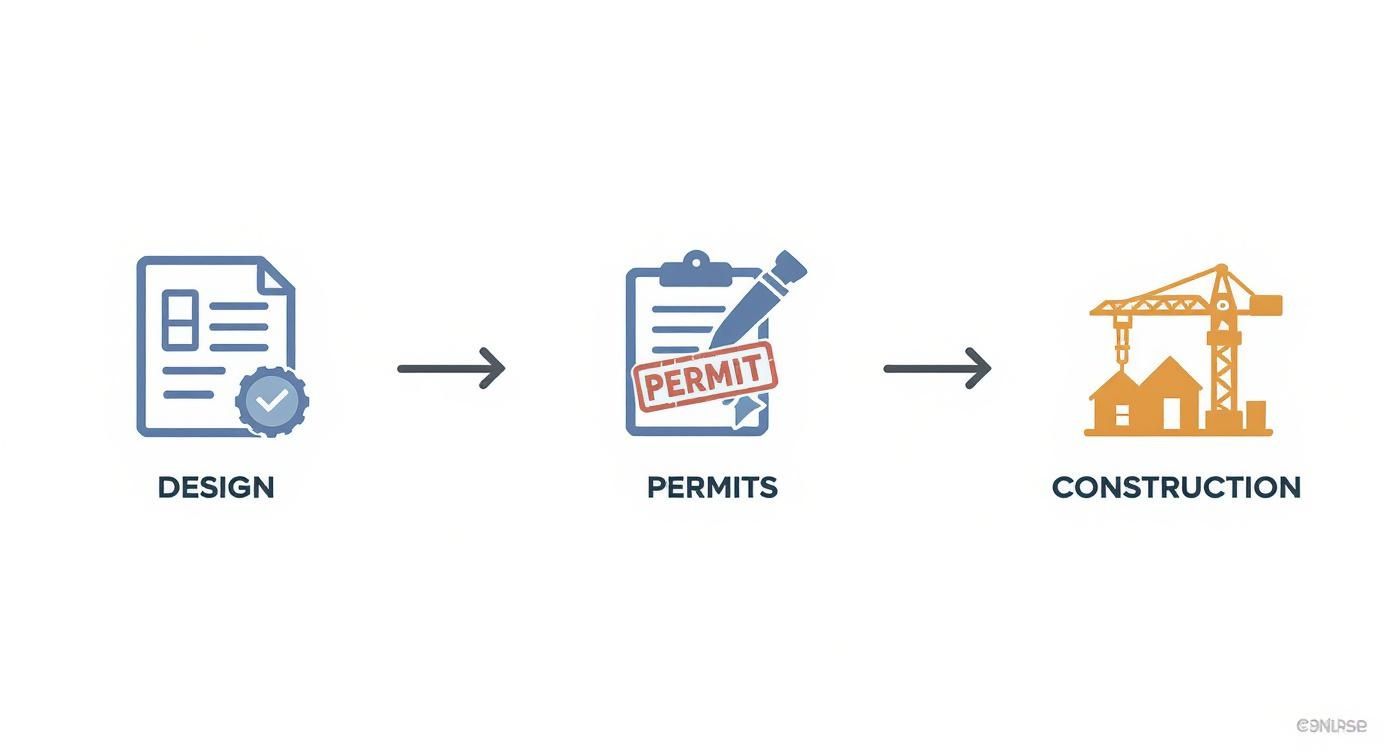
It really highlights how a structured, phase-based approach ensures that foundational work is perfect before moving on to the next stage. For a detailed breakdown of how we manage these steps seamlessly, you can learn more about our process and what makes it a genuinely stress-free experience.
Overview of the Home Building Procedure
To give you a clearer picture, here's a high-level look at the key stages involved when building a custom home in Malvern East. This table breaks down what happens at each step and what you can generally expect.
Phase | Primary Objective | What to Expect |
1. Pre-Construction | Solidify the vision, plans, and all necessary approvals. | Detailed design meetings, soil tests, engineering reports, and council submissions. |
2. Construction | Transform the approved plans into a physical structure. | Site clearing, foundation work, framing, roofing, and lock-up stage. |
3. Interior Fit-Out | Bring the interior spaces to life with all finishes. | Installation of plasterboard, kitchens, bathrooms, flooring, and painting. |
4. Practical Completion | Finalise all details and prepare for handover. | Final inspections, quality assurance checks, and professional cleaning. |
Each phase builds upon the last, and careful management is the key to ensuring a smooth transition from one to the next, keeping the project on track and on budget.
This guide will now walk you through each of these phases in more detail, offering the insights you need to approach your Malvern East building journey with complete confidence.
Navigating Design and Council Approvals
Before a single shovel hits the dirt, a mountain of critical work happens behind the scenes. This is the pre-construction phase, where your vision gets translated into actionable blueprints and legally approved plans. It's an intricate dance between creativity and compliance, and a misstep here can cause serious delays that throw the entire project off course.
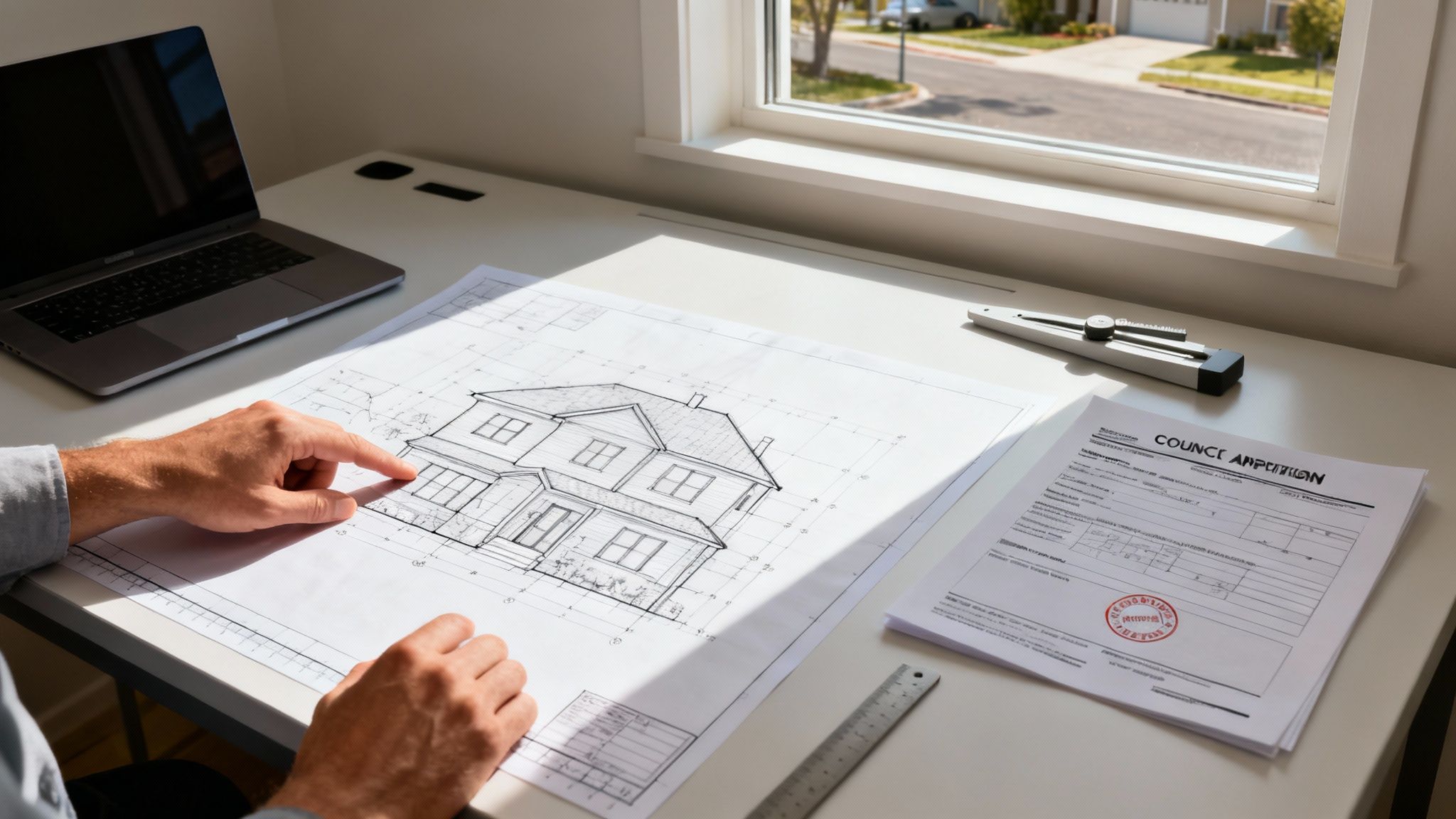
It all starts with developing a detailed design brief. This is much more than a simple wish list; it’s a deep dive into your lifestyle, your aesthetic tastes, and what you’ll need from the home in the future. A good builder will guide you through this, asking questions you might not have even considered. How do you like to entertain? Where do you want the morning sun to fall? How will the home need to adapt as your family grows?
From Concept to Compliant Plans
Once your brief is crystal clear, the architects and engineers get to work. They’re the ones who transform your ideas into structural plans that are not only beautiful and functional but also fully compliant with the National Construction Code and local regulations. This stage gets into the nitty-gritty, from specifying load-bearing walls to locking in energy efficiency ratings.
For a custom home in a suburb like Malvern East, this step is especially crucial. The Stonnington City Council has its own set of planning overlays and design guidelines that simply must be respected. This is where an integrated design-build firm really shines, as we manage this entire process to ensure the architectural vision, engineering realities, and council requirements all align from day one.
The biggest mistake homeowners can make is treating design and approvals as separate hurdles. True success comes from an integrated approach where the designer, engineer, and builder are in constant communication, ensuring the plans are not just inspiring but also buildable, compliant, and on budget.
The Two-Fold Approval Hurdle
Securing the right permits is often the most complex part of the journey to build a house. Many people are surprised to learn that there are typically two distinct types of permits needed, each serving a very different purpose.
- Planning Permit: This permit is all about the use and development of the land. It’s the council’s way of assessing whether your proposed home design is appropriate for the neighbourhood, looking at things like visual bulk, overshadowing of adjacent properties, and how it fits with the local character.
- Building Permit: This one is focused squarely on the structural integrity and safety of the build itself. It certifies that your detailed plans and engineering specs comply with all the relevant building codes and Australian Standards.
Navigating this dual system can be confusing and frankly, a bit of a grind. An experienced builder who regularly works in Malvern East will have an established relationship with the Stonnington council, which can help smooth out the process and prevent unnecessary back-and-forth. For a deeper dive, check out our guide on how to get a building permit in Victoria.
Why Delays Happen and How to Avoid Them
The approval phase has a reputation for being a major bottleneck in the building industry, and for good reason. Recent data on building approvals in Australia highlights this challenge perfectly. While the total number of dwellings approved recently rose by 12.0% to 17,019, there's still a significant lag in getting those approved projects finished. While factors like labour shortages play a part, procedural delays at the council level are a huge contributor. You can explore more about Australian building approval trends on abs.gov.au.
The most common tripwires we see are:
- Incomplete Documentation: Submitting applications with missing information.
- Non-Compliant Designs: Plans that overlook specific local planning rules.
- Requests for Further Information (RFIs): The council hitting pause while they wait for more details.
An experienced registered builder knows how to anticipate these issues. They make sure every 'i' is dotted and every 't' is crossed before anything gets submitted, managing the entire process on your behalf. This expert management is invaluable, turning what could be a stressful bureaucratic headache into a smooth, efficient step toward finally breaking ground.
Preparing The Site and Pouring The Foundation
Once the council gives the green light, things really start to happen. The quiet, careful planning phase makes way for the rumble of machinery as your empty lot finally becomes an active construction site. This is where we literally lay the groundwork for your dream home in Malvern East.
The first job is to get the site ready. That means clearing away any trees, old garden beds, or debris. If you’re doing a knockdown-rebuild—which is pretty common in established suburbs like this—we’ll start by carefully and safely demolishing the old house.
It All Starts Below The Surface
Before a single concrete truck is ordered, we have to look underground. A thorough soil test isn't just a box-ticking exercise; it’s a non-negotiable step that underpins the entire structural design of your foundation. A geotechnical engineer will come out, take samples, and analyse the soil's composition, reactivity, and how much weight it can bear.
The results from this test tell us exactly how to design your home’s footings and slab. Getting this wrong can lead to devastating—and incredibly expensive—structural problems like cracking or subsidence years down the line. It's a classic case of 'measure twice, cut once'.
Once we know what we're working with, the excavation begins, precisely following the architectural plans. We dig the trenches for the footings and shape the ground for the slab and all the underground services that need to go in.
Getting The Footprint and Services Right
With the site dug out, the next step is the "set out". This is a really exciting moment. A surveyor uses the approved plans to mark out the exact footprint of your new home on the ground with stakes and string lines. For the first time, you can see the 2D blueprints come to life in a real, 3D space.
This is also when licensed plumbers arrive to install all the crucial "below-slab" services. Getting this right is critical, because fixing it after the concrete is poured is a nightmare. This includes:
- Sewer and stormwater pipes: These are carefully laid in their trenches, making sure they have the right slope for proper drainage.
- Water connections: The main water tap and any other plumbing rough-ins are positioned exactly where they need to be.
- Electrical conduits: We lay protective piping for all the future electrical and data cables that will run under your home.
We dive deeper into this crucial first stage in our guide to effective site preparation for construction, breaking down these essential first steps.
Pouring the foundation is a major milestone. It’s the point where your home stops being a set of drawings and becomes a permanent fixture on the land. It signifies the successful completion of all preparatory work and signals the exciting start of vertical construction.
Pouring The Concrete Foundation Slab
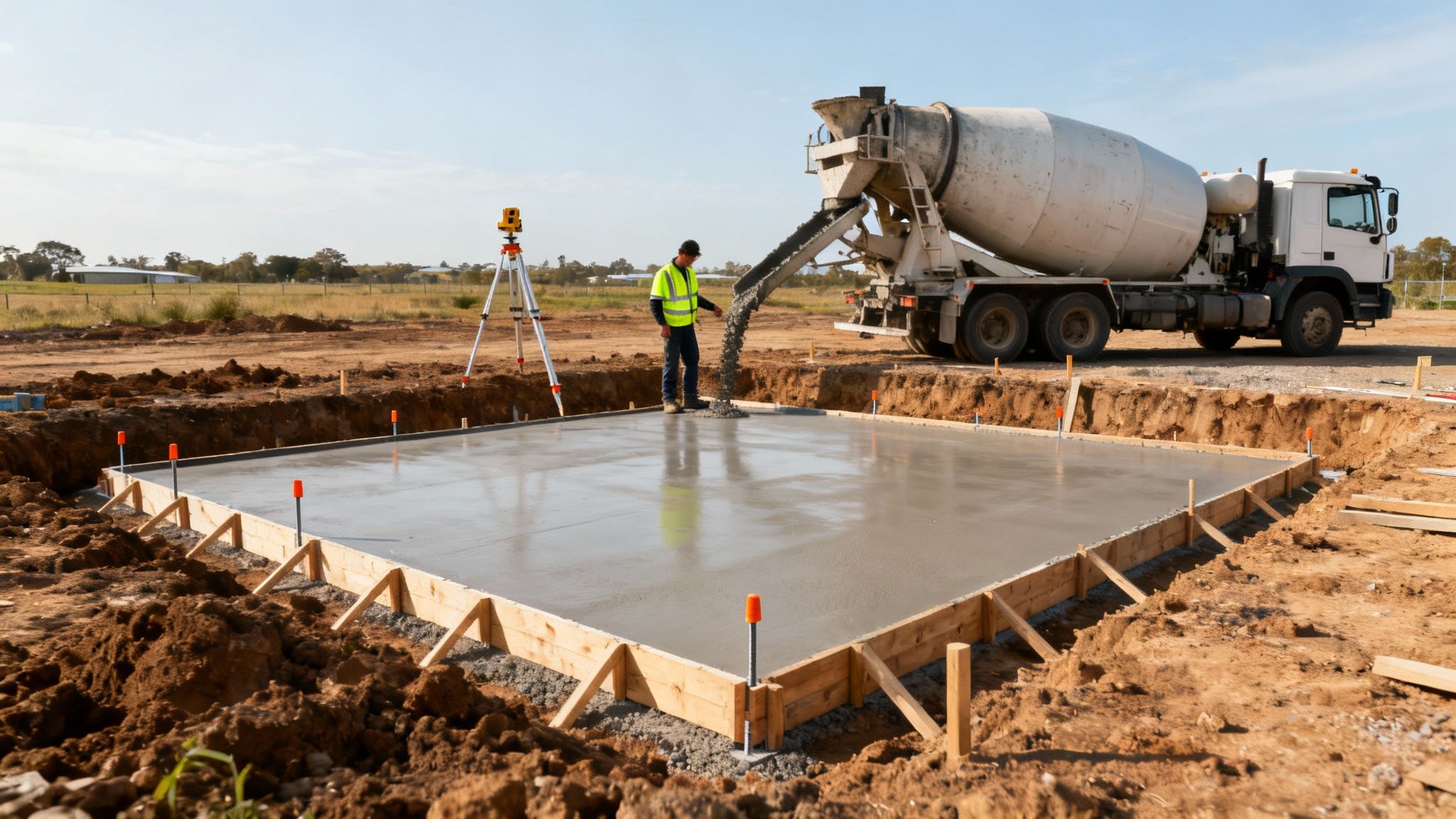
After the underground services pass inspection, we make the final preparations for the pour. We lay down a moisture barrier, followed by a grid of steel reinforcement mesh, which is what gives the concrete its tensile strength. Around the perimeter, we build the formwork—a temporary mould that holds the wet concrete in shape.
The day of the pour is a big, coordinated effort. Concrete trucks roll in one after the other, and our team works quickly to pour, spread, and perfectly level the concrete across the entire foundation.
Then, the concrete begins to cure. It’s a chemical process where it hardens and gains its full strength. While this takes a few weeks, it's usually strong enough after about a week for the framing crew to start their work, kicking off the next exciting phase of the build.
Raising the Frame and Reaching Lock-Up
Once the concrete foundation has properly cured, we get to the part everyone loves to see. This is where your Malvern East home truly begins to take shape, rising from the ground and transforming from a 2D plan into a three-dimensional structure you can finally walk through. It's an incredibly exciting time for any homeowner.
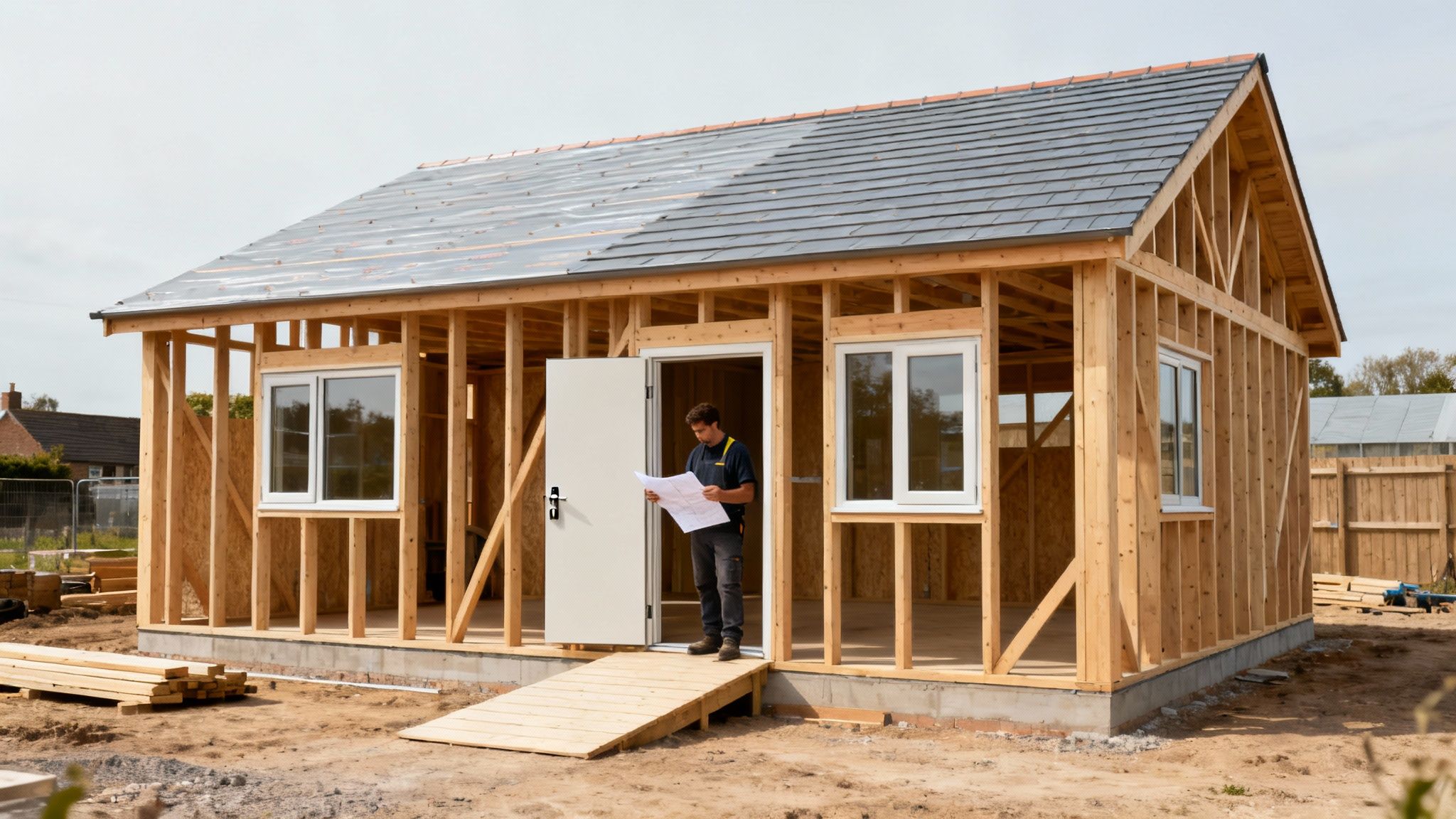
The whole process kicks off when the timber or steel frames arrive on-site. Our team of skilled carpenters gets to work, meticulously piecing together the wall frames according to the architectural blueprints. Next up are the floor joists for the second storey (if you have one), followed by the complex network of roof trusses that will define your home’s final, iconic shape.
Choosing Your Structural Frame: Timber vs Steel
One of the first big decisions you’ll make for this stage is the framing material itself. Both timber and steel bring their own unique advantages to the table, and the right call often comes down to your home’s specific design, budget, and long-term goals.
Timber Frames: A classic choice in Australia for a reason. Timber is cost-effective, relatively easy for our carpenters to work with on-site, and it's a great natural insulator. While it's a sustainable resource, it absolutely must be treated properly to protect against termites and moisture.
Steel Frames: The modern alternative. Steel is perfectly straight, surprisingly lightweight yet incredibly strong, and completely resistant to termites and fire. It can sometimes be a bit more expensive upfront, but its durability and precision make it a huge plus for complex architectural designs.
We’ll walk you through the pros and cons for your specific project, making sure the structural core of your new home is perfectly suited to your vision.
The Significance of Reaching Lock-Up
With the frame complete, our focus shifts to a major milestone in any build: the lock-up stage. This is the point where we make the home a secure, weatherproof shell by installing all the external doors, windows, and finishing the roof cladding.
Reaching lock-up is a huge step forward. It means the building's interior is now protected from Melbourne’s famously unpredictable weather. This gives the green light for all our internal trades—electricians, plumbers, and plasterers—to start their work without the risk of damage or delays from rain and wind. It's here that the many intricate build processes really start to overlap and build momentum.
Reaching lock-up is more than just a technical step; it’s a psychological turning point for our clients. It’s the moment their project transforms from a construction site into their future home. From this point on, every action is about bringing the interior vision to life.
Navigating Modern Building Challenges
Bringing a home from a slab to lock-up requires flawless coordination, a task that’s become more complex in today’s building environment. Australia's house construction industry has faced some real headwinds recently, with revenue declining at a compound annual rate of 1.5% over the past five years due to market volatility. Rising material costs and persistent labour shortages have stretched out average construction times, impacting every phase of the build.
There are so many procedures to building a house, and an experienced builder’s role is to proactively navigate those supply chain issues and trade shortages. A seasoned builder in Malvern East already has established relationships with reliable suppliers and a trusted network of tradespeople. This lets us anticipate potential material delays and secure skilled labour well in advance, keeping the project moving forward smoothly. This level of project management is precisely why engaging an expert registered builder is so critical to avoid the common pitfalls that cost homeowners both time and money.
For a more detailed look at the various phases, explore our breakdown of the different house construction stages.
Bringing Your Interior Vision to Life
Once your Malvern East home reaches the lock-up stage, the whole focus of the project pivots from the outside in. With the structural shell now secure and weatherproof, we can finally set the stage for the intricate work of bringing the interiors to life. This is the moment when empty, framed spaces begin their transformation into the sophisticated, functional rooms you’ve been dreaming of—a phase we call the ‘fixing and fit-out’.
This part of the build is an incredibly coordinated dance of trades and timelines. There’s a very specific, logical order we must follow to guarantee efficiency and a flawless finish. Imagine trying to hang plasterboard before the plumbing and electrical services are roughed-in—it would be a recipe for disaster, forcing us to rip out brand-new work. This is exactly why having an experienced registered builder steering the ship is non-negotiable; we manage this complex sequence to sidestep costly mistakes that throw your budget and schedule off course.
The Inner Workings: Services Rough-In
Before a single wall is closed up, our team of specialised tradespeople moves in to lay the groundwork for your home’s essential services. This is the ‘rough-in’ stage, where all the hidden arteries of your home are meticulously installed.
- Plumbers will run all the necessary water supply and drainage pipes through the wall cavities and ceiling spaces for your bathrooms, kitchen, and laundry.
- Electricians are next, running wires from the switchboard to every planned power point, light switch, and appliance location.
- HVAC technicians then install the ductwork for your heating and cooling systems, ensuring it’s all neatly tucked away behind what will soon be walls and ceilings.
This is a critical checkpoint in the build. Once this work is done, it undergoes a thorough inspection to make sure everything is perfectly positioned and compliant with Australian Standards before anything gets covered up.
From Bare Frames to Finished Walls
With the rough-ins officially signed off, the next step is insulation. This is absolutely vital for your home's thermal and acoustic performance, keeping you comfortable all year round while keeping energy bills down. We fit high-quality insulation snugly between the wall studs and ceiling joists.
From there, the plasterboard sheets are delivered and installed, and this is when your rooms truly start to feel like defined spaces. Our plastering team hangs the sheets, tapes all the joints, and applies multiple coats of plaster, sanding between each one to create a perfectly smooth, seamless surface that’s ready for the first lick of paint.
The quality of the plastering is a true hallmark of a luxury build. A flawless, level-five finish is what separates an average result from an exceptional one. It’s a subtle detail you might not consciously notice, but it contributes immensely to the overall sense of quality and refinement in your home.
Installing Your Bespoke Joinery and Finishes
Once the plaster is set, the fit-out really gets going, and your personal design selections start to make their grand entrance. This is where the incredible skill of our cabinet makers and tilers truly shines.
Your custom-designed kitchen cabinetry, bathroom vanities, and built-in wardrobes are all meticulously installed. This is a precision job that demands exact measurements for a perfect fit. At the same time, our tilers get to work, waterproofing all wet areas like bathrooms and laundries before laying the beautiful tiles you selected months ago. It's a methodical process that finally brings colour, texture, and personality into these key spaces.
When you visit the site at this point, pay close attention to the little things. Check the alignment of cabinet doors, the consistency of the grout lines, and the clean finish where different materials meet. This is where true craftsmanship becomes obvious, and it’s a key part of building a home to a luxury standard. Your builder should be walking you through, pointing out the quality and making sure every last detail meets your expectations.
Final Finishes and Your Official Handover
This is where the magic really happens. The final stretch is all about the little details that transform your house into a home you’ll love for years to come. We’re moving from a well-built shell to a beautifully finished space, driven by meticulous craftsmanship and our own high standards.
It all kicks off with the painters, who bring the walls to life with the final coats of your chosen colours. At the same time, our flooring specialists get to work laying down rich timber, plush carpet, or elegant tiles. Then, the electricians and plumbers circle back to install all your light fixtures, power points, taps, and sinks, making every room fully functional and ready for living.
The Critical Practical Completion Inspection
Before a single key is handed over, we walk through the home with you for the Practical Completion Inspection (PCI). This isn't just a formality; it's a vital quality check for your new Malvern East home.
Together, we’ll create a definitive list of any minor imperfections that need rectifying. It could be something as small as a paint touch-up or a cabinet door that needs a slight adjustment. A good builder will have already spotted most of these, but a second set of eyes—yours—is always invaluable.
The Practical Completion Inspection isn't about finding fault; it's about achieving perfection. It’s our final opportunity to ensure every single detail meets the high standards we’ve promised and that you expect from your custom luxury home.
Completing the External Works
While the interior is being perfected, our team is also putting the finishing touches on the outside. This is what creates that all-important street appeal and completes the entire picture of your new home.
This stage typically involves:
- Pouring the driveway and any other pathways.
- Completing the initial landscaping, like laying down turf and preparing garden beds.
- Installing fences and gates to give you privacy and security.
It's worth noting that the construction industry can be unpredictable. Australia has been facing some headwinds, and even with government targets to build more homes, only 174,030 dwellings were completed in FY 2025. The June quarter was actually the weakest we've seen in over a decade. You can get more insight into Australia's residential construction outlook on macrobusiness.com.au. An experienced builder knows how to navigate these challenges, securing trades and materials well ahead of time to keep your project on track.
Your Official Handover Day
This is the moment you've been waiting for. Once every item on the PCI list has been ticked off to your complete satisfaction and the home has been professionally cleaned from top to bottom, it's time for the official handover.
We’ll hand you the keys to your beautiful new home, along with a comprehensive handover package. Inside, you'll find all the essential documents you need—appliance warranties, product manuals, and the crucial compliance certificates—officially marking the completion of your new Malvern East residence. Welcome home.
Answering Your Top Questions About The Building Process
Building a custom home in Malvern East is a huge undertaking, and it's completely normal to have a lot of questions. Getting your head around the key stages of the process will give you clarity and help you set realistic expectations for your project.
How Long Does It Really Take To Build?
While every custom home is different, a realistic timeline for a luxury build in Malvern East is usually between 12 to 18 months, from the first sketch to the day we hand over the keys.
This breaks down into two main parts:
- Pre-construction (Design & Approvals): 4–6 months. This is where we get into the nitty-gritty of detailed design, engineering, and navigating the council permit maze. It can be a surprisingly lengthy process, but getting it right is non-negotiable.
- Construction: 8–12 months. This is the exciting part you can see, covering everything from pouring the foundation slab to installing the final doorknob. The final timeline here really depends on the complexity of your home.
Of course, things like unpredictable Melbourne weather, material supply chains, and the intricacy of your design can all play a role in the final schedule.
There are so many moving parts in a home build. You really want an experienced registered builder in your corner to steer you away from the common pitfalls that can end up costing you serious time and money.
Can I Make Changes During The Build?
The short answer is yes, but it’s something we need to manage very carefully. Any change is handled through a formal variation order, which clearly outlines what’s changing, how it affects the cost, and any impact on the timeline.
Honestly, this is why we put so much emphasis on detailed planning upfront. Making big changes once construction is underway can cause delays and blow out the budget. A good builder will help you think through all the possibilities early on, so we can lock in decisions and keep those costly variations to a minimum.
Ready to navigate the home building process with an expert guide? At Envy Abode, we manage every single detail of the design and build journey to deliver your dream Malvern East home, without the stress. Contact us today to start your journey.