Malvern EastProject Repton , 2025
“The key thing we were looking for was the consistency in the pricing that we received, having the right team to be able to problem solve when an issue arose, they did it in a very calm and measured manner. They're a great team and we worked so well together, had we done the design with Envy it would have saved us 6 months minimum”
Finding the Right Builders Melbourne for Your Dream Home

Committing to a luxury home build is a massive undertaking—it’s an investment of your money, your time, and a whole lot of emotion. Finding the right partner among the many builders Melbourne has to offer is everything. It's what separates a project that flows smoothly from one that becomes a constant source of stress. The best firms don't just build houses; they bring a client's unique vision to life.
Starting Your Melbourne Luxury Home Journey
Creating a bespoke home in Melbourne is about more than just bricks and mortar; it’s about crafting a lifestyle. Your journey starts long before anyone breaks ground, beginning with a crystal-clear vision and a well-defined scope for your project. This initial planning stage is the bedrock of everything that follows.
For a high-end build, a specialist design-build firm is almost always the way to go. They bring architectural design and construction expertise together under one roof, which is a game-changer.
This integrated approach sidesteps the all-too-common friction between designers and builders. It ensures every single detail, from the choice of Italian marble to the structural engineering, is part of a single, cohesive plan. You end up with a truly collaborative process where your ideas are not just heard, but are thoughtfully planned and flawlessly executed.
Defining Your Vision and Scope
Before you even think about picking up the phone to a builder, it's time to get clear on exactly what you want to achieve. This is about more than just a list of rooms. Think about how your family lives day-to-day, how you like to entertain guests, and what "luxury" truly means to you. Is it the latest smart home automation, sustainably sourced timbers, or bespoke, handcrafted joinery?
To get ready for those first meetings, put together a detailed brief. It should cover:
- Your "Must-Haves": The non-negotiables. Think number of bedrooms, a dedicated home office, or that dream kitchen layout with a butler's pantry.
- Your "Wish List": The features you’d absolutely love if the budget and design allow for them, like a temperature-controlled wine cellar or a dedicated home cinema.
- Inspiration Files: Start collecting images from magazines, Pinterest, or architectural websites that capture the look and feel you're aiming for.
This whole process, from dreaming up the vision to choosing your partner, is the most critical first step you'll take.
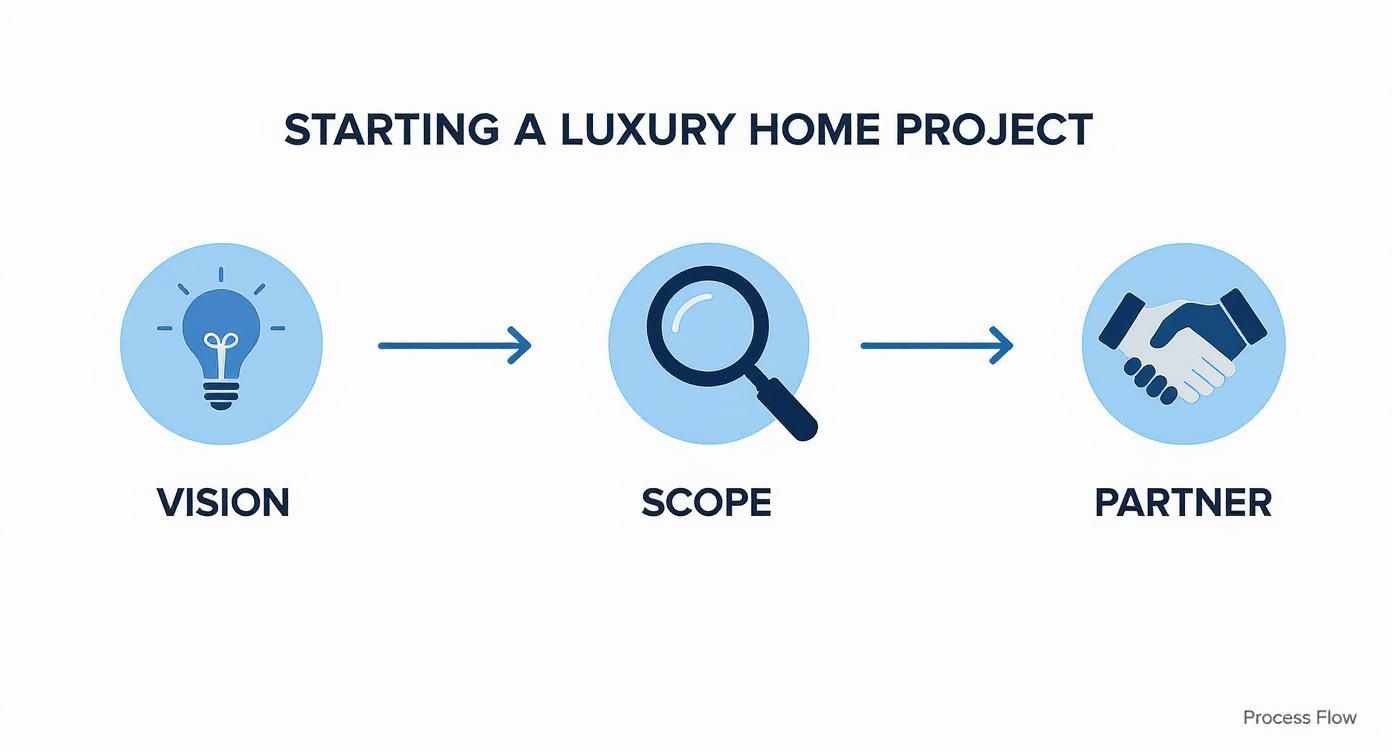
Thinking about the start of your project in these three clear stages—vision, scope, and partner—helps make what can feel like a monumental task much more manageable.
Navigating the Current Building Climate
Having a realistic grasp of the local market is essential right now. The construction scene in Melbourne is under some serious pressure. Workforce shortages are a real headache, with recent figures showing that around 85% of builders are struggling to find skilled trades.
This has had a massive knock-on effect on project timelines, stretching them from what used to be an average of 14-16 weeks to nearly a full year for many new builds. You can get a better sense of the issues by reading this detailed analysis on Melbourne’s construction supply challenges.
By taking the time to prepare a thorough brief, you give potential builders the information they need to provide accurate feedback on feasibility, timelines, and costs right from the start. It sets a professional, collaborative tone for the entire project.
Alright, you've narrowed down your list of potential builders. Now comes the critical part: moving from a firm’s glossy brochure to the real-world proof of their capabilities. This is where you separate the truly exceptional from those who just talk a good game.
Think of yourself as the hiring manager for one of the most significant projects of your life. You're about to enter a partnership that will likely last 12 to 24 months, so every detail matters. This isn't just about looking at pretty pictures; it's about deep-diving into their work, their reputation, and their stability as a business.
How to Vet Builders and Analyse Their Portfolios
Doing your due diligence now saves a world of headaches later. It’s about building a complete picture of who you’ll be working with day in and day out.
Decoding the Portfolio
A portfolio is so much more than a gallery of finished projects. It’s a builder’s resume, telling a story about their style, their consistency, and their ability to handle complex designs. Don't just flick through the images. You need to analyse what you’re seeing with a clear checklist.
Look for these vital signs of a top-tier firm:
- Project Diversity and Specialisation: Do they have a solid track record with projects like yours? If you're planning a complex, contemporary second-storey extension, a portfolio full of heritage ground-floor renovations might signal a mismatch in expertise. Look for relevance.
- Consistency in Quality: Zoom in. Scrutinise the details across multiple projects. Are the paint lines crisp? Is the joinery flawless? Does the tiling show intricate, precise work? Consistent, high-quality finishing reveals a builder with robust quality control and a trusted team of trades.
- Construction Synergy: A truly great builder can bring any custom design vision to life. Notice how well their finished work honours different styles. They should be able to execute a minimalist, modern design with the same finesse as a grand Hamptons-style home.
A strong portfolio isn’t about the number of projects; it’s about a consistent, undeniable standard of excellence. It should leave you with zero doubt that the builders Melbourne you choose can deliver your vision to an impeccable standard.
The Non-Negotiable Checks
Before you get carried away by stunning designs, it’s time for the essential background checks. These are the non-negotiables that protect you from serious financial and legal risks. Any professional, reputable builder will have this information on hand and will provide it without hesitation.
Make sure you verify these three things:
- BPC Registration: First things first, confirm they are a Registered Building Practitioner (RBP) with the Building and Plumbing Commission (BPA). This is a legal requirement in Victoria and your first assurance that they have the right qualifications.
- Insurance Coverage: Ask to see current copies of their Public Liability Insurance and Domestic Building Insurance (DBI). DBI is mandatory for any project over $16,000 and is your safety net if the builder dies, disappears, or goes bust.
- Financial Stability: It might feel a bit awkward, but asking about their financial health is just smart business. You can request a letter from their accountant or run a credit check to ensure they’re a stable company capable of seeing a large-scale project through to the end.
Speaking with Past Clients
Client references are your best source of unfiltered truth. A portfolio shows you the polished final product; a past client tells you about the entire journey, warts and all. When you get them on the phone, go deeper than a simple, "Were you happy with the result?"
Ask pointed questions that get to the heart of the working relationship:
- "How did the builder handle unexpected challenges or changes during the build?"
- "Was the communication clear and consistent? Who was your main point of contact?"
- "How did the final cost stack up against the initial budget? Were there many variations, and were they explained clearly?"
- "Did they finish on schedule? If not, how were the delays managed and communicated?"
The answers will tell you everything you need to know about a builder's transparency, problem-solving skills, and professionalism. For more tips, our detailed guide on how to select a builder offers even more vetting strategies. Taking this thorough approach ensures you find a partner who not only builds beautiful homes but also delivers a truly exceptional client experience.
Getting the Budget and Contracts Right
Once the design concepts are sparking your imagination, it's time to ground them in reality with two of the most critical parts of any build: the budget and the contract. These aren’t just formalities; they are the financial and legal bedrock of your entire project. Getting them right from the outset with an elite Melbourne builder means a transparent, predictable process, keeping everyone on the same page from day one.
A budget for a high-end home isn't just a single number for construction. It’s a comprehensive financial plan that has to account for everything, from the first design sketches right through to the final light fitting.
Crafting a Realistic Project Budget
On a luxury project, it’s not a question of if something unexpected will come up, but when. That’s why a contingency fund isn't just a good idea—it's absolutely essential. Think of it as your project’s safety net, ready to catch any surprises like unforeseen site issues, a brilliant design idea you have mid-build, or a last-minute decision to upgrade the benchtops.
- Contingency Fund: You’ll want to set aside 10-15% of the total construction cost. This isn't just spare cash; it’s a strategic buffer that gives you breathing room and keeps the project moving smoothly.
- Prime Cost (PC) Items: These are the beautiful fixtures and fittings—like your oven, tapware, or feature lighting—that haven’t been chosen yet. Your builder will put an estimate in the budget, but it’s easy to fall in love with something that costs a little more.
- Ancillary Costs: Don't forget all the costs that fall outside the main building contract. This can include fees for landscape architects, interior designers, council permits, and new utility connections.
A solid budget is an honest one. It anticipates the twists and turns of a custom build and prepares for them, ensuring your vision doesn't get squeezed by financial pressure down the track.
Understanding the Different Contract Structures
In Melbourne's luxury building world, you’ll mainly come across two types of contracts: fixed-price and cost-plus. Each has its pros and cons, and the right one for you really depends on your project's complexity and how you prefer to manage the finances.
A fixed-price contract is exactly what it sounds like—the total cost is locked in before a single sod of earth is turned. This is perfect if every single detail is already decided and documented, leaving no room for changes. The flip side? Any variations you decide on later can be expensive and potentially slow things down.
A cost-plus contract, on the other hand, offers far more flexibility. You pay the actual cost of all labour and materials, plus a pre-agreed margin for the builder. This approach is completely transparent and works beautifully for complex, bespoke projects where you want the freedom for the design to evolve. We've put together a detailed guide on cost-plus contracts that explains how this structure can be a huge benefit for custom builds.
To help you see the difference at a glance, here’s a simple breakdown of how they stack up.
Contract Type Comparison for Luxury Builds
Feature | Fixed-Price Contract | Cost-Plus Contract |
Budget Certainty | High. The price is locked in upfront. | Lower. The final cost is unknown until completion. |
Flexibility for Changes | Low. Variations can be costly and cause delays. | High. Easy to make changes or upgrades during the build. |
Transparency | Moderate. Costs are bundled into a single price. | High. You see every invoice and cost as it happens. |
Best For | Projects with fully finalised designs and selections. | Complex, unique projects where design may evolve. |
Ultimately, the best contract type depends on your comfort level with financial risk and your desire for flexibility during construction.
The Key Clauses in Your Building Contract
A building contract can look pretty intimidating, but there are a few key areas that need your full attention. Any good builder will take the time to explain them, but it’s smart to know what you’re looking for.
Zero in on these critical sections:
- Payment Schedule: This clearly lays out the progress payments you’ll make at key stages of the build (e.g., slab down, frame complete, lock-up). Make sure these milestones are tied to real, tangible progress you can see on site.
- Variations Clause: This section explains the formal process for making any changes to the original plans. It should cover how you request a change, how it's quoted, how it’s approved (always in writing!), and how it's paid for. A clear process here stops "scope creep" from blowing your budget.
- Completion Dates and Delays: Your contract needs a clear completion date. It should also define what counts as a legitimate reason for an extension, like a week of torrential rain or major supply chain hold-ups.
It's also worth keeping an eye on the bigger picture. With Australia’s construction market forecast to hit AUD 193.2 billion by 2025, the industry is facing challenges like longer lead times for materials and rising costs. Being aware of these market dynamics helps you understand the timelines and contingencies your builder puts forward.
At the end of the day, a fair and detailed contract is there to protect both you and your builder. It sets the rules of the game, manages expectations, and gives you a clear path for sorting out any issues that pop up along the way. Taking the time to get it right is a huge investment in a successful, stress-free build.
The Design and Council Approval Process
This is where the magic really happens. Once you’ve chosen your Melbourne builder, all those ideas and clippings from your design brief start taking shape as real architectural plans. A top-tier design-build firm shines here, guiding you through what can be a complex but incredibly exciting phase. It’s a genuine collaboration, turning your dream home from a concept into a detailed, buildable reality.
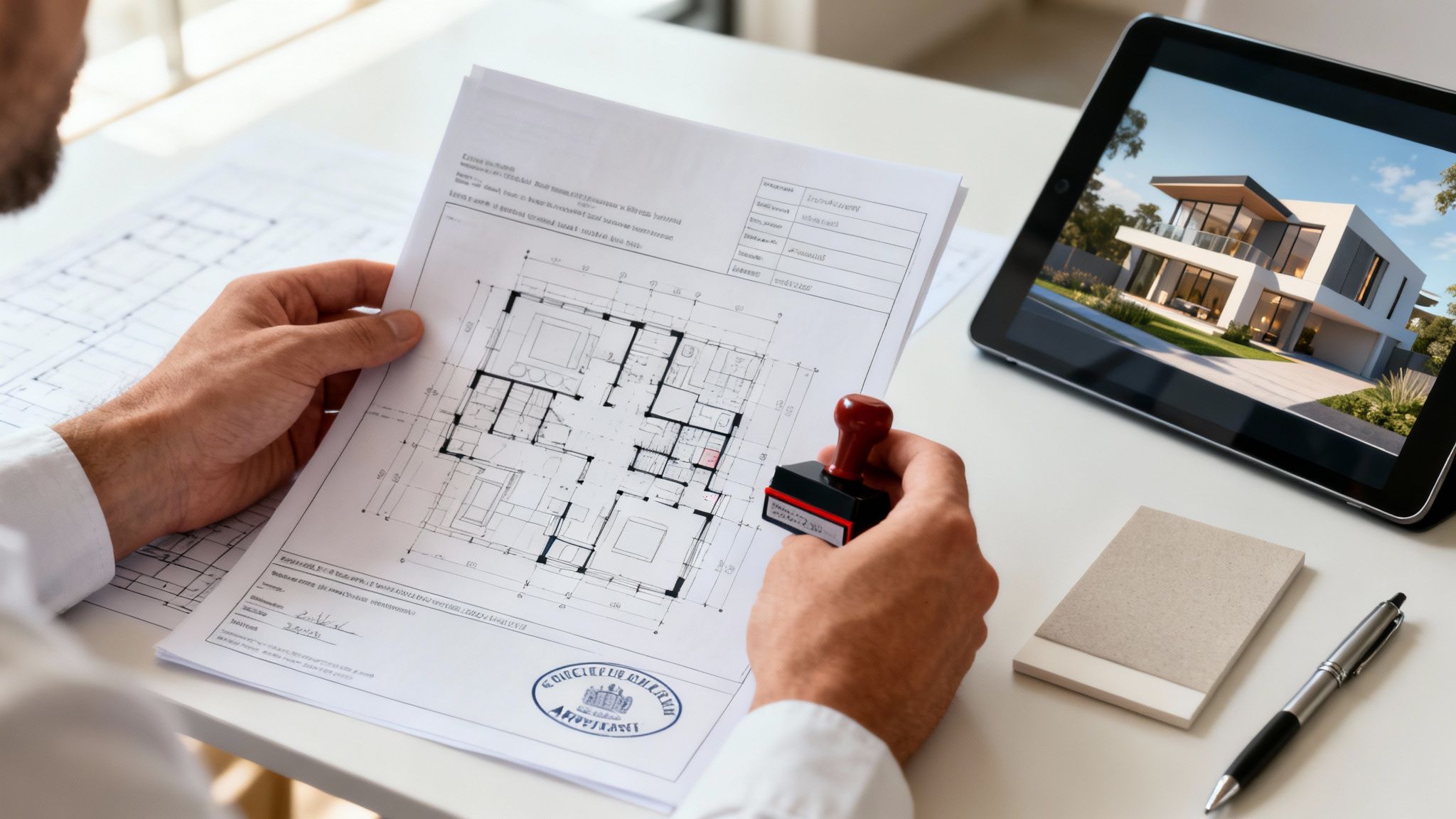
It all kicks off with initial concept sketches. These early drawings are all about exploring the possibilities—playing with the layout, refining the look and feel, and seeing how it all flows. Your builder will translate your must-haves and wish-list items into a visual format, so you can get a real sense of the space before locking anything in.
From there, we move into developing the detailed custom designed plans. These are the technical blueprints that nail down everything—from structural engineering and material choices right down to the exact placement of every light switch. It’s a meticulous process, and the decisions made now are what truly define the final outcome and budget.
Navigating Melbourne Council Permits
Let’s be honest: securing council approval is often the biggest hurdle in any Melbourne build. Every local council, from Bayside to Stonnington, has its own set of planning regulations, and you need deep local knowledge to navigate them smoothly. This is where an experienced Melbourne builder is worth their weight in gold.
You might run into complexities like:
- Heritage Overlays: If your home is in a designated heritage area, the rules about what you can change (especially on the outside) are strict. Your design has to respect the neighbourhood's historical character.
- Zoning Rules: These regulations dictate things like building height, how far you need to be from the property line, and the overall size of your home.
- Neighbourhood Character Policies: Many councils want to ensure new builds or renovations fit the existing streetscape, which can influence everything from your brick choice to your roofline.
Knowing how to get a building permit is one thing, but managing the process is another. Your builder will handle submitting all the documentation—drawings, engineering reports, sustainability assessments—to clear the path for approval.
A great builder doesn’t just react to council feedback; they anticipate it. By addressing potential issues in the design phase, they save you from the massive headaches of costly delays and redesigns down the track.
Integrating Finishes and Technology Early
The design stage is also the time to finalise the key selections that will give your home its sense of luxury and functionality. It’s so important to integrate these decisions early so they feel seamless, not like an afterthought.
This means specifying everything from the European oak flooring you love to the exact brand of integrated appliances for the kitchen. It’s also the perfect moment to plan for sustainability features—think solar panels, high-performance insulation, and double-glazed windows. The same goes for smart home technology. If you want automated lighting, climate control, or security, it has to be planned and wired into the home’s very fabric from the beginning.
By the time this phase is done, you’ll have a complete set of "for construction" drawings. These documents become the bible for the entire build, ensuring every single tradesperson on site is working from the same plan. This level of detail is what guarantees the home you see on paper is the magnificent home you’ll be walking into.
Staying Involved and Ensuring Quality Construction
Once the first shovel hits the dirt, your role shifts from planner to project partner. The construction phase is where your vision finally starts taking shape, and staying engaged is crucial to making sure the final result is everything you imagined.
But let’s be clear: effective involvement isn’t about micromanaging. You've hired expert builders Melbourne professionals for a reason—so trust their process. Your goal is to be an informed, decisive client who understands the project’s rhythm, not someone questioning every nail and screw. A great builder will set up a clear communication framework from day one to make this partnership feel effortless.
The Power of Scheduled Communication
Random drop-ins and daily phone calls can throw a wrench in the works on a busy construction site. The best way to stay in the loop is through a regular, scheduled meeting with your project manager. This is usually a weekly or fortnightly site walk-through where you can see the progress with your own eyes, ask questions, and make decisions without delay.
This structured approach keeps everyone on the same page. Before each meeting, your project manager should give you a quick update and flag any upcoming decisions needed from you—things like finalising tile grout colours or confirming the placement of power points.
Establishing a predictable meeting rhythm respects everyone's time and transforms your involvement from reactive to proactive. It creates a dedicated space for collaboration, ensuring your input is received at the right moments without slowing down the build.
This kind of disciplined communication is the secret to a smooth construction phase. It heads off misunderstandings and keeps your project moving forward.
Critical Stages for Quality Checks
While your builder manages the day-to-day quality control, there are a few key moments in the build where your attention (or that of an independent inspector) is invaluable. These are milestones where work is about to be covered up, making it the last chance to verify quality before it’s hidden away.
Your builder will coordinate all the mandatory inspections, but knowing these stages empowers you to ask the right questions at the right time.
- Foundation and Slab Pour: This is literally the foundation of your home. Before any concrete is poured, you’ll want to see that the formwork, steel reinforcement, and plumbing penetrations all line up perfectly with the plans.
- Frame Completion: Once the frame is up, you get the first real feel for the scale and flow of your home. Walk through every room. Does it feel right? This is your last easy opportunity to move an internal wall or tweak a window size.
- Waterproofing Installation: In wet areas like bathrooms and laundries, waterproofing is everything. A failure here can cause enormous headaches down the track. Make sure the membrane has been applied correctly and has passed inspection before a single tile goes on.
- Pre-Plaster Inspection: Just before the plasterboard goes on, the "guts" of your home are exposed. This is your chance to confirm all the plumbing, electrical wiring, insulation, and data cabling are exactly where you specified them.
Paying close attention at these junctures helps guarantee the quality is built-in, not just skin-deep. For a more detailed guide, our construction quality control checklist offers an excellent framework for what to look for at each stage.
The Final Handover and Your Checklist
The practical completion inspection, or handover, is the final, most detailed check of your new home. It’s your last opportunity to spot any defects or incomplete items before making the final payment and getting the keys. Whatever you do, don't rush this.
Come prepared with a detailed checklist and a roll of blue painter's tape to mark any issues. Go through the home room by room, system by system.
Your handover checklist should absolutely include:
- Paint and Finishes: Look for any scuffs, chips, or patchy paintwork. Check all joinery for scratches or dings.
- Fixtures and Appliances: Test every single tap, light switch, and power outlet. Run all appliances through a short cycle to confirm they work.
- Doors and Windows: Open and close every door and window. Make sure they operate smoothly and latch properly.
- Flooring and Tiling: Inspect floors for any scratches or damage. Check tiles for cracks and make sure the grout lines are clean and consistent.
- Documentation: Ensure you receive all warranty documents, appliance manuals, and a full set of "as-built" plans.
A reputable builder will welcome this level of detail and will compile a clear list of items to fix. Only when you are completely satisfied that every detail meets the standard you agreed upon should you sign off. This final bit of diligence ensures your beautiful new home is perfect from the moment you move in.
Your Top Questions About Hiring a Melbourne Builder Answered
Stepping into the world of high-end construction naturally brings up a lot of questions. For anyone considering a bespoke project, getting clear, straightforward answers is the first step towards making a confident decision. We've compiled some of the most common queries we hear from homeowners looking to partner with the best builders Melbourne has to offer.
Think of this as your cheat sheet to cut through the industry jargon and get a realistic picture of what lies ahead for your luxury home build or renovation.
Custom Builder vs. Volume Builder: What’s the Real Difference?
This is probably one of the most fundamental things to get your head around. A volume builder essentially works on a production line model. They build hundreds of homes from a set menu of floor plans with very limited room for you to make changes. Their whole business is built on efficiency and scale, which allows them to deliver a predictable product at a competitive price.
A custom builder, especially a true design-build firm, is the complete opposite. We don't have a catalogue. We specialise in creating one-of-a-kind homes designed specifically for a particular client, a unique block of land, and a personal vision. This path gives you total freedom in design, material choices, and finishes. For a truly bespoke luxury home in Melbourne, it's the only way to go. The focus is on exceptional craftsmanship and individuality, not how many homes can be built in a year.
A volume builder sells you a product off the shelf; a custom builder collaborates with you to create a unique piece of architecture. For a high-end, personalised home, there’s really no comparison.
How Long Does a Luxury Custom Build Actually Take?
Patience is definitely a virtue in the world of custom construction. Unlike a volume build with a cookie-cutter timeline, a luxury project is influenced by so many different variables. Generally speaking, you should realistically budget anywhere from 12 to 24 months for the entire process, from the first design meetings right through to getting the keys.
What can stretch out that timeline? A few things:
- Council Approvals: Navigating planning permits, especially for properties with heritage overlays or tricky zoning, can easily add months to the pre-construction phase.
- Design Complexity: An custom designed ambitious home with unique structural engineering is naturally going to take longer to build than something more conventional.
- Sourcing Bespoke Materials: If your heart is set on custom-milled joinery from a local artisan or that perfect slab of marble from an Italian quarry, those items have lead times that need to be factored into the schedule.
- Unexpected Site Challenges: Sometimes the ground beneath your feet holds surprises. Unexpected soil conditions or difficult site access can cause delays that need to be managed.
Any experienced Melbourne builder worth their salt will provide a detailed and, most importantly, realistic project timeline in your contract, breaking down each stage and its expected duration.
What Should I Look for in a Builder’s Warranty Insurance?
In Victoria, this is non-negotiable. It’s called Domestic Building Insurance (DBI), and it’s a critical safety net for you as the homeowner. It's a legal requirement for any domestic building project valued at more than $16,000. Think of it as your financial protection if things go seriously wrong.
DBI steps in to cover you if your builder dies, goes insolvent, or simply vanishes before finishing the job or fixing defects. Here’s the crucial part: before you pay a cent of your deposit, your builder must give you a certificate of currency for the DBI policy that is specific to your property. This policy covers you for the non-completion of the work and for defects for up to six years after the project is finished. Don't proceed without it.
How Involved Should I Be During the Construction Phase?
Honestly, your level of involvement is completely up to you, and a good builder will work with your preference. Most of our clients find the sweet spot is attending scheduled site meetings, which we typically hold weekly or fortnightly. These are the most productive way to stay in the loop, see the progress for yourself, and make key decisions without slowing down the team on site.
Trying to pop in every day or making constant calls can actually be counterproductive. The most successful projects are always built on a foundation of trust and clear communication. Your builder should set up a communication plan right from the start, so you know who your main point of contact is and how you'll receive updates. This allows you to be as engaged as you want to be, without having to micromanage.
At Envy Abode, we believe a transparent and collaborative process is the foundation of every exceptional home. If you're ready to discuss your vision for a luxury build or renovation in Melbourne, we invite you to connect with our team.
Explore our design-build services and see how we can bring your dream home to life