Malvern EastProject Repton , 2025
“The key thing we were looking for was the consistency in the pricing that we received, having the right team to be able to problem solve when an issue arose, they did it in a very calm and measured manner. They're a great team and we worked so well together, had we done the design with Envy it would have saved us 6 months minimum”
Choosing Melbourne Home Builders A Practical Guide

You have a vision for your new Melbourne home, but finding the right team to bring it to life? That's the real make-or-break moment. The best Melbourne home builders aren't just contractors; they're partners who can take your abstract ideas and shape them into a beautiful, functional space you'll love for years. This journey is about so much more than bricks and mortar—it's about collaboration, trust, and sharing a common goal.
Starting Your Melbourne Home Building Journey
Deciding to build a home is one of the biggest financial and emotional investments you'll ever make. Before you get lost in floor plans and colour swatches, the first real step is to get the lay of the land. Melbourne's property market is constantly shifting, shaped by everything from population growth to local council rules and the latest design trends. This initial phase is all about setting yourself up for success, and that starts with having a crystal-clear plan.
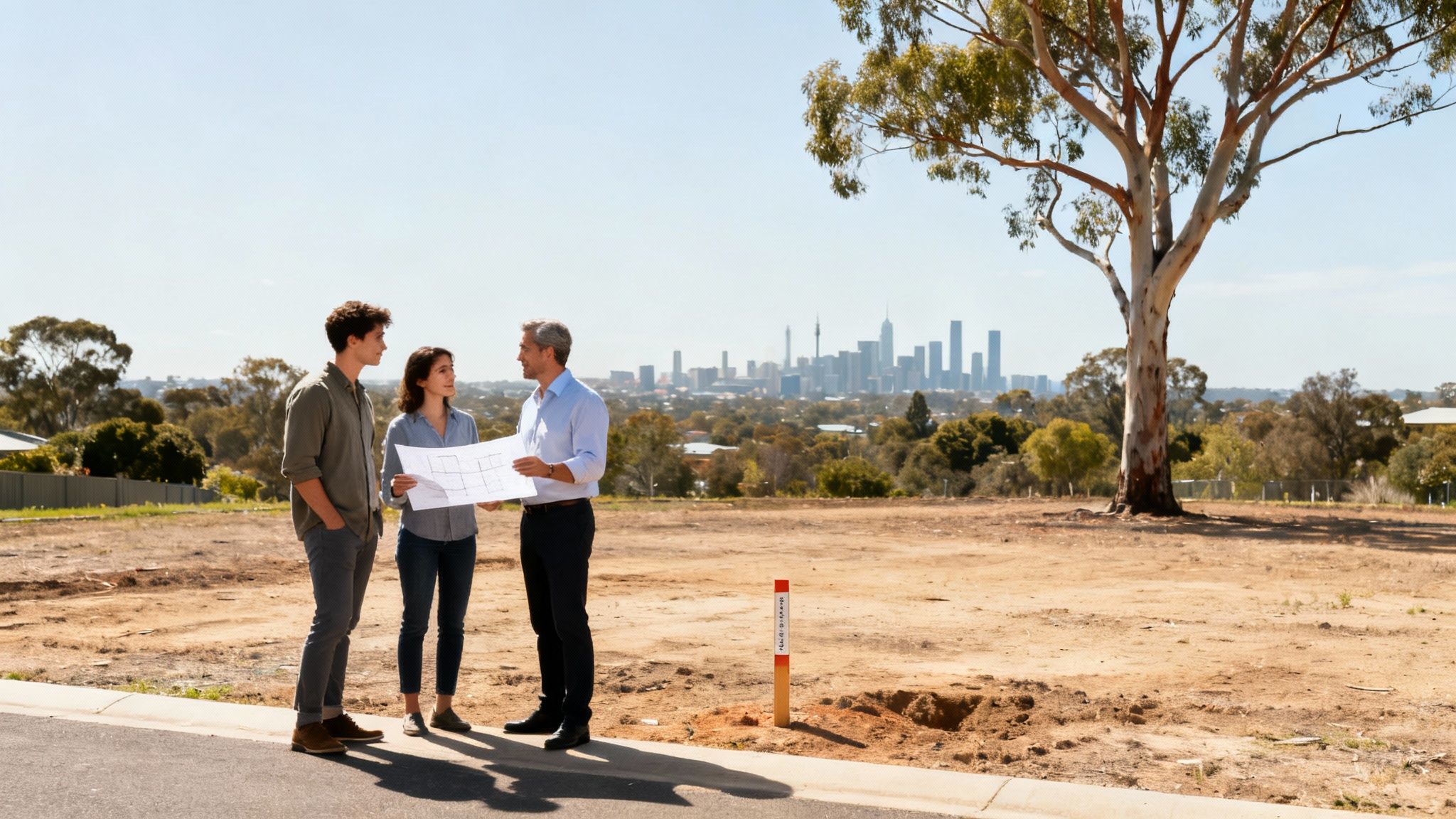
The health of the market has a direct knock-on effect on everything from builder availability to the cost of timber and steel. Recently, we've seen a real surge in confidence. In the September 2025 quarter, total dwelling approvals across Australia jumped a sharp 12.0% to 17,019. More specifically, approvals for private sector houses rose by 4.0% to 9,547, which tells us that developers and homeowners are feeling positive again.
For anyone looking to build in Melbourne, this is a big deal. It means that while there are plenty of skilled builders out there, the best ones are often booked up months, sometimes even years, in advance. Starting your research early is absolutely crucial.
Understanding Your Builder Options
Not all builders are cut from the same cloth. In Melbourne, you'll generally find three main types, and each one is geared towards a different kind of project, budget, and level of personalisation.
- Volume Builders: These are the big players who build hundreds of homes a year from a set catalogue of designs. You get less flexibility, but their bulk-buying power often makes them a more budget-friendly option.
- Custom Home Builders: A custom builder is your go-to for a truly one-of-a-kind home. They work directly with you and your architect to build from scratch, offering complete freedom for unique blocks or complex designs.
- Design-Build Firms: This is the all-in-one approach. A design-build firm like Envy Abode has both the architectural designers and the construction team under one roof. We manage the entire project from the first sketch to the final handover, giving you a single point of contact and ensuring the design intent is perfectly executed.
Choosing the right type of builder is the first major decision you'll make. A design-build firm is often the best choice for homeowners who value a streamlined process, cohesive vision, and clear accountability from start to finish.
Setting the Stage for Success
Before you even think about creating a shortlist of builders, you need to get your own house in order. A bit of prep work now will save you a world of time, money, and headaches later on. A clear vision is your North Star—it guides every single decision from here on out.
Think about your life not just today, but in five or ten years. Is the family growing? Do you need a dedicated home office? Planning for the future ensures your new home won't just suit you now, but will adapt as your life changes. It’s also the time to get serious about your finances. A realistic budget isn't just the build cost; it needs to cover council fees, landscaping, and a healthy contingency fund for those curveballs that building projects inevitably throw at you.
Honestly, a well-prepared client is a builder's dream partner. To get you started, have a look at our guide on the complete process of building a home. It breaks down exactly what to expect at every stage, giving you a clear roadmap for the journey ahead.
Defining Your Vision and Building Your Budget
Before you even think about picking up the phone to call Melbourne home builders, you need two things locked down: a crystal-clear brief and a rock-solid budget. These aren't just documents; they're your project's compass. They ensure every single decision, from the big picture down to the smallest detail, aligns with your dream and your dollars. Winging it with a vague idea is a surefire way to watch your costs spiral and your vision get lost in translation.
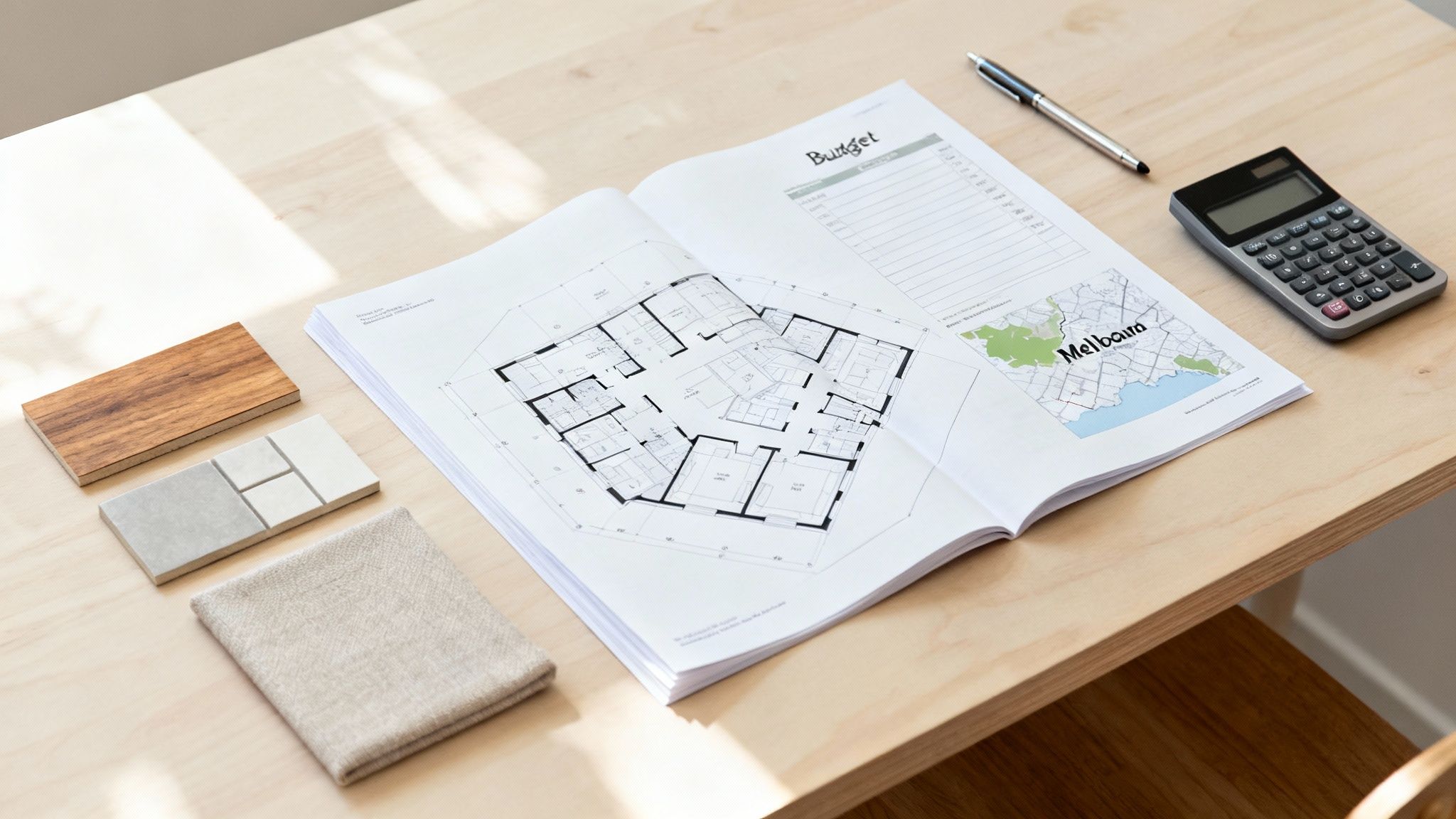
Think of the brief as a detailed letter to your future builder. It’s where you pour out your lifestyle, your aesthetic tastes, and your family's practical needs onto paper, creating a tangible blueprint. This is the key to getting everyone, from the designer to the tilers, on the same page from day one.
Crafting a Comprehensive Project Brief
Your brief isn't a one-and-done document. It's a living thing that will grow and evolve as you get clearer on what you want. Start by collecting inspiration—flick through architectural magazines, scroll through Pinterest, and even take photos of homes you love in your neighbourhood. But don't stop at the surface level. Think deeply about the flow and function of your daily life.
To create a brief that really works, make sure you include:
- Home Style and Layout: Are you after a sleek, minimalist build or something more classic like a Hamptons-style home? Get specific about your desired floor plan, noting the number of bedrooms, bathrooms, and any special spaces like a dedicated home office or a much-needed mudroom.
- Must-Haves vs. Nice-to-Haves: This is a game-changer. Create two columns. "Must-haves" are your non-negotiables—things like a double garage or a north-facing living area. "Nice-to-haves" are the dream features you'd love if the budget stretches, like a butler's pantry or hydronic heating.
- Finishes and Fixtures: Detail your preferences for key materials. This covers everything from flooring (polished concrete vs. engineered oak), benchtops (natural stone vs. porcelain), and even the style of tapware and lighting you love.
- Energy and Tech Goals: If sustainability is important, outline your goals. This could include solar panels, rainwater tanks, or high-performance insulation. Also, list any smart home integrations you’re after, such as automated lighting or security.
A well-developed brief is the most powerful tool you have for getting accurate quotes. When builders know exactly what you're imagining, they can price the job properly, which means fewer nasty surprises down the track.
Building a Realistic Melbourne Budget
Once you’ve nailed the vision, it's time to talk money. Budgeting for a new home in Melbourne is much more complex than a simple cost-per-square-metre calculation. You need a detailed financial plan that anticipates every possible expense, both the obvious and the hidden.
As of 2025, the average cost to build in Australia sits somewhere between $1,800 and $4,500 per square metre. In Melbourne’s premium market, you can expect to be at the higher end of that scale. For a standard 200-square-metre home, this puts the base construction cost between $360,000 and $900,000, and that's before you've even bought the land or paid for other critical fees. This figure is constantly shifting due to supply chain pressures, inflation, and a growing desire for high-quality, sustainable materials. You can explore more about Melbourne's property market dynamics to get a better sense of these trends.
Looking Beyond the Build Cost
One of the biggest mistakes we see homeowners make is focusing only on the builder's quote. A truly realistic budget must account for a whole host of other expenses that can easily add another 20-30% to your total project cost.
Your complete budget should set aside funds for:
- Site Costs: These are the costs to get your land ready for construction. Think soil testing, excavation, retaining walls, and connecting services like water, power, and sewerage.
- Council and Permit Fees: Every Melbourne council has its own schedule of fees for planning permits, building permits, and inspections. These can quickly add up to thousands of dollars.
- Professional Fees: Don't forget to budget for architects, draftspeople, engineers, and building surveyors if their services aren't bundled into your builder's contract.
- External Works: The builder’s quote usually stops at the front door. You’ll need a separate budget for the driveway, fencing, landscaping, and any decking or outdoor entertaining areas.
- Contingency Fund: This is your non-negotiable financial safety net. Set aside 10-15% of the total project cost for the unexpected. It's for things like hitting rock during excavation or deciding to make a crucial design change mid-build.
By taking the time to create a detailed brief and a thorough budget, you're not just planning a build. You're laying the essential groundwork for a smooth, transparent, and successful partnership with your chosen Melbourne home builder.
Finding and Vetting Potential Melbourne Builders
With your vision clear and a budget in hand, it’s time for the exciting part—finding the right team to bring it all to life. The search for reputable Melbourne home builders isn’t about just Googling and hoping for the best. It’s about a targeted search to build a shortlist of professionals whose style, scale, and commitment to quality genuinely match what you’re looking for.
A fantastic place to start is with the industry bodies themselves. Organisations like the Housing Industry Association (HIA) and Master Builders Victoria are goldmines for credible, professional builders. Membership isn’t just a sticker on a van; it shows a commitment to industry standards and staying up-to-date, which gives you an immediate layer of confidence.
Another smart move? Ask your architect or building designer. They're on the front lines every day and know exactly who delivers on their promises, who communicates clearly, and who runs a tight ship. Their insider knowledge can be the shortcut you need to find a real gem.
Due Diligence Is Non-Negotiable
Once you've narrowed it down to a shortlist of three to five builders, the real work begins. This vetting stage is the single most important part of protecting your investment and ensuring the whole process doesn't turn into a nightmare. Seriously, don't skip these checks, even if a builder comes with a glowing recommendation from a friend.
First stop: the Victorian Building Authority (VBA). Their public register is a free and essential tool. Use it to confirm that your potential builder is registered and holds the right class of licence for your project. More importantly, it will show you if they have any disciplinary actions or orders against their name. A quick five-minute search here could save you years of headaches.
Next up is insurance. Your builder absolutely must have current Domestic Building Insurance (DBI), which you might know as builder’s warranty insurance. This is your safety net if the builder dies, disappears, or goes bust. On top of that, they need Public Liability Insurance to cover any accidents on-site. Ask to see the actual certificates of currency for both—a verbal confirmation isn't good enough.
Never, ever sign with a builder who can't show you proof of a current VBA registration and valid insurance. These are the absolute basics for any legitimate building professional in Victoria. No excuses.
Assessing Workmanship and Reputation
A builder’s true story is told by their past projects. A slick website is one thing, but seeing their craftsmanship with your own eyes is something else entirely. Ask each builder on your shortlist for addresses of recently completed homes that are similar in scope and style to yours.
Make the effort to visit at least one or two of these properties. As you walk through, zoom in on the little details—this is where you can separate the good from the truly great.
- Check the Finishes: How’s the paintwork? Are the tile and grout lines clean and precise? Do the cabinet doors and drawers all line up perfectly?
- Inspect the Joinery: Look at how the architraves, skirting boards, and window frames meet. You're looking for tight, seamless joints.
- Assess Overall Quality: Does the home feel solid? Open and close doors, windows, and drawers. They should operate smoothly, not stick or rattle.
While you're at it, ask for the phone numbers of those homeowners. A conversation with a past client gives you the unfiltered truth about what it’s like to work with that builder. Ask them about communication, sticking to the timeline and budget, and how they handled the inevitable curveballs. This kind of real-world feedback is pure gold and often the final piece of the puzzle.
To get your research started, checking out a curated list of the top 20 builders in Melbourne can be a great way to discover some of the city's most respected names.
Interviewing Builders and Comparing Quotes
You’ve done the hard yards. You’ve got a detailed brief, a realistic budget, and a shortlist of vetted Melbourne home builders. Now for the part that can’t be boiled down to a spreadsheet: the interviews.
Think of this less like a formal Q&A and more like a first date for a long-term business partnership. You’re looking for someone whose skills, price, and communication style all click. This is the person you’ll be navigating one of life’s biggest projects with for the next 12 to 18 months, so finding the right fit is everything.
This chat is your chance to get a feel for their process, their team, and how they handle the inevitable hiccups that come with any build. You need to walk away feeling confident you can trust and genuinely collaborate with them.
Essential Questions to Ask Your Potential Builder
Walking into these meetings unprepared is a huge missed opportunity. A good set of questions helps you cover all the bases and compare each builder’s answers fairly. It’s time to move beyond the obvious "how much will it cost?" and get into the nitty-gritty of how they actually operate.
Here are a few questions that will tell you a lot:
- Project Management and Communication: Who will be my day-to-day contact? How often should I expect updates? A dedicated site manager and a clear communication rhythm are hallmarks of a well-run company.
- Team and Subcontractors: Do you have your own team, or do you rely on a rotating cast of subcontractors? Builders with long-standing relationships with their trades almost always deliver more consistent, high-quality work.
- Handling Issues: Can you walk me through a time a project went off the rails and how you brought it back? Their answer will reveal a lot about their problem-solving skills, honesty, and accountability.
- Timeline Specifics: What’s your current workload look like, and when could you realistically start our project? Be wary of any builder who can start tomorrow—the best ones are usually booked well in advance for a reason.
A builder's communication style is just as important as their construction skill. You're looking for someone who actually listens, answers your questions without hiding behind jargon, and makes you feel heard. That rapport is what will get you through the hundreds of decisions you’ll make together.
Decoding and Comparing Quotes
Once the interviews are done, the quotes will start to land in your inbox. It’s so tempting to just skip to the final number at the bottom, but that’s one of the biggest mistakes a homeowner can make.
Builder quotes are rarely an apples-to-apples comparison. A cheaper quote often just means less has been included. Your job is to put on your detective hat and figure out exactly what’s behind each price. Look closely at the inclusions, exclusions, and the type of contract on offer.
Understanding Pricing Structures
In Melbourne, you’ll generally come across two main types of building contracts. Each has its own benefits and risks.
- Fixed-Price Contract: This is the most common approach for new homes. The builder agrees to complete the whole project for a set total price. It gives you budget certainty, which is great, but be warned: any changes you make along the way will result in variations, and those can get expensive, fast.
- Cost-Plus Contract: With this model, you pay the actual cost of labour and materials, plus a builder’s margin (usually a percentage of the total). It’s far more transparent and flexible, but it offers less predictability on the final cost from the outset.
The type of contract a builder prefers can tell you a lot about their process. A premium firm like Envy Abode, for example, will often work with clients to find a structure that provides both clarity and control, tailored to the unique demands of the project.
Spotting Hidden Costs in a Quote
To truly compare your quotes, you need to understand two key terms that trip up many homeowners: Prime Cost (PC) items and Provisional Sums (PS).
- A PC item is an allowance for something where the final choice is still yours, like tapware, tiles, or appliances. The builder puts in an estimate, but if your taste is more expensive than their allowance, you’ll be paying the difference.
- A Provisional Sum is an allowance for work where the full scope isn’t known yet, like excavation or rock removal. If the site work turns out to be trickier than anticipated, the cost will climb beyond this initial sum.
Pay very close attention to these allowances. Some builders might use unrealistically low PC and PS figures to make their quote look more attractive, knowing full well the costs will blow out later.
To keep everything straight, a simple comparison table is your best friend. It forces you to line everything up and see where the differences really are.
Comparing Builder Quotes: A Side-by-Side Analysis
Item/Feature | Builder A (e.g., Fixed Price) | Builder B (e.g., Cost Plus) | Builder C (e.g., Envy Abode) | Notes/Questions |
Contract Type | Fixed Price | Cost Plus 25% | Custom Hybrid | Does the fixed price feel too restrictive for us? |
Site Costs Allowance | PS $25,000 | PS $35,000 | PS $32,000 (based on soil report) | Why is there a $10k difference in allowances? |
Kitchen Appliances | PC $8,000 | PC $15,000 | PC $15,000 (specific brands listed) | Is an $8k allowance realistic for the quality we want? |
Landscaping Included? | No | No | Driveway and basic turf included | What will the full landscaping cost us later? |
Timeline Estimate | 12-14 Months | 10-12 Months | 12 Months | What are the penalties if the project is delayed? |
By meticulously breaking down each quote and asking these clarifying questions, you’ll move beyond the price tag to find the builder who offers the best value and, more importantly, the most transparent partnership. This diligence is your best defence against budget blowouts and the key to a smoother journey.
Navigating Contracts, Timelines, and Approvals
You’ve found your builder—congratulations! Now, the project shifts from ideas and sketches to the nuts and bolts of making it happen. This is where the legal and logistical framework gets built, and honestly, it’s just as important as the concrete slab your home will sit on.
This stage is all about contracts, timelines, and the often-tricky world of council approvals. Getting this part right is the key to a smooth, predictable build with your Melbourne home builders.
The first big document you’ll see is the domestic building contract. In Victoria, these are heavily regulated to protect both you and the builder. It will lay out everything in black and white: the total price, the payment schedule, the exact scope of work, and even how you’ll handle any disagreements. It’s a dense, legally binding document, and signing it without a thorough review is a huge risk. We always tell our clients to have a solicitor who specialises in construction law look it over before putting pen to paper.
This diagram shows you the key steps leading up to this crucial contract stage.
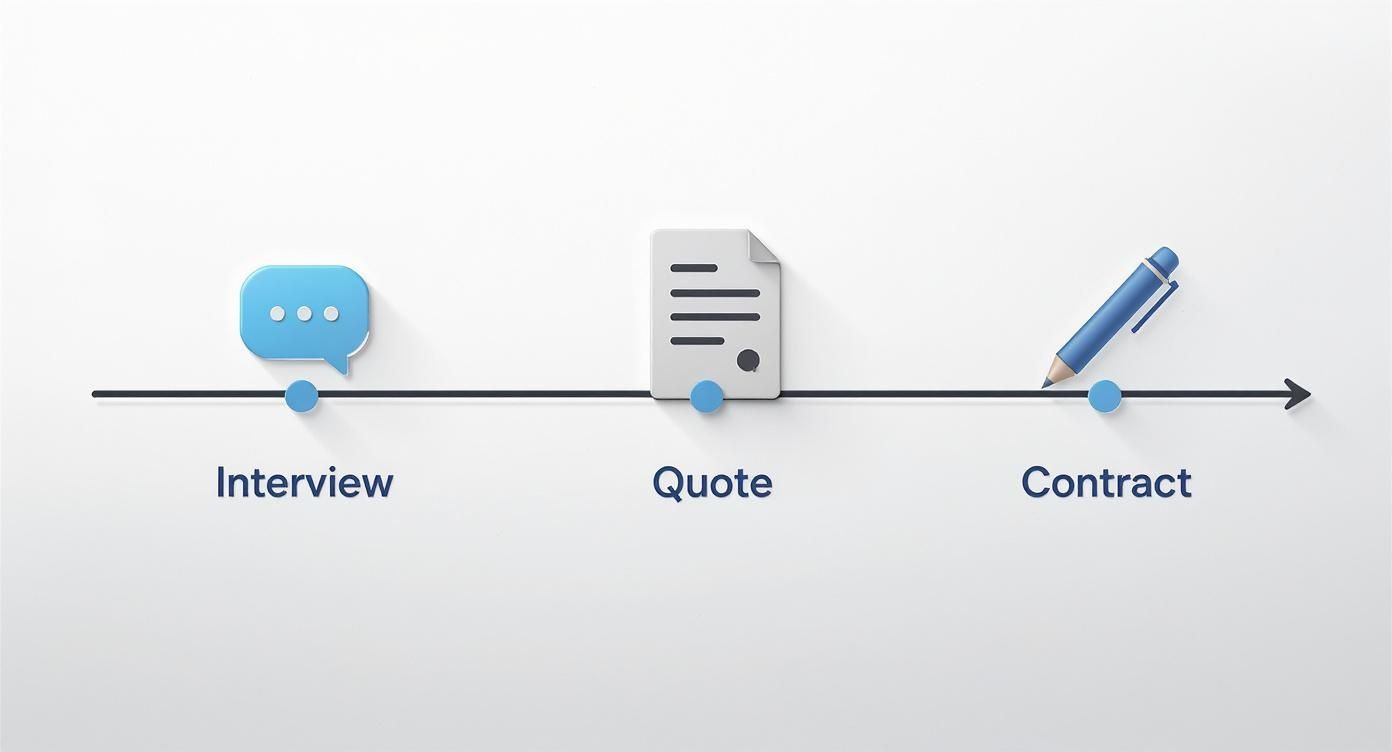
As you can see, signing the contract isn’t the beginning—it’s the final step after a careful process of interviews and quote comparisons, locking in the partnership for your build.
Understanding the Melbourne Building Timeline
One of the first questions we always get is, "So, how long will this actually take?" While every custom home is unique, a typical construction timeline in Melbourne follows a pretty predictable sequence. Knowing what to expect is crucial for a positive experience.
A standard project usually breaks down like this:
- Pre-Construction (3–6 months): This is the planning engine room. It’s all about finalising designs, sorting out the engineering, securing planning and building permits, and making those final decisions on fixtures and finishes.
- Site Preparation & Foundation (1-2 months): Once the paperwork is sorted, the real work begins. The site is cleared, services are connected, and the concrete slab is poured.
- Framing & Lock-Up (2–4 months): This is when your home really starts to take shape. The frame goes up, followed by the roof, windows, and external doors. At "lock-up," your home is officially secure and weatherproof.
- Interior Fit-Out (3–5 months): Now, the inside comes to life. This covers plumbing and electrical rough-ins, insulation, plastering, joinery, tiling, and painting.
- Completion & Handover (1-2 months): The final push! Appliances and fixtures are fitted, landscaping is completed, and we'll walk through with you to address any minor defects before handing over the keys.
It also pays to keep an eye on the bigger picture. Recent data from the June 2025 quarter, for instance, showed a 4.4% drop in new dwelling commencements across Australia, with new private house starts falling by 6.6%. These numbers, often influenced by interest rates and construction costs, can impact builder availability and material lead times, subtly shifting project schedules.
The Local Permit and Approval Process
Navigating Melbourne’s planning and permit landscape can feel like you’re trying to solve a puzzle. You’re dealing with multiple authorities, mainly the local council and a private building surveyor, who have very different but equally important jobs.
Your council is in charge of the planning permit. They’re looking at whether your design fits the local zoning rules, neighbourhood character, and any heritage overlays. The building permit, on the other hand, is issued by a building surveyor. They're focused on making sure your plans comply with the National Construction Code and all the technical standards for safety and structural integrity.
An experienced local builder is your greatest asset here. They get the specific quirks of different councils—from Stonnington’s strict heritage guidelines to Boroondara’s tree protection rules—and can prepare paperwork that anticipates and solves potential problems before they cause months of delays.
Common hurdles often pop up around things like overlooking or overshadowing neighbouring properties, or not meeting setback requirements. A skilled design-build firm like Envy Abode manages this entire process for you, talking directly with councils and surveyors to clear a smooth path to approval. For a closer look, check out our guide on how to get a building permit.
Getting a firm grip on these contracts, timelines, and approvals is what sets the stage for a successful and surprisingly stress-free build.
Managing the Handover and Final Inspection
After months of anticipation, you’ve finally reached the finish line. The handover is one of the most exciting moments of the entire build, but it’s also where a sharp eye for detail is absolutely non-negotiable. This isn’t just about being handed the keys; it’s the formal process of accepting your new home and ensuring every last detail is up to the standard you’ve paid for.
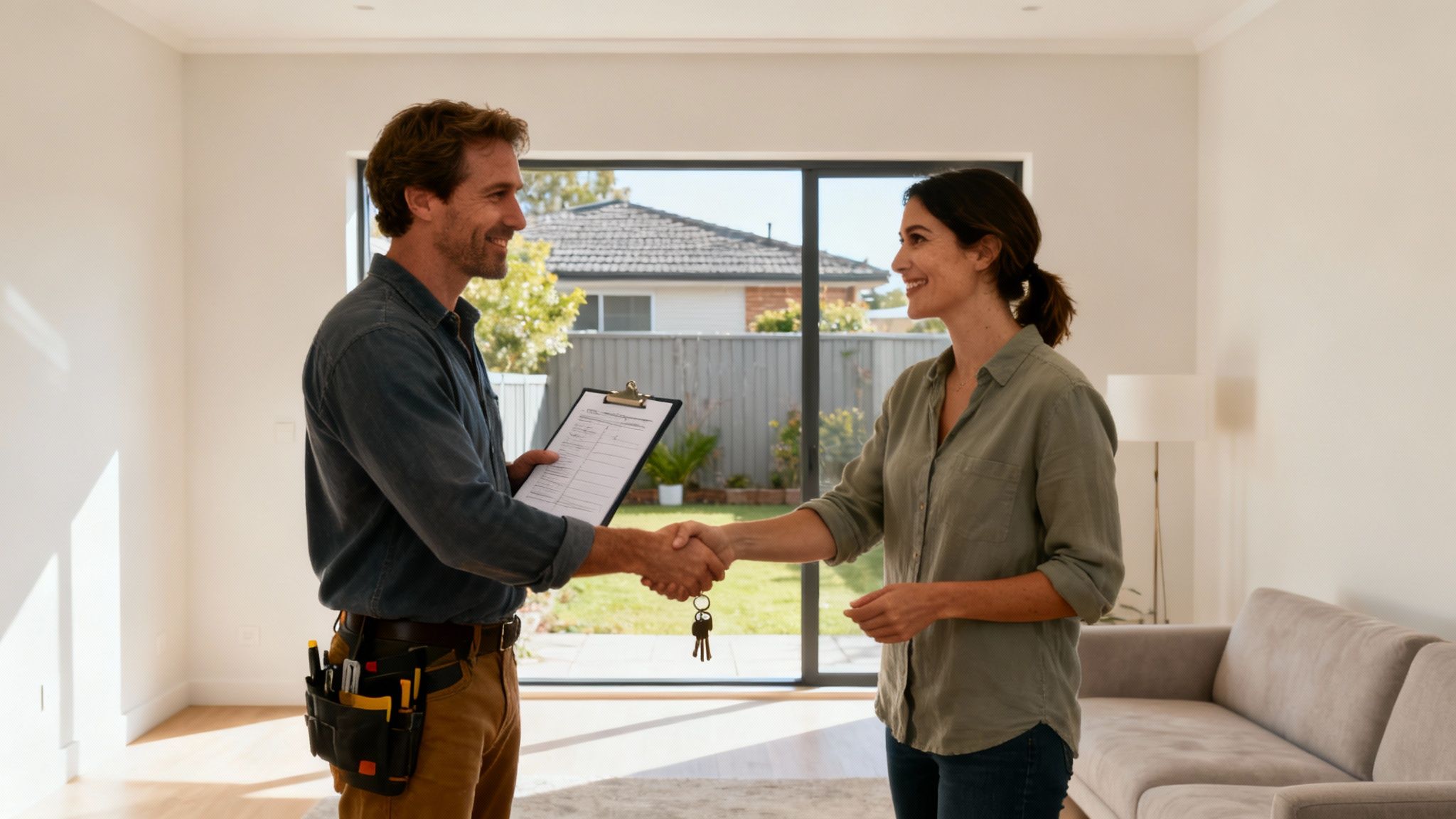
This final stage kicks off when your builder announces the project has reached practical completion. In builder-speak, this means the home is safe and reasonably ready to live in, even if a few minor touch-ups are still needed. It’s your cue to conduct the final inspection, make a list of any outstanding issues, and get ready for the official handover.
Conducting a Meticulous Final Inspection
This is it—your last chance to spot any issues before you make that final payment. Whatever you do, don't rush it. A quality Melbourne builder will actually encourage you to take your time, walking you through the property with the site manager to review the work together.
It pays to go in with a game plan. Arm yourself with a checklist and move methodically from room to room, so nothing gets missed.
Here’s what I always tell clients to look for:
- Surfaces and Finishes: Check paintwork from different angles and in different lighting to spot patchy areas, drips, or scuffs. Scan walls and ceilings for any cracks or imperfections.
- Fixtures and Fittings: Seriously, open and close every single door, window, and cupboard. Do they operate smoothly? Do they latch properly? Test every tap, showerhead, and toilet flush.
- Electrical and Appliances: Flick every light switch on and off. Test every power point—your phone charger is the perfect tool for this. If appliances are included, run them on a quick cycle to make sure they’re working.
- Flooring and Tiling: Walk over all the floors, listening for squeaks and looking for scratches or gaps. Run your hand over tiled surfaces to check they’re level and inspect the grout lines for consistency.
For a detailed, room-by-room guide, our comprehensive building inspection checklist is an incredibly useful resource to bring along on the day.
The Essential Handover Documentation
Once you’re happy and any defects you’ve pointed out have been fixed, your builder will hand over a folder of crucial documents. This isn’t just admin; it’s your home’s official history and proof that everything is compliant and above board.
Your handover pack should always contain:
- Certificate of Occupancy: This is the big one, issued by your building surveyor. It certifies your home is safe, habitable, and meets all building regulations. You legally cannot move in without it.
- Warranties and Manuals: You should get all the paperwork for your appliances, hot water system, air conditioning, and any other equipment installed in the home.
- Compliance Certificates: These are official documents confirming that all plumbing, electrical, waterproofing, and termite protection work was done by licensed professionals to Australian Standards.
Think of this document handover as the final piece of the puzzle. It transfers legal responsibility for the home to you and equips you with everything you need to operate and maintain your new property effectively for years to come.
Understanding the Defects Liability Period
Your relationship with your builder doesn’t just stop the moment you have the keys. In Victoria, all domestic building contracts include a defects liability period. This is a set timeframe, usually between three and six months, where the builder is obligated to come back and fix any defects that pop up.
This covers the little things that often only become apparent after you’ve moved in—a nail pop in the plaster as the house settles, a tiny plumbing leak, or a door that starts to stick.
My advice? Keep a running list of any non-urgent issues you notice and send it to your builder before the period ends. A truly reputable builder stands by their craftsmanship and will address these items professionally, giving you complete peace of mind to simply enjoy your beautiful new home.
Your Top Building Questions, Answered
If you’re thinking about building in Melbourne, you’ve probably got a few questions swirling around. It’s completely normal. To help clear things up, we’ve put together some straight answers to the queries we hear most often.
How Long Does It Take to Build a House in Melbourne?
This is the big one, isn’t it? For a custom single-storey home, you can generally expect the on-site construction to take between six and twelve months. If you’re planning a more complex double-storey build, that timeframe often extends to ten to eighteen months.
But here's a crucial tip: that’s just the time spent on-site. The pre-construction phase—which covers design, detailed documentation, and navigating council approvals—can easily add another four to eight months before a single shovel hits the dirt.
What Is a Defects Liability Period?
Think of the defects liability period as your built-in quality guarantee. It’s a set timeframe written into your contract, typically lasting between three and twelve months in Victoria, that starts right after handover.
During this period, your builder is legally required to come back and fix any issues that pop up with their workmanship or the materials used. It’s all about ensuring the quality stands up as your new home settles into its foundations.
A professional builder will always stand by their work. This period isn't a formality; it’s their commitment to addressing any legitimate defects promptly, giving you total peace of mind to settle in and enjoy your beautiful new space.
Ready to start a conversation about your own building journey? The team at Envy Abode specialises in crafting bespoke luxury homes, seamless extensions, and stunning renovations right across Melbourne.
Take a look at our portfolio and see how our integrated design-build process brings incredible visions to life. You can learn more at https://envyabode.com.au.