Malvern EastProject Repton , 2025
“The key thing we were looking for was the consistency in the pricing that we received, having the right team to be able to problem solve when an issue arose, they did it in a very calm and measured manner. They're a great team and we worked so well together, had we done the design with Envy it would have saved us 6 months minimum”
Choosing Melbourne Luxury Home Builders

Building a custom home in Melbourne isn’t just about bricks and mortar; it’s about creating your own personal sanctuary. It’s the incredibly rewarding journey of translating your lifestyle, your personality, and your aspirations into architectural form. This guide is your roadmap to navigating that intricate process with complete confidence.
Your Journey to a Bespoke Melbourne Home
Embarking on a custom home build is easily one of the most significant investments you'll ever make. It goes far beyond just picking finishes from a catalogue. This is a deep, creative collaboration between you, architects, designers, and masterful builders to bring something truly unique to life. The whole process is about marrying your vision with the practical realities of construction, council regulations, and the specific character of your site.
The journey actually begins long before anyone turns the first sod of earth. It starts with you defining what "luxury" truly means to you.
Is it a state-of-the-art kitchen built for entertaining? A serene, minimalist retreat to escape the city's relentless pace? Or perhaps a fully integrated smart home where everything works seamlessly? Your daily routines, your hobbies, and your plans for the future all become part of the brief.
Why Build a Custom Home in Melbourne
Melbourne’s property landscape is unique. Prestigious suburbs like Toorak, Brighton, and Kew present both incredible opportunities and very specific challenges, like navigating heritage overlays or working with compact, challenging sites. A custom build is your chance to maximise every square metre of your block, creating a home that responds perfectly to its environment and, more importantly, to you.
The market for high-end homes here is strong and resilient. Melbourne's luxury home building sector has seen significant growth, driven by a real demand for premium, sustainable, and intelligent homes. Property values continue to climb in sought-after suburbs where limited supply and keen buyer interest create a very favourable environment. You can get more detail on the local market from building experts like Hamilton Bardin.
The decision to build a custom home is a commitment to uncompromising quality. It’s about ensuring every single detail—from the satisfying weight of a door handle to the exact way light fills a room at sunrise—aligns with your personal standard of excellence.
Partnering with the right team of Melbourne luxury home builders is the absolute cornerstone of success. These people aren't just contractors; they are the custodians of your vision. The very best builders act as your guide, translating abstract ideas into meticulously detailed plans and, ultimately, into a breathtaking reality. Their expertise ensures the final result isn’t just beautiful, but also functional, enduring, and a true reflection of you.
How to Properly Vet and Select Your Builder
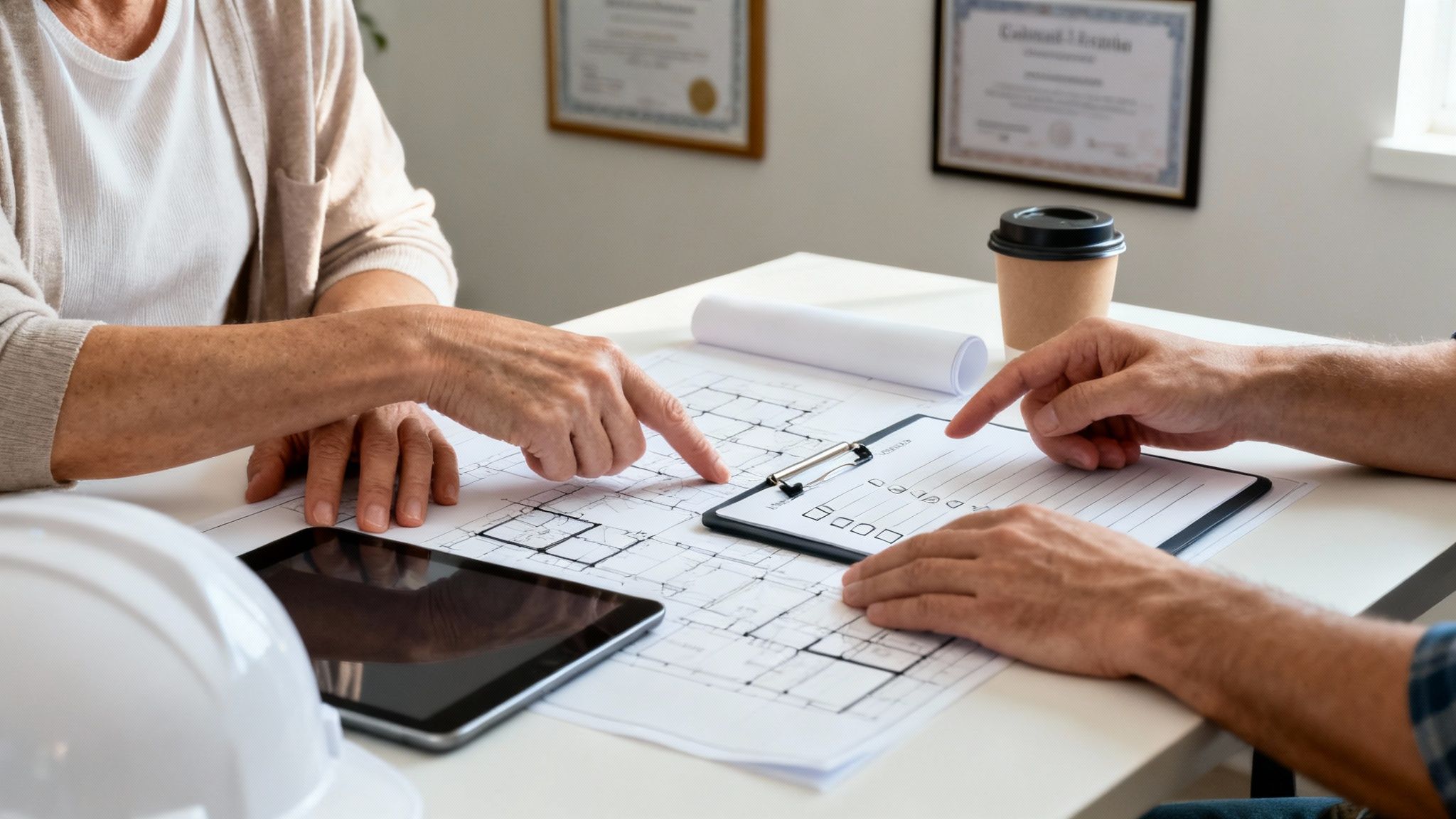
This is it. The single most important decision you'll make for your entire project. While a builder’s stunning portfolio is a great first impression, it only ever tells part of the story.
To truly protect your investment, you need to dig deeper. You're looking for a partner whose financial stability, transparent processes, and long-term client satisfaction are just as impressive as their finished homes.
Verifying Credentials and Financial Health
Before you fall in love with a builder’s designs, you need to be sure their business is on solid ground. A financially healthy builder has the stability to see your project through without cutting corners or experiencing supplier issues.
Start by asking for proof of all their essential insurances. This includes Public Liability and, crucially, Domestic Building Insurance (DBI), which is mandatory in Victoria for any project over $16,000.
Next, check their industry affiliations. Are they members of respected bodies like the Housing Industry Association (HIA) or Master Builders Victoria? These memberships aren't just logos on a website; they signify a commitment to a code of ethics, ongoing professional development, and industry best practices.
A builder’s hesitation to provide financial references or proof of insurance is a major red flag. Reputable Melbourne luxury home builders will have this information ready and should offer it willingly. It’s a standard part of the process.
It's also worth asking about their current workload. How many projects do they have underway, and how many have they completed in the last year? This gives you a real-world sense of their capacity and reputation in the market.
Speaking with Past Clients
This is where you get the unvarnished truth. Don't just rely on hand-picked testimonials on a website; ask your potential builder for the contact details of at least three past clients.
Make sure these projects are similar in scale and style to yours, and—this is key—that they were completed one to three years ago. This timeframe is the sweet spot. It’s long enough for any post-handover issues to have emerged, giving you a clear picture of the builder’s warranty support and the durability of their work.
When you call, get specific with your questions:
- Communication: How was the flow of information? Did you feel in the loop, or were you always chasing answers?
- Budget: How were variations handled? Were there unexpected costs, and how were they justified?
- Timeline: Did they finish on schedule? If not, what caused the delays and how did the builder manage the situation?
- Aftercare: Have any issues popped up since you moved in? How quickly did the builder respond to fix them?
This is candid, real-world feedback you simply can't get anywhere else. For an even more exhaustive list of questions, check out our guide on how to select a builder.
Assessing Experience with Complex Melbourne Projects
Building a high-end home in Melbourne isn't straightforward. You might be dealing with the strict heritage overlays in Camberwell, tight site access in South Yarra, or a sloping block in Balwyn North. These challenges require a specific skill set that not every builder possesses.
Ask for direct examples of projects they've built that faced similar constraints to your property. If you have a heritage overlay, ask them to talk you through how they navigated the council approval process. If your site is tricky, ask to see a home they’ve built on a comparable block.
A builder who mostly works on flat, empty lots in new estates may not have the creative problem-solving skills needed for an intricate build in an established suburb. Seeing their past success in these very areas is one of the strongest indicators they’re the right fit for you.
To help you stay organised during your interviews, we've put together a simple checklist of what to ask.
Builder Vetting Checklist
Use this table as a guide when you sit down with potential builders. Their answers—and how they answer—will tell you everything you need to know.
Area of Inquiry | Key Questions to Ask | Ideal Response / What to Look For |
Licensing & Insurance | Can I see your VBA registration and proof of Domestic Building & Public Liability Insurance? | Immediate and willing to provide all documents without hesitation. |
Financial Stability | Can you provide a reference from your bank or a primary supplier? | Transparency and confidence. They should have established, positive relationships. |
Experience & Specialisation | Can you show me 3-4 projects similar to mine in scale, style, and location? | A portfolio that clearly demonstrates relevant experience, not just generic luxury homes. |
Client References | May I have contact details for 3 recent clients (from 1-3 years ago)? | Eagerness to connect you. It shows they have happy clients with nothing to hide. |
Team & Process | Who will be my primary point of contact? How often will we have site meetings? | A clear structure (e.g., a dedicated Project Manager) and a defined communication plan. |
Problem Resolution | Can you describe a major challenge on a past project and how you resolved it? | A story that shows proactive problem-solving and accountability, not blame-shifting. |
Heritage & Council | What is your experience with heritage overlays and local council requirements in my area? | Specific examples of navigating complex approvals and demonstrating local knowledge. |
Warranty & Aftercare | What does your post-handover warranty process look like? | A clear, documented process for addressing any defects promptly. |
Having these questions prepared shows you’re a serious and informed client, setting the tone for a professional and respectful partnership from day one.
Navigating the Design and Planning Phase
Once you’ve chosen your builder, the real excitement begins. This is where your vision starts to become tangible, moving from abstract ideas and inspiration boards into detailed construction plans. Getting this stage right is everything. It sets the tone for the entire project, ensuring the home we build isn't just stunning, but a true reflection of how you live.
Right away, you'll face a crucial decision: how to manage the project. The traditional route involves hiring an architect separately, finalising the design, and then putting the plans out to tender for builders to bid on. But there’s a more integrated and, frankly, smarter way to work—the design-build approach.
Design-Build Versus Traditional Models
With a design-build model, everyone is on the same team from day one. Your designer, interior designer, and builder are all at the table together, working as a single, unified force. This is a complete game-changer.
Why? Because your builder’s real-world construction knowledge and on-the-ground cost insights are baked into the design process from the very first sketch. This synergy means we can align your aesthetic dreams with your budget in real time, sidestepping expensive and frustrating revisions down the track.
Think about a common scenario: an building designer designs a breathtaking cantilevered balcony. In a traditional setup, you might not find out until months later, during the builder tender process, that the structural engineering required blows your budget sky-high. With a design-build firm, that conversation happens immediately, allowing the team to find a clever solution that captures the look you want without derailing the finances.
Engaging your builder during the design phase is one of the single best ways to protect your budget and timeline. It turns the process from a linear, often disjointed sequence into a dynamic, collaborative partnership.
This early collaboration is also invaluable for navigating Melbourne’s unique planning hurdles. An experienced local builder can immediately flag potential issues with heritage overlays in suburbs like Armadale or Kew. They can advise on excavation strategies for the tricky sloping sites common in areas like Balwyn North long before plans ever get near the council—saving you months of potential delays.
Developing Your Detailed Project Brief
Your project brief is the North Star for your new home. It needs to go so much deeper than just the number of bedrooms and bathrooms. A great brief captures the feeling you want your home to evoke and the function it needs to serve.
Take some time to think about your daily routines, what you’re passionate about, and how you see your family using the space in five or ten years.
- Lifestyle & Entertaining: Do you love hosting big, lively gatherings, or are intimate dinner parties more your style? This single detail will shape the flow between your kitchen, dining, and outdoor entertaining areas.
- Private Sanctuaries: Is a quiet library, a dedicated home gym, or a sun-drenched reading nook essential for your well-being?
- Future Needs: Might you need a guest suite for visiting family, more space for growing kids, or features that will allow you to comfortably age in place?
The more detail you can give us, the more precisely our team can craft a home that is yours and yours alone. For a deeper dive into this creative process, explore our guide to achieving a custom new home design.
Assembling Your Specialist Team
A truly exceptional home is the sum of many expert parts. Beyond the architect and builder, getting key specialists involved early in the planning phase is non-negotiable for a sophisticated and cohesive result.
- Interior Designer: They do more than just choose fabrics and furniture. An interior designer ensures the home’s interior architecture—from custom joinery to intelligent lighting placement—is considered from the very beginning.
- Landscape Architect: In Melbourne, the connection between inside and out is paramount. A landscape architect is crucial for creating that seamless flow, making your garden feel like a natural extension of your living space.
- Lighting Consultant: The right lighting is transformative. A specialist can design a scheme that sets the mood, highlights beautiful architectural details, and makes your home a joy to live in.
Bringing these experts into the fold early ensures a holistic vision where every element works in perfect harmony. It’s a core principle for the best Melbourne luxury home builders because it consistently delivers a superior, more thoughtfully realised home. Despite recent data showing a 19% decline in general detached house construction in Victoria, the luxury market remains strong, underscoring the enduring value of getting these details right. You can read more about Victorian housing development dynamics in this ANU report.
Understanding Costs, Contracts and Timelines
Once the design is locked in, the conversation naturally turns to the numbers, the paperwork, and the schedule that will shape the next 18 to 24 months of your life. Getting your head around these elements is the key to managing your budget and feeling confident as your home takes shape.
It can all seem a bit daunting, but a great builder will walk you through every line item and clause. This stage is all about pulling back the curtain, making sure there are no nasty surprises, and setting crystal-clear expectations for everyone involved.
Fixed-Price Versus Cost-Plus Contracts
One of the first big financial decisions you'll make is the type of contract you'll sign. In Melbourne's luxury custom home market, you’ll generally come across two main options: fixed-price and cost-plus. Neither is right or wrong; the best fit really comes down to your project’s complexity and how you feel about budget certainty versus in-the-moment flexibility.
- Fixed-Price Contract: Just as it sounds, this gives you a single, locked-in price for the entire build. It’s based on a meticulously detailed set of plans and specifications, offering ultimate peace of mind when it comes to the final number. The trade-off? It’s less flexible. If you decide to change something mid-stream (known as a variation), it’ll require a formal—and often expensive—amendment to the contract.
- Cost-Plus Contract: With this model, you pay the actual cost of labour and materials, plus an agreed-upon builder's margin (the "plus"). It’s a completely transparent, "open-book" way of working, often preferred for highly bespoke projects where you might want to finalise finishes as you go. You get maximum flexibility, but less certainty on the final cost from day one. A healthy contingency fund is absolutely essential here.
A seasoned Melbourne luxury home builder won't just push one over the other. They’ll sit down with you, discuss the pros and cons of each in the context of your specific vision, and help you land on the structure that feels right for you.
Everything from the initial brief, through to detailed design and council approvals, lays the financial groundwork for the build itself.
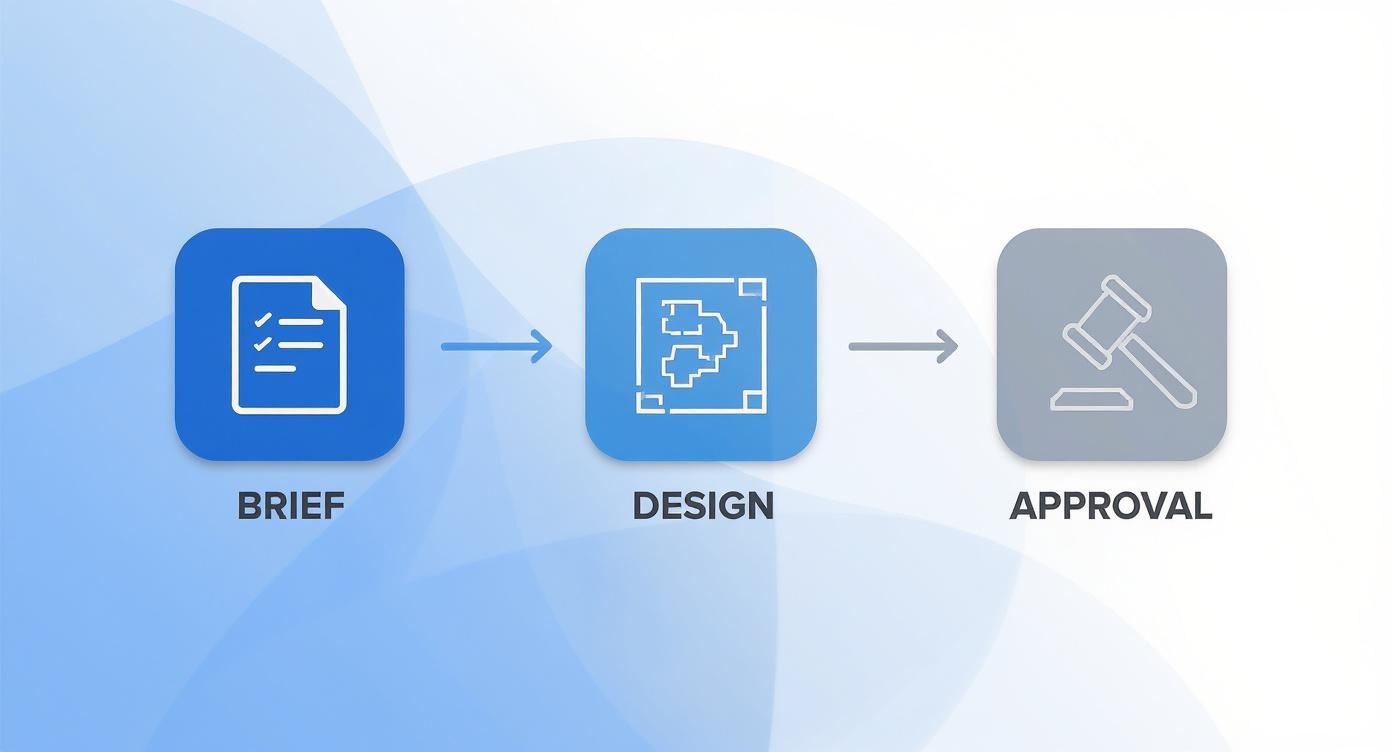
This workflow isn't just about process; it's about making those crucial decisions before a single sod is turned, which is the secret to keeping a complex project on track and on budget.
Key Drivers of Your Project Budget
While every custom home is one-of-a-kind, there are a few key areas that consistently have the biggest say on the final figure. Knowing what these are helps you make smart decisions about where to invest for the greatest impact.
You can get a deeper dive into local pricing factors in our guide on the average cost to build a house.
Generally, the major cost drivers boil down to these four areas:
- Site Conditions and Prep: This is the great unknown. Hitting unexpected rock, dealing with a steep slope, or finding poor soil can add tens of thousands to the budget before you've even laid the slab.
- Structural Complexity: Want that dramatic cantilevered balcony or a massive, uninterrupted open-plan living space? Features like these require some serious engineering and specialised trades, which all comes at a cost.
- Materials and Finishes: This is where the budget can truly skyrocket. The gap between a high-end tile and a bespoke, book-matched marble slab from Italy is enormous. The same goes for tapware, flooring, and lighting.
- Joinery and Cabinetry: Fully custom joinery is a signature of luxury design, but creating those beautiful walk-in robes, library shelves, and gourmet kitchens is a significant investment.
Cost Driver Comparison for a Luxury Build
This table gives you a feel for how different selections can influence the final cost.
Cost Category | Standard Luxury Inclusion | Premium/Bespoke Upgrade | Approximate Cost Impact |
Kitchen Benchtops | High-end engineered stone (e.g., Caesarstone) | Imported natural stone slab (e.g., Calacatta marble) | $20k - $80k+ |
Flooring | Quality engineered timber or large-format porcelain tiles | Custom-milled European oak or natural stone flooring (e.g., Travertine) | $30k - $100k+ |
Windows | High-performance, double-glazed aluminium frames | Architecturally designed steel-framed or thermally broken systems | $50k - $150k+ |
External Cladding | Render with feature timber or stone elements | Full natural stone cladding, zinc, or copper panelling | $40k - $200k+ |
These are just examples, of course, but they illustrate how quickly the numbers can climb based on your personal taste and specifications.
A builder who values transparency won’t just hand you a single number. They'll give you a detailed, itemised quote that breaks down exactly where every dollar is going. This empowers you to make strategic choices that align your vision with your budget.
Establishing a Realistic Timeline
A truly bespoke home simply can't be rushed. For a significant custom build in Melbourne, a realistic timeline from your first design meeting to getting the keys is typically between 18 and 24 months.
Here’s a rough breakdown of how that time is spent:
- Design & Approvals (6-12 months): This phase covers everything from initial concepts and detailed drawings to navigating the often slow council approval process—especially if you're dealing with heritage overlays.
- Construction (12-18+ months): The build itself, from excavation right through to the final coat of paint. The exact duration hinges on the home’s size, complexity, and even the access to your site.
Delays can and do happen—bad weather, supply chain hiccups, or extra council requests. A skilled project manager earns their keep by anticipating these risks, ordering items with long lead times well in advance, and having strong relationships with suppliers. This proactive approach is what sets the best Melbourne luxury home builders apart.
Managing the Build and Ensuring Quality
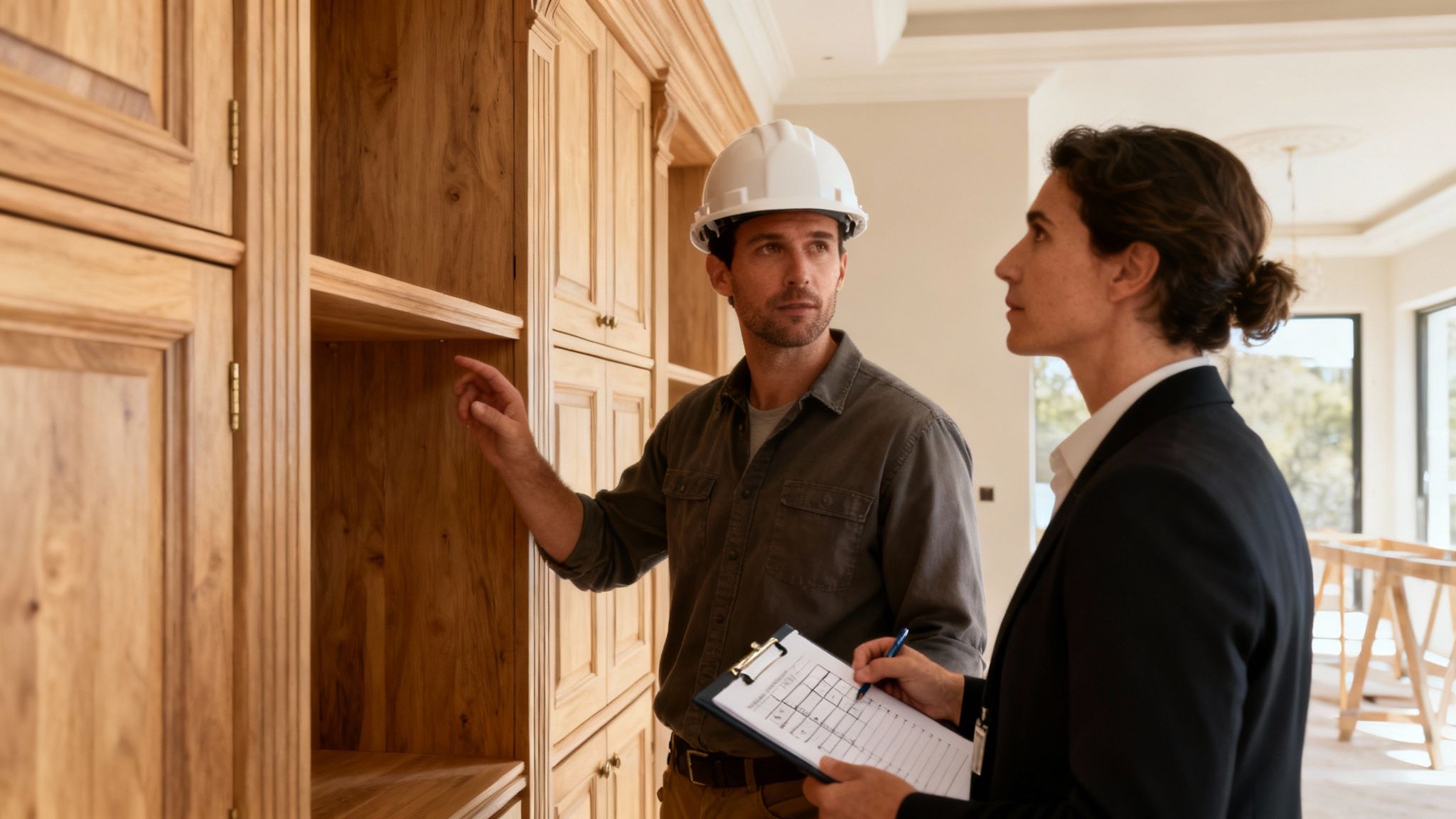
The moment concrete starts pouring and frames begin to rise, your project transforms. It’s no longer a set of plans on paper; it's a dynamic, living construction site where your vision finally starts taking shape.
This is where your partnership with the builder truly comes to life. Proactive project management and crystal-clear communication are no longer just important—they are the absolute bedrock of a successful build. It’s what ensures the exceptional quality you expect is delivered at every turn.
A top-tier builder makes you feel like a core part of the process, never a bystander. You shouldn’t have to chase anyone for an update. Instead, expect a structured rhythm of communication, usually with a dedicated project manager as your single point of contact and regular, scheduled site meetings. These meetings are your chance to walk the site, see the progress firsthand, and ask questions as they come to you.
Establishing Clear Communication Channels
Great communication stops misunderstandings that can snowball into costly delays or mistakes. The best Melbourne luxury home builders establish a clear framework right from the get-go. This isn't about drowning you in emails; it’s about having a defined process for every kind of discussion.
- Fortnightly Site Meetings: Consider these non-negotiable. They’re a dedicated forum to discuss progress against the schedule, look at upcoming milestones, and make timely decisions on selections before they hold anything up.
- A Formal Variation Process: Let's be realistic—changes happen in a custom build. A professional builder will have a documented process for any variation, clearly outlining the cost and time implications for your approval before a single tool is lifted.
- Project Management Software: Many leading builders now use client portals or dedicated apps. These tools give you real-time updates, progress photos, and a central hub for all your documents, keeping you in the loop 24/7.
This structured approach ensures every decision is on the record, every conversation is productive, and you always have a clear line of sight over your project.
Key Construction Milestones to Watch For
There's nothing quite as exciting as seeing your home take shape. While your project manager is across the day-to-day details, understanding the major milestones helps you appreciate the journey and know what to look for at each critical stage.
- Slab Pour and Foundations: This is the groundwork that supports everything else. Precision here is absolutely paramount.
- Framing: The skeleton of your home goes up. This is when you get the first true sense of room sizes and the flow of the spaces.
- Lock-Up Stage: A huge milestone. All windows and external doors are installed, making the house secure and weatherproof so internal work can begin.
- Rough-In: All the "unseen" services are installed within the walls—plumbing, electrical wiring, and HVAC systems—before the plaster goes on.
- Finishing Trades: This is where the personality of your home truly emerges. Think joinery installation, tiling, painting, and flooring.
The difference between a good build and a truly exceptional one lies in the details you don't see. Meticulous waterproofing, flawless plastering, and perfectly aligned joinery are the hallmarks of true craftsmanship.
The Role of Independent Inspections
Even when you’re working with the best builder, bringing in an independent building inspector offers an invaluable layer of assurance. These third-party experts can conduct inspections at critical stages—like pre-slab, frame, and pre-handover—to verify that all work meets or exceeds Australian standards.
This isn’t about mistrusting your builder; it’s about adding a professional second opinion for your complete peace of mind. A confident builder will welcome this scrutiny, seeing it as another way to demonstrate their commitment to quality. For a deeper dive into what to look for, our construction quality control checklist is an essential resource.
Ultimately, managing the build is a collaborative effort. By fostering an open, transparent relationship with your builder and staying engaged at key milestones, you ensure the final home isn’t just built to plan, but is crafted to a standard that will endure for generations.
Of course. Here is the rewritten section, crafted to sound completely human-written, following the specific style and tone from your examples.
Your Top Questions About Building a Luxury Home in Melbourne
Embarking on a custom home journey is exciting, but it naturally comes with a lot of questions. From timelines and contracts to budgets and sustainability, getting clear on the big picture from the start is the key to a smooth and successful project.
We get asked these questions all the time, so we’ve put together some straightforward answers. Think of this as a practical guide to help you navigate the complexities of a high-end build with confidence.
How Long Does It Really Take to Build a Luxury Home?
A truly bespoke home is a significant undertaking, and the one thing you can't do is rush it. Compromising on time almost always means compromising on quality. For a high-calibre custom home in Melbourne, you should realistically plan for 18 to 24 months from your very first design chat to the day you get the keys.
This timeline generally splits into two main phases:
- Design and Approvals (6-12 months): This is where the magic begins, but it also requires patience. It covers everything from initial sketches and detailed architectural drawings to getting the green light from the local council. This stage can really stretch out in suburbs with strict heritage overlays or complex planning rules.
- Construction (12-18 months): This is the part everyone loves to watch. It’s the physical build, from digging the foundations right through to the final coat of paint and rolling out the lawn. How long this takes really depends on the home’s size, structural complexity, and how tricky the site access is.
A good builder will always give you a detailed project schedule with key milestones, so you know exactly what to expect and when.
Fixed-Price vs. Cost-Plus Contracts: What’s the Difference?
Understanding your building contract is absolutely fundamental to managing your budget and expectations. For luxury homes, you’ll almost always encounter two types: fixed-price and cost-plus.
A fixed-price contract gives you certainty by locking in the total project cost before a single sod is turned. This works beautifully if you’ve already finalised every last design detail and finish. The catch? It’s not very flexible. If you decide to change something mid-build, it requires a formal variation, which can be costly and slow things down.
A cost-plus contract, on the other hand, is more transparent and adaptable. You pay the actual cost of labour and materials, plus a pre-agreed builder's margin. This is often the preferred route for highly customised homes, as it gives you the freedom to make selections as you go. While it offers far more control over quality, it means you have less certainty about the final price tag.
What Are the Biggest Unforeseen Costs?
Even with the most meticulous planning, unexpected costs can pop up. Being prepared for them is just smart budget management. Any reputable builder will strongly recommend setting aside a contingency fund of 10-15% of the total build cost to cover these “what ifs.”
The biggest surprises usually come from two places:
Site Conditions: The great unknown is what lies beneath the ground. Hitting unexpected rock that needs to be excavated, dealing with groundwater issues, or finding unstable soil can all add significant costs to the initial site works.
Client-Driven Variations: This is the other big one. It’s easy to get excited and decide to upgrade your kitchen appliances, choose a different stone for the benchtops, or tweak the layout after construction is underway. All these changes will inevitably impact the budget.
A transparent builder will have a crystal-clear process for variations. They should provide a detailed quote for any change you request—outlining the full cost and any impact on the schedule—and wait for your approval before they do the work.
How Important Is Sustainability These Days?
In Melbourne, sustainability isn't just a buzzword anymore; it’s a core element of modern luxury living. Discerning homeowners now expect their homes to be high-performing, energy-efficient, and comfortable all year round. Going beyond the minimum energy rating standards doesn't just feel good—it adds serious long-term value to your property.
Certain features are quickly becoming standard expectations for Melbourne luxury home builders:
- Passive Solar Design: Cleverly orienting the home to capture natural warmth in winter and minimise heat in summer.
- High-Performance Glazing: Using double or even triple-glazed windows to dramatically improve insulation.
- Superior Insulation: Making sure walls, ceilings, and floors are exceptionally well-insulated to keep the indoor temperature stable.
- Renewable Energy: Integrating solar panels and battery storage to cut down your reliance on the grid and slash running costs.
The key is to discuss your sustainability goals with your architect and builder right at the start. That way, these elements can be woven into the very fabric of your home’s design.
At Envy Abode, we believe that building a luxury home should be a rewarding and transparent journey. Our integrated design-build approach ensures your vision is realised with meticulous attention to detail and uncompromising quality. Discover the Envy Abode difference and start your journey today.