Malvern EastProject Repton , 2025
“The key thing we were looking for was the consistency in the pricing that we received, having the right team to be able to problem solve when an issue arose, they did it in a very calm and measured manner. They're a great team and we worked so well together, had we done the design with Envy it would have saved us 6 months minimum”
Mid Century Modern House Plans Australia: A Practical Guide

The appeal of mid-century modern house plans in Australia really boils down to one simple truth: the style’s core ideas of open-plan living and a deep connection to nature are a perfect match for the Aussie lifestyle. It’s a design philosophy that just feels right at home under our sun.
Why Mid-Century Modern Design Thrives in Australia
Ever wondered why the clean lines and nature-focused feel of mid-century modern (MCM) design just work so well in the Australian landscape? It’s no accident. This timeless style, born from an era of post-war optimism and innovation, found incredibly fertile ground here. It’s since evolved into a distinctly Australian way of building that still resonates deeply today.
This guide is your complete roadmap, moving beyond just glossy inspiration to give you real, actionable insights for bringing your own MCM vision to life. As specialists in designing and building mid-century modern styled homes, we at Envy Abode don't just admire these homes—we bring them to life. We'll share our firsthand experience adapting these classic designs for contemporary Australian living, ensuring you have the expert advice needed for your project.
A Perfect Match for the Aussie Lifestyle
The synergy between MCM design and Australian culture is undeniable. The style champions an informal, relaxed way of living that perfectly mirrors our own national identity.
A few key elements make it such an enduring favourite:
- Seamless Indoor-Outdoor Connection: Hallmarks of the style include large glass panels, sliding doors, and integrated patios or courtyards. This design thinking erases the boundaries between inside and out—a concept we dive into deeper in our guide to creating effortless indoor-outdoor living spaces.
- Emphasis on Natural Light: With its clever use of clerestory windows and open floor plans, MCM architecture is designed to capture and celebrate natural light. This makes homes feel bright, airy, and constantly connected to their surroundings.
- Honest and Simple Materials: The use of natural timber, exposed brick, and stone reflects a love for authenticity and function over fussy ornamentation, which aligns perfectly with a practical, down-to-earth sensibility.
At its heart, Australian mid-century modern isn't just an aesthetic; it's a blueprint for living. It prioritises family connection, embraces the natural environment, and champions a simpler, more intentional lifestyle.
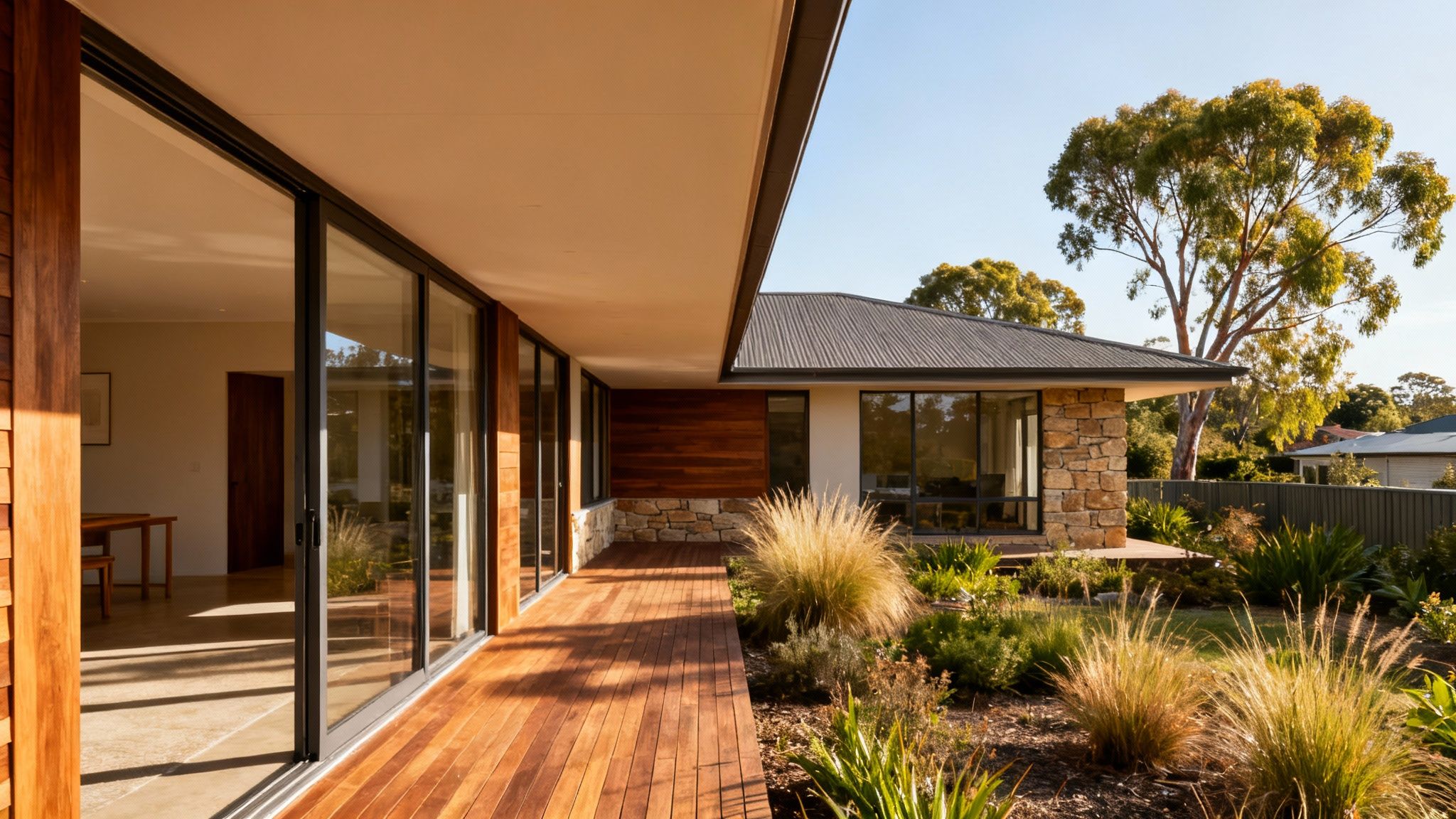
A Style Forged in Post-War Optimism
The mid-century modern movement landed in Australia during a period of incredible growth. Between the end of World War II and the early 1970s, the country saw a massive surge in residential construction, with MCM house plans dominating the suburban landscape.
The economic boom of the 1950s and 1960s meant home ownership rates were climbing fast. New housing estates sprung up around our major cities, all built on the promise of a brighter, more open future.
The fundamental DNA of an MCM Home
To really get what makes mid century modern house plans in Australia so special, you have to look past the cool, retro aesthetics and dig into the philosophy behind them. These homes weren't just a collection of fashionable features; they were born from a complete rethink of how we should live. The whole point was to design spaces that were more functional, deeply connected to their surroundings, and just felt right for the people inside.
This fundamental DNA is the soul of a true MCM home. It’s why open-plan layouts were conceived—not just to make a space feel bigger, but to fundamentally change how a family interacts, tearing down the stuffy, formal walls of older homes. It's a design language built on clarity, purpose, and a genuine respect for both its inhabitants and the Aussie landscape.
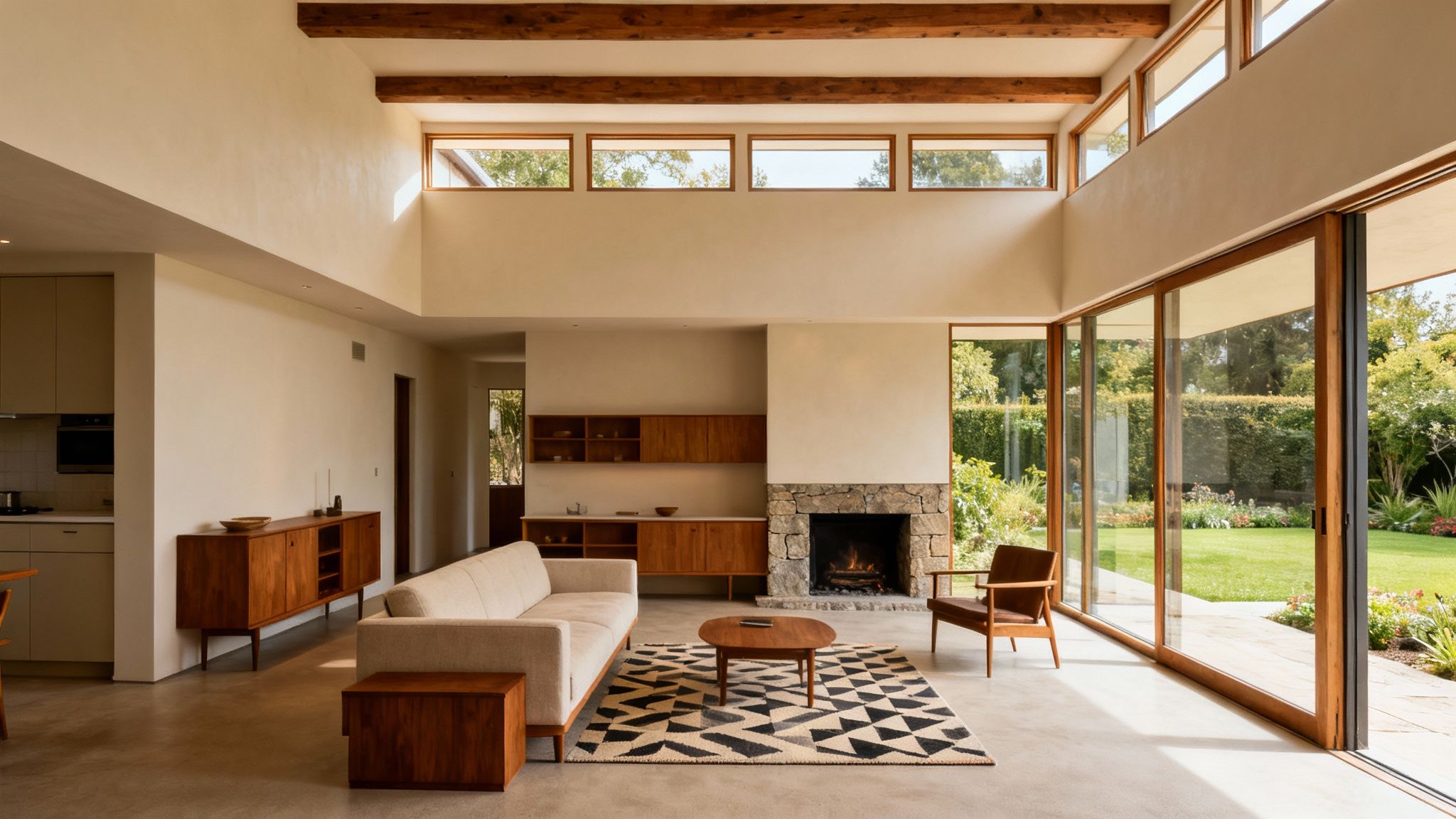
Connection to Nature as a Core Principle
If there's one thing that defines MCM design, it's the absolute commitment to blurring the lines between indoors and out. This was never just about slapping in a big window; it was about making the house and the landscape one seamless experience.
You see this connection come to life through a few key moves working together:
- Expansive Glazing: Floor-to-ceiling glass walls and sliding doors are a must. They do more than just offer a pretty view; they frame the garden like a living piece of art and make your backyard an extension of your lounge room.
- Clerestory Windows: These high, skinny windows tucked just under the roofline are pure genius. They let sunlight pour deep into the house all day long without sacrificing privacy or precious wall space for your art.
- Integrated Outdoor Spaces: Patios, decks, and internal courtyards aren't just tacked on. They're designed as integral parts of the floor plan, creating a natural flow for entertaining and everyday life.
The Beauty of Honest Materials and Form
Mid-century modernism threw out all the fussy, unnecessary ornamentation. Instead, it found its beauty in the raw, inherent qualities of the materials themselves and in clean, logical structures. The thinking was refreshingly simple: let the materials tell their own story.
This "truth to materials" idea is why you’ll see exposed timber beams celebrating the home’s structure or a rugged stone feature wall that starts outside and continues right into the living room. There’s a beautiful honesty to it—what you see is what you get. The building's form is driven purely by its function, resulting in those minimalist silhouettes that still feel fresh today.
The legacy of mid-century modern houses in Australia was powerfully shaped by visionaries like Robin Boyd, Harry Seidler, and Roy Grounds, whose work captured the optimism of the era. By the 1960s, their forward-thinking designs had made open-plan living the new standard, a massive shift from the rigid layouts of the past. Initiatives like the Small Home Service, which Boyd was involved in, created elegant, builder-friendly plans that made this sophisticated style accessible to more Aussies, fuelling its spread across the country. You can dive deeper into how these pioneers shaped the enduring design of Australian homes.
To help you spot these defining features, we've broken down the core elements that make an Australian MCM home what it is.
Core Elements of Australian Mid Century Modern Design
Design Feature | Underlying Principle | Practical Benefit for Aussie Homes |
Flat or Low-Pitched Rooflines | Horizontal Emphasis | Grounds the home in the landscape, creating a sleek, unobtrusive profile. |
Large, Uninterrupted Windows | Connection to Nature | Floods interiors with natural light and frames garden views. |
Open-Plan Layouts | Functional Living | Creates flexible, social spaces for modern family life and casual entertaining. |
Natural, Raw Materials | Truth to Materials | Showcases the inherent beauty of timber, stone, and brick for a warm, textured feel. |
Split-Level Designs | Integration with Site | Allows the home to adapt to sloping blocks, creating interesting internal zones. |
Built-in Cabinetry & Storage | Efficiency and Order | Maximises space and minimises clutter for a clean, minimalist aesthetic. |
These aren't just random design choices; they're thoughtful solutions that came together to create a home that is both beautiful and incredibly liveable.
Defining Lines and Open Spaces
The visual signature of an MCM home is often its roof. Those low-pitched or flat rooflines create a powerful horizontal line, grounding the house in its landscape and giving it that classic, sleek profile.
Inside, this horizontal language continues with the famous open-plan layout. By knocking down the walls between the kitchen, living, and dining areas, architects created a more social and relaxed way of living. This wasn't just a trend; it reflected a shift in society that valued family time and casual get-togethers over formal, separated rooms.
The genius of a well-executed mid-century modern floor plan is its efficiency. Every square metre has a purpose, often serving multiple functions without feeling cluttered, thanks to clever built-in storage and a logical flow between zones.
Here at Envy Abode, we believe understanding this DNA is everything. As specialists in designing and building mid-century modern styled homes, we don't just copy a look. We’re applying these core principles—connection to nature, material honesty, and functional, open living—to create a home that’s authentic, timeless, and a perfect fit for a modern Australian lifestyle.
Adapting Classic Designs for the Aussie Climate
A true mid-century modern home in Australia has to perform just as beautifully as it looks. While the classic plans from Palm Springs or Scandinavia are a fantastic starting point, just plopping one down in our unique environment is a recipe for an uncomfortable, energy-guzzling house.
The real art lies in taking those timeless designs and cleverly adapting them to work with our climate, not against it.
This means looking past the aesthetics for a moment and building smart, climate-responsive strategies right into the bones of your home. The goal is simple: a house that feels cool and breezy on a scorching summer arvo and warm and inviting on a crisp winter morning, all while keeping your power bills down.
At Envy Abode, this performance-based approach is central to our work as specialists in designing and building authentic mid-century modern house plans for Australia.
Harnessing the Sun with Passive Solar Design
One of the most powerful tools in our kit is passive solar design. This isn't some complex new tech; it's an intelligent design philosophy that uses the building’s orientation, windows, and materials to manage the sun's energy. It’s all about letting the good sun in and keeping the bad sun out.
For most of Australia, this starts with orienting your main living areas and biggest windows to the north. This one decision allows your home to soak up the low-angled winter sun, which streams deep into your rooms to passively warm the space all day. In summer, the sun is much higher in the sky, and that's where another classic MCM feature comes into its own.
- Strategic Eaves and Overhangs: Those iconic, deep eaves aren't just for show. When calculated correctly for your specific location, they act as the perfect seasonal shade, blocking the high summer sun from hitting your glass but letting all that welcome winter sun stream in underneath.
- Thermal Mass: Materials like a concrete slab floor or an internal feature wall of brick or stone are brilliant at absorbing the winter sun's warmth. They soak up heat during the day and then slowly release it back into the home at night, keeping you comfortable long after sunset.
Passive design is the quiet engine of a high-performance home. It’s about making smart, upfront decisions that pay you back in comfort and energy savings for decades, all without compromising on the clean lines of MCM design.
Getting these techniques right requires a deep understanding of sun paths and local climate data. If you'd like to dive a bit deeper, you can learn more about the principles of what passive solar design is and how it creates year-round comfort.
Engineering Natural Airflow and Ventilation
Long before air conditioning was a household staple, mid-century architects were masters of natural cooling. We can learn a lot from their techniques to cut our reliance on power-hungry systems. The secret is creating effective cross-ventilation pathways.
This involves thoughtfully placing windows and doors on opposite sides of a room—or the entire house—to catch prevailing breezes and let them flow through. For example, combining low-level windows on the cooler, southern side with high clerestory windows on the northern side creates a natural "stack effect." As hot air rises, it escapes through the high windows, drawing cooler air in from below and creating a constant, gentle airflow.
Specifying Modern Materials for Better Performance
While the original MCM homes were incredibly innovative for their time, building materials and technology have come a long way. A modern interpretation should blend the classic aesthetic with today's high-performance products to meet our current energy efficiency standards.
This is where working with a specialist builder becomes so important. Key upgrades we always recommend include:
- High-Performance Glazing: Swapping out single-pane glass for double-glazed windows is completely non-negotiable. For even better results, specifying units with a thermally broken frame stops heat from transferring through the metal, helping to keep your home cooler in summer and warmer in winter.
- Superior Insulation: Today’s insulation batts, rigid foam boards, and reflective sarking offer far greater thermal resistance than anything available in the 1960s. Properly insulating the roof, walls, and even under the floor slab is one of the most effective ways to maintain a stable, comfortable temperature inside.
- Airtightness: Sealing all the little gaps and cracks in the building envelope is a simple step that makes a huge difference. It stops unwanted draughts and heat loss, dramatically improving your home’s energy efficiency and overall comfort.
Integrating Modern Tech with a Classic Look
Finally, a contemporary home needs modern amenities. The good news is that technologies like rooftop solar panels and rainwater tanks can be integrated into an MCM design without disrupting its clean, minimalist aesthetic.
The flat or low-pitched rooflines are perfect for mounting solar panels discreetly, often making them completely invisible from the street. In the same way, slimline rainwater tanks can be neatly tucked away or worked into the landscape design. By planning for these elements right from the start, we ensure your home is not only beautiful and comfortable but also sustainable and ready for the future.
From Plans to Reality: A Building Roadmap
Holding a set of beautifully resolved mid-century modern house plans for your Australian block is a huge moment. It’s exciting. But it’s also the point where the real questions start. How do you actually turn that vision on paper into a home you can live in?
The path from architectural drawings to a finished build is a well-trodden one, involving everything from navigating council red tape to managing the organised chaos of a construction site. It can feel like a lot to take on, but with the right team and a clear roadmap, it's a completely manageable process.
Let's break down the journey so you know exactly what to expect.
Navigating Council Approvals and Planning Permits
Before a single shovel hits the ground, your plans need the green light from your local council. Honestly, this can often be the trickiest part of the entire project. Every council has its own unique rulebook, and these local regulations can have a massive impact on your design.
For distinctive homes like MCM designs or blocks with unique challenges, a few common hurdles tend to pop up.
- Bushfire Attack Level (BAL) Ratings: If your property is in a bushfire-prone area, it will come with a BAL rating. This isn't just a number; it dictates very specific construction requirements. Think specialised materials, certain types of windows, and mandatory clearances from vegetation—all of which have to be baked into your plans from the get-go.
- Heritage Overlays: There's a growing movement to protect Australia's architectural history, and mid-century modern homes are finally getting the recognition they deserve. Many of these gems have been lost to redevelopment over the years. We saw councils like Bayside in Melbourne attempt to survey and protect MCM homes in suburbs like Beaumaris and Black Rock, highlighting just how fragile this heritage can be. You can read more about the push to protect these culturally significant homes and see why it matters.
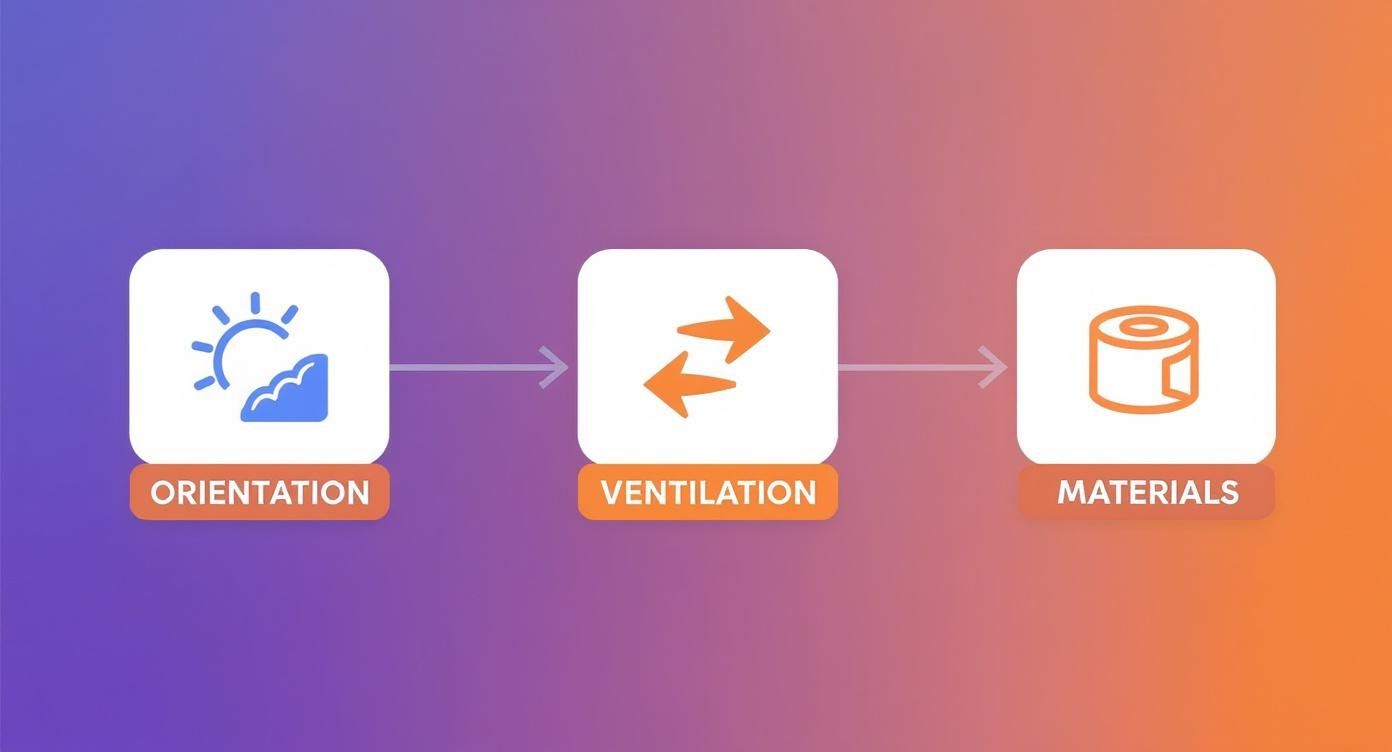
This kind of thinking—blending design with climate and context—is crucial long before you even think about submitting plans. The best homes are the ones where these foundational choices are made early and with purpose.
The Construction Phase: From Slab to Handover
Once the plans are approved and your building permit is in hand, the real fun begins. While no two projects are identical, the construction of your home will follow a fairly predictable sequence of major stages.
It all starts with preparing the site and laying the foundations—either pouring the concrete slab or setting up stumps and a sub-floor. This is the literal base for everything that follows, so getting it perfect is non-negotiable. Next, the frame goes up, and for the first time, you’ll see the three-dimensional outline of your home take shape. It’s a pretty special moment.
From there, we hit the "lock-up" stage. This is when the roofing, windows, and external doors are installed, making the structure secure and watertight. With the house sealed from the elements, the internal work can start. Plumbers and electricians run their pipes and wires, insulation is fitted, and plasterboard goes on the walls. Finally, the finishing trades arrive to handle all the details that make a house a home: joinery, tiling, painting, and flooring.
It can be a complex dance of trades and timelines. If you want to get a better handle on the details, our guide on how to read architectural drawings is a great place to start.
The Advantage of a Unified Design-Build Model
The traditional way of building a home is a bit fragmented. You hire an architect for the design, then you take those plans and shop them around to different builders for quotes. The problem? This often creates a disconnect. You can end up with a stunning design that's eye-wateringly expensive or just plain difficult to build.
There’s a much better way: the design-build model.
With a design-build firm, one cohesive team manages your entire project, from the very first concept sketch to the final handover of the keys. This integrated approach offers powerful benefits for homeowners.
When you work with a firm like Envy Abode, who are specialists in designing and building mid-century modern styled homes, you have a single point of responsibility. Our designers and builders are colleagues, not contractors. They're in constant communication, making sure the architectural vision is practical, buildable, and on-budget from day one.
This leads to some serious advantages:
- Tighter Budget Control: Because the builder is involved right from the design phase, they can provide real-time cost feedback. This means the design evolves within your budget, preventing nasty surprises or the need for costly redesigns down the track.
- A Unified Vision: There's zero risk of a builder misinterpreting the architect's intent. The whole team is on the same page, working towards the same goal. The result is a home that’s completely true to the original concept.
- A Less Stressful Experience: You have one contact for everything. It simplifies communication, streamlines decision-making, and gets rid of the headache of trying to mediate between different companies with potentially conflicting priorities.
Ultimately, this unified model ensures your journey from plans to reality isn't just successful, but genuinely enjoyable. It’s how we deliver a home that is as thoughtfully designed as it is expertly constructed.
Budgeting for Your Australian Dream Home
Right, let's talk numbers. Bringing a beautiful, authentic mid-century modern home to life is an incredible investment, but it’s crucial to go in with a clear-eyed view of the costs. A detailed budget isn't just a spreadsheet; it's the single most important tool for keeping your project on track and avoiding those stressful financial surprises down the line.
As specialists in designing and building mid-century modern styled homes, we guide clients through this financial roadmap every single day. A successful budget isn’t just one big figure—it’s a transparent breakdown of all the moving parts that turn a set of plans into a finished, liveable home.
Breaking Down the Major Costs
Your total project cost is so much more than the builder's quote. It's really a sum of several distinct parts, and getting your head around each one is the key to accurate planning.
For a typical new build here in Australia, the budget gets carved up into four main chunks:
- Land Acquisition: The initial cost of your block. This is often the biggest single expense and, as you know, it can vary wildly depending on the postcode.
- Design and Approval Fees: This bucket covers everything from architectural design and engineering reports (like soil tests and structural plans) to surveyor fees and council application costs.
- Construction Costs: This is the main event—all the labour and materials needed to build the house itself. It's the figure most people focus on, often quoted on a per-square-metre basis.
- Finishing Costs: These are all the things that happen outside the main build contract. Think landscaping, driveways, fencing, a pool, and even window coverings.
A classic mistake we see is people focusing solely on the construction number. Forgetting to properly budget for design, approvals, and all those finishing touches can lead to a serious shortfall right when you’re nearing the finish line.
For a deeper dive into the specifics, you can explore our detailed guide on current building costs per square metre, which offers some really valuable regional insights.
Factors That Heavily Influence Your Final Price
Here’s the thing: no two projects cost the same, even if the house plans look similar. Several "site-specific" factors can have a massive impact on your budget, and spotting them early is absolutely vital.
A sloping block, for instance, is a classic feature of many iconic MCM homes. But it also demands more extensive earthworks, retaining walls, and potentially a more complex split-level foundation. All of that adds to the cost compared to building on a dead-flat site.
Likewise, the soil conditions on your land are critical. Poor soil might mean you need deeper, more expensive footings or a specialised slab design, which will be flagged in a geotechnical engineer's report. These aren't just "nice-to-haves"; they are structural necessities that have to be factored into your budget from day one.
Managing Your Budget and Preventing Overruns
The best way to keep your budget in check is to make smart, informed decisions early and then stick to them. It sounds simple, but it makes all the difference.
The Non-Negotiable Contingency Fund
Every single building project—no matter how meticulously planned—will hit a snag. It could be finding a giant boulder of rock during excavation or a supplier delay that has a costly knock-on effect. It happens.
This is exactly why a contingency fund of 10-15% of your total construction cost is absolutely non-negotiable. This isn’t a slush fund for upgrading your tapware; it’s a crucial safety net to cover unexpected but necessary expenses without derailing your entire project.
Lock in Selections Early
Your choice of fixtures, fittings, and finishes—from the tapware and tiles to the flooring and joinery—can cause huge budget variations. The more of these decisions you can finalise with your design-build team before a single sod is turned, the more accurate your final price will be.
Making changes once work is underway is one of the fastest ways to blow your budget. It's not just the cost of the new item; it can also lead to expensive labour variations and frustrating project delays. Working with an integrated team like Envy Abode means these selections are considered right from the design phase, which helps lock in costs and prevents those painful last-minute changes.
Common Questions About Building an MCM Home
When you're diving into a project as big as building a new home, you’re going to have questions. It’s only natural. And when it comes to the unique character of mid century modern house plans in Australia, we find a few specific queries pop up time and time again.
As specialists in designing and building mid-century modern styled homes, we at Envy Abode have heard them all. Here are our honest, straight-from-the-source answers to the questions we get asked most.
Are Mid Century Modern Homes Expensive to Build in Australia?
This is usually the first thing people ask, and the honest answer is: it really depends. The final cost swings wildly based on where you’re building, how tricky your site is, the materials you fall in love with, and the level of finish you're after.
While the MCM style is all about beautiful simplicity, getting those signature architectural features right with quality materials can cost more than a standard project home. For instance, creating those glorious, wide-open living spaces often demands more structural steel. And those huge, high-performance glass walls that blur the line between inside and out? They naturally carry a higher price tag.
But here’s the upside. The clever, efficient layouts baked into MCM design mean you can often get a highly functional, beautiful home with a smaller overall footprint. That efficiency can really help to balance the books. This is where working with a specialist design-build firm like Envy Abode makes all the difference—we design a home that we know is buildable within your budget from the get-go, so there are no gut-wrenching surprises down the line.
Can I Build an MCM Home on a Small or Narrow Block?
You absolutely can. In fact, mid-century design principles are incredibly adaptable and often present the perfect solution for those challenging sites we see so often in modern Australian cities.
Got a narrow block? We might look at designing the home around a central courtyard. It’s a classic MCM move that pulls natural light and a slice of nature right into the heart of the house, making it feel bright, open, and anything but constrained.
Sloping sites are another area where this style truly shines. Instead of fighting the land with massive, expensive earthworks, a split-level design—a signature MCM solution—gracefully follows the natural contours. This approach doesn't just solve a site problem; it turns it into a stunning architectural feature, creating distinct and interesting zones throughout the home.
The real secret to building on a tricky block is a truly custom design. It’s about applying those core principles of light, flow, and connection to nature to the specific opportunities and constraints of your land, creating a home that feels like it was always meant to be there.
What's the Difference Between a Project Home and a Custom MCM Design?
Think of a project home as being built from a template. You get a pre-designed plan with a limited menu of changes. While some volume builders might offer a facade with an "MCM-inspired" look, they often miss the architectural soul and site-specific thinking that defines a true mid-century modern home.
A custom design from a specialist firm like Envy Abode starts with a completely blank page. We begin with your land, your lifestyle, and your vision. It’s a bespoke approach that ensures every single decision is made for a reason.
- Site-Specific Design: We orient the home perfectly on your block to capture the winter sun and welcome cooling summer breezes.
- Landscape Integration: The floor plan is thoughtfully laid out to create a seamless, authentic connection to your garden and the world outside.
- Design Authenticity: We obsess over the details—the proportions, the material palette, the clean lines—to ensure they’re all true to the mid-century philosophy. The result is a timeless home that is uniquely yours.
How Do I Get an Authentic Mid Century Modern Feel?
Getting that authentic feel isn't about just copying a look from a Pinterest board. It’s about genuinely understanding and embracing the philosophy behind the style. The real magic happens when a few key commitments come together.
It starts with an honest expression of materials—letting timber be timber, stone be stone, and celebrating the home's structure instead of hiding it away. It also comes from creating uncluttered, highly practical spaces that feel fundamentally connected to the outdoors.
Ultimately, the surest way to get that authentic feel is to partner with a designer and builder who specialises in this style. A team like ours at Envy Abode just gets it. We understand the nuances—the exact pitch of a roofline, the right way to detail a window, and the perfect material palette—that come together to create a timeless home that is both historically respectful and perfectly suited to modern Australian living.
Ready to turn your vision for a mid-century modern home into a reality? The team at Envy Abode combines specialist design expertise with master craftsmanship to deliver homes that are as beautiful as they are liveable.