Malvern EastProject Repton , 2025
“The key thing we were looking for was the consistency in the pricing that we received, having the right team to be able to problem solve when an issue arose, they did it in a very calm and measured manner. They're a great team and we worked so well together, had we done the design with Envy it would have saved us 6 months minimum”
Creating Modern Home Design Plans That Work

Modern home design plans are so much more than just blueprints. They're a translation of your lifestyle into a living, breathing space that’s both beautiful and incredibly functional. The best modern designs prioritise things like clean lines, loads of natural light, and a seamless flow between inside and out. It’s about moving past simple room counts to create a home that truly reflects your daily routines and aspirations.
Defining Your Vision for a Modern Home
Before a single line gets drawn, the most important step is to get crystal clear on your vision. This is about so much more than picking out paint colours or flooring; it’s about figuring out how you want to live and turning that into a practical design brief. For a moment, let's put the technical stuff aside and focus on the feeling and function you want your home to have.
The word 'modern' can mean a lot of different things to different people. Your idea of modern might be the sharp, geometric shapes of Box Modern, or perhaps the rustic warmth of a Modern Farmhouse. Maybe it's the balanced, calm feeling you find in Japandi design. Nailing down the aesthetic that speaks to you is the true foundation of your entire project.
From Lifestyle to Design Brief
A truly great design brief is a story about your life. Think about your daily routines. Do you love to entertain? An open-plan kitchen and living area might be non-negotiable. Do you work from home? A dedicated, quiet office space is probably high on your list. Thinking through these practicalities from the start ensures the final layout actually supports your lifestyle, rather than getting in the way of it.
This whole process is about turning those abstract ideas about how you live into a concrete vision, and finally, into a detailed brief for your designer.
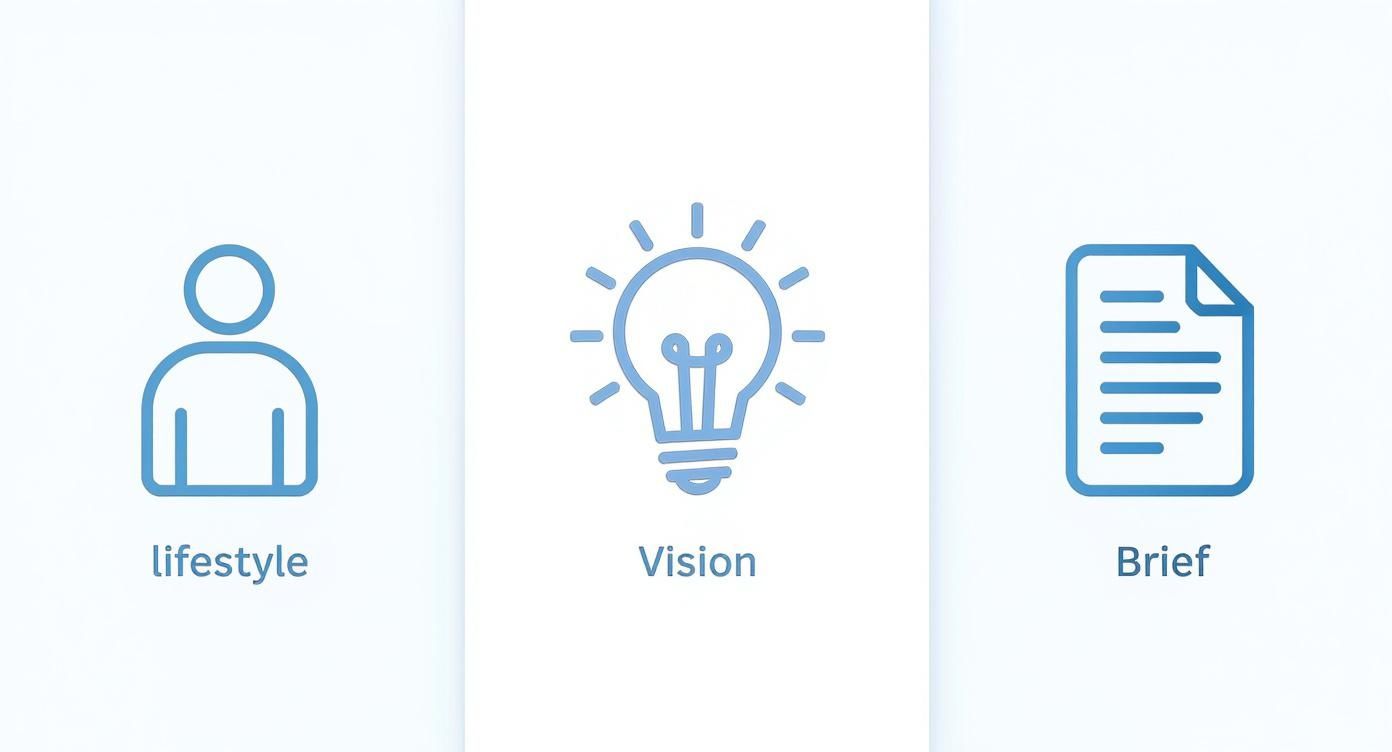
This journey from analysing your day-to-day needs to creating a tangible brief is what makes a custom home truly yours. It’s the difference between a house and a home.
Future-Proofing Your Home Design
It's also smart to think beyond your current needs. Life changes, after all. Could you see needing space for multi-generational living down the track? Will your family grow, or will you eventually want to downsize into a more manageable space? Planning for these possibilities now ensures your home remains a perfect fit for years to come. For a bit more inspiration, check out our guide on the latest trends in modern Australian house designs.
A great design brief is a story about your life, not just a list of rooms. It should communicate the atmosphere you want to create—whether that's a calm sanctuary, a vibrant hub for social gatherings, or a highly efficient family command centre.
The James Hardie Modern Homes Forecast 2025 actually identified eight key architectural styles that are defining contemporary Aussie homes, from Modern Coastal to Mid-Century Modern. But more importantly, it showed that lifestyle themes like flexibility, resilience, and wellbeing are huge drivers behind modern home design plans today.
Ultimately, this initial vision-setting stage is where you create the soul of your home. At Envy Abode, we have a dedicated design team that can create your perfect custom designed home. We specialise in this collaborative process, working closely with our clients in suburbs like Toorak to ensure every custom home we design is a perfect reflection of their unique story.
Translating Your Vision into Functional Spaces
Once you've mapped out your vision, the real design work begins. This is where we start translating those lifestyle goals and aesthetic ideas into a functional layout—a process we call space planning. It’s the critical step where your modern home design plans move from an abstract concept to a practical, liveable reality that just works for you and your family every single day.
The secret to brilliant space planning lies in getting the flow of a home right. Think about how you move through your current house. Are there awkward bottlenecks near the hallway? Do you have to weave through a formal living room just to get a drink from the kitchen? A well-designed modern home eliminates these daily frustrations, creating intuitive pathways that make life feel effortless.
Balancing Open-Plan and Private Retreats
It’s no surprise that open-plan living is a cornerstone of modern Australian architecture. It fosters connection, floods a home with light, and creates a wonderful sense of spaciousness, making it perfect for families who love to entertain.
But modern life is also busy. We need quiet corners for focused work, dedicated study nooks for the kids, or just a cosy spot to unwind away from the hustle and bustle. The key is to find that perfect balance.
A clever layout might feature a connected kitchen, dining, and living area that acts as the heart of the home, while a separate study or media room is cleverly tucked away, buffered from the main household noise. This "zoning" approach gives you the best of both worlds.
A well-designed floor plan doesn't just dictate where the walls go; it choreographs daily life. It anticipates movement, supports routines, and creates distinct atmospheres for different activities, from bustling family gatherings to quiet moments of solitude.
Striking this balance is a central part of developing modern home design plans. If you're keen to understand more about how layouts influence the feel and function of a home, it's worth exploring some foundational architectural design principles.
Comparing Modern Home Layouts
Choosing the right floor plan is a huge decision. It shapes how your family interacts and how you use your space for years to come. Here's a quick look at some popular modern layouts to help you see which one might be the best fit.
Layout Concept | Best For | Key Features |
Classic Open-Plan | Families who entertain and value togetherness. | A single, large space combining kitchen, living, and dining areas. Great for socialising. |
Broken-Plan | Those wanting connection with a bit more definition. | Uses half-walls, screens, or varying floor levels to subtly divide zones without closing them off. |
Zoned Layout | Households with diverse needs (e.g., working from home). | Clearly separates public "social" areas from private "quiet" zones like studies and bedrooms. |
Courtyard Design | Maximising light and indoor-outdoor living on tricky blocks. | The home is built around a central outdoor space, with rooms opening onto it. |
Ultimately, the best layout is the one that aligns perfectly with your lifestyle, whether that means a sprawling open space or a home with more defined, intimate zones.
Optimising Every Square Metre
Making every part of your home count goes far beyond just adding clever storage. It’s about being strategic with light, planning for furniture, and forging a strong connection between your indoor and outdoor spaces.
- Natural Light: We carefully orient rooms to capture the best of the morning or afternoon sun. This not only makes a space feel incredible but also cuts down on your lighting bills. Large windows, skylights, and double-height voids are your best friends here.
- Furniture Placement: A great floor plan is designed with furniture in mind from day one. Knowing exactly where your sofa or dining table will go ensures the room feels balanced and truly usable, not like an awkward, hard-to-furnish box.
- Indoor-Outdoor Connection: Nothing enhances a modern home more than a seamless link to a deck, patio, or garden. Large sliding or bi-fold doors can virtually erase the wall between inside and out, making your living areas feel twice as big.
At Envy Abode, our dedicated design team can create your perfect custom designed home. We live and breathe this level of detailed planning, working closely with clients across Melbourne, including in suburbs like Toorak, to craft homes where every single element is thoughtfully considered. The result is a home that’s not just beautiful but perfectly in tune with modern living.
Weaving in Smart and Sustainable Features
A truly modern home is more than just clean lines and big, open spaces. It's intelligent. It's efficient. It’s designed for the future, not just for today.
The key is to weave smart technology and sustainable features into your modern home design plans right from the very beginning. This isn't about tacking on a few gadgets later; it's about creating a home with a truly integrated system that works for you.
Think of it as giving your home a brain. An integrated smart system can automate your lighting, climate, and security, even learning your daily routines to optimise energy use without you lifting a finger.
Imagine your blinds automatically lowering to block the harsh afternoon sun, or your heating knowing precisely when to power down as you leave for work. This level of smart automation isn't just about convenience—it's about creating a home that actively works to slash your running costs.
Building for Efficiency and Lasting Comfort
While smart tech gets a lot of attention, the most powerful features are often the ones you can't see. Foundational, energy-efficient design is the backbone of any high-performance modern home. Get this right, and you'll lock in lasting comfort and a much smaller environmental footprint for decades to come.
These are the non-negotiables you should be discussing with your designer from day one.
- Passive Solar Design: This is the art of positioning your home on its block to work with the sun, not against it. We aim to maximise winter sun exposure for natural warmth while using clever eaves and shading to keep the intense summer heat out.
- High-Performance Insulation: A well-insulated home is a comfortable home. Upgrading the insulation in your walls, ceiling, and even under the floor creates a powerful thermal barrier. Your home stays cooler in summer and warmer in winter with far less need for air conditioning or heating.
- Energy-Efficient Glazing: The impact of double or even triple-glazed windows is massive. They stop heat from escaping in winter and creeping in during summer, dramatically improving your home's comfort and energy bills.
To get a better handle on creating a home that’s as economical as it is beautiful, take a look at our guide to developing energy-efficient house plans.
True sustainability in modern home design isn't about a single "eco" feature. It's a holistic approach where smart orientation, a well-sealed building envelope, and efficient systems all work together to deliver exceptional performance and genuine long-term value.
Practical Sustainability in Action
Beyond these fundamentals, plenty of other options can boost your home's sustainability. A rainwater harvesting system, for instance, can be plumbed to your toilets and garden taps, taking pressure off the mains water supply.
Likewise, installing solar panels with battery storage can slash your electricity bills and give you priceless backup power during an outage.
Navigating all these choices is where having an experienced team makes all the difference. At Envy Abode, our dedicated design team can create your perfect custom designed home. We work hand-in-hand with clients in areas like Toorak, seamlessly integrating these smart and sustainable elements from the very first sketch.
It’s how we ensure your new home isn't just stunning, but also cost-effective and truly built for the future.
Bringing Your Modern Interior to Life
The days of cold, sterile modernism are well and truly behind us. Today, the soul of a modern home lies in an interior that feels warm, deeply personal, and genuinely supportive of the way you live. It’s about crafting a sanctuary, a space that tells your story through colour, texture, and the pieces you choose to surround yourself with. The focus has shifted from clinical minimalism to creating inviting interiors that feel layered, authentic, and lived-in.
This move towards more expressive interiors is something we're seeing right across Australia. According to Temple & Webster's latest Trend Report, individuality and comfort are now the biggest priorities shaping how we design our homes. The report flags three key movements—Mix & Max, Past Forward, and Sumptuous Sanctuaries—all of which champion personal expression over following rigid rules. You can dive deeper into their findings on Aussie interior design trends over at a-d.com.au.
Moving Beyond the All-Neutral Palette
While a neutral foundation is fantastic for creating a sense of calm, modern interiors are confidently embracing colour and texture. It's about using these elements with purpose—to evoke a specific mood or to highlight a unique architectural feature. This doesn't mean you have to paint every wall a loud colour; often, the most effective approach is more nuanced.
- Feature Walls: Think about a deep, moody green behind a bed to create a truly restful atmosphere in a master suite.
- Textural Finishes: Finishes like Venetian plaster or timber battens can add incredible warmth and depth to a main living area, turning a plain wall into a piece of art.
- Colour Blocking: Use paint to cleverly define a smaller zone, like carving out a study nook within a larger open-plan space.
The real goal is to use colour and texture with intention, making your modern home design plans feel dynamic and anything but cookie-cutter.
Embracing Unique Forms and Materials
Another huge shift we're seeing is the move towards furniture and fixtures with more organic, interesting shapes. There's a clear departure from sharp, straight lines in favour of softer, more sculptural forms. The numbers back this up, with sales of wavy furniture jumping by 29% and searches for boucle beds soaring by a massive 286%. It’s clear people are craving items that have real character and feel special.
An interior should be a collection of things you love, not a catalogue of trends. The most successful modern homes feel like they've been curated over time, reflecting the personality and experiences of the people who live there.
This philosophy extends right down to the materials you choose. It’s about finding that perfect balance between aesthetics and durability for a home that not only looks incredible but stands up to the rigours of daily life. Think about how different materials feel to the touch—the solid warmth of natural stone underfoot, the cool smoothness of a brass tap, or the comforting softness of a pure wool carpet. These are the sensory details that truly turn a house into a home.
At Envy Abode, our dedicated design team can create your perfect custom designed home. We love guiding clients through these choices, helping homeowners in suburbs like Toorak ensure every finish, fixture, and material selection contributes to an interior that is not only beautiful but deeply and authentically personal.
From Blueprint to Reality: Navigating Council Approvals and Construction
You’ve got the final plans in hand. This is the exciting part—where the creative vision starts its journey into something real and tangible. But before the first shovel hits the ground, we need to navigate the world of council approvals and bring a builder on board.
This is where the paperwork really kicks in. Getting your building approvals isn’t just a tick-box exercise; your local council needs absolute certainty that your new home will be safe, structurally sound, and compliant with all regulations.
Getting Your Plans Council-Ready
Think of your submission as the complete instruction manual for your home. It needs to be thorough, leaving no questions unanswered. While the specifics can differ slightly from one council to another, you'll generally need a solid package of documents.
Here’s what a typical submission looks like:
- Architectural Drawings: These are the master plans. They cover everything—floor plans, elevations, cross-sections, and all the fine-print construction details.
- Structural Engineering Plans: This is the home's skeleton on paper. It details the footings, framing, and all the supports that guarantee a strong, stable structure.
- Soil Reports: We need to know what we're building on. A geotechnical survey analyses the soil, which is crucial for designing the right foundation.
- Energy Efficiency Reports: This report proves your home's design meets (or, as we prefer, exceeds) the minimum energy performance standards set out in the National Construction Code.
Pulling all this together is a detailed job. If you want a deeper dive into what's involved, you can learn more about the building plan approval process in our detailed guide.
Finding the Right Builder
With council approval secured, the next big step is choosing the builder who will bring your home to life. This is easily one of the most critical decisions in the entire project. You’re not just looking for technical skill; you need a great communicator and a brilliant project manager.
The standard approach is a tender process. You’ll give your full set of approved plans to a few selected builders, and they’ll come back with a detailed quote to construct the home. It’s tempting to just look at the bottom line, but you need to compare these quotes carefully. Dig into the specific inclusions and allowances for things like fixtures, fittings, and finishes.
Choosing a builder is about so much more than the lowest price. It’s about finding a team you click with, whose work you admire, and who genuinely gets what you’re trying to achieve.
This is where having a dedicated design and build team really smooths things out. Envy Abode has a dedicated design team that can create your perfect custom designed home, managing these complexities from start to finish. When we’re designing a home for a client in a suburb like Toorak, we handle this entire process. It creates a seamless transition from the final drawing to the finished home, ensuring the original design intent is perfectly realised in the final build.
A Few Common Questions About Modern Home Design
Taking the leap into a custom home journey naturally brings up a lot of questions. This final planning stage can feel like the most complicated part, but a little clarity goes a long way. To help you move forward with confidence, here are the answers to some of the most common queries we get from our clients.
The way we live is always evolving, and this has a huge impact on home design. Right now, multi-generational living is a big driver in Australian home design, thanks to economic shifts and changing family dynamics. This trend demands clever architectural solutions that give everyone space to be together while still having their own private retreat. Think separate living zones, ground-floor bedrooms with ensuites, or even self-contained granny flats. You can find more insights into what’s shaping new home design trends in Australia on houseseeker.com.au.
How Much Will Custom Home Plans Cost?
This is always one of the first questions, and for good reason. The honest answer is: it varies. The final cost for custom modern home design plans really depends on the size of your project, how complex the design is, and the specific fees of the architect or building designer you bring on board.
As a general rule of thumb, you can expect professional design fees to be somewhere between 8% and 15% of the total construction cost. Your best bet is always to get detailed quotes from a few different professionals so you can compare exactly what’s included for the price.
How Long Does The Design And Approval Process Take?
Patience is a virtue in custom home building. Bringing a unique home to life is a marathon, not a sprint. The initial design phase, where you’re working closely with your designer to nail down every last detail, usually takes about three to six months. This can stretch a bit depending on how many tweaks and revisions are needed to get it just right.
Once you’ve signed off on the final design, it’s time to submit the plans to your local council for approval. This stage often adds another three to six months to the timeline, though it can differ between councils. A detailed, well-prepared application is your best friend here—it can definitely help avoid unnecessary delays.
The most successful projects are built on a foundation of detailed planning. Rushing the design or approval phase almost always leads to compromises or unexpected costs down the line. Taking the time to get it right from the start is the smartest investment you can make.
Can I Change The Plans During Construction?
Technically, yes, but we strongly advise against it. Making changes once construction is underway is one of the quickest ways to blow your budget and timeline out of the water. These late-stage alterations are called "variations," and they can be incredibly expensive.
Even a seemingly small tweak can create a massive ripple effect, impacting everything from structural engineering and material orders to the schedules of your tradies. It is always, always more efficient and affordable to lock in every single detail during the design phase, well before any dirt is moved. It’s the key to a smooth build and a finished home that’s exactly what you dreamed of.
Ready to turn your vision into a reality? The dedicated design team at Envy Abode can create your perfect custom designed home, guiding you through every step of the process with clarity and expertise. https://envyabode.com.au