Malvern EastProject Repton , 2025
“The key thing we were looking for was the consistency in the pricing that we received, having the right team to be able to problem solve when an issue arose, they did it in a very calm and measured manner. They're a great team and we worked so well together, had we done the design with Envy it would have saved us 6 months minimum”
What is building envelope: what it is and why it matters

In simple terms, the building envelope is the physical barrier separating your home's comfortable interior from the world outside. Think of it like a high-performance jacket, meticulously designed to shield you from wind, rain, and fluctuating temperatures.
Your Home’s Protective Shield, Explained
Imagine your home’s building envelope as its skin. It's not just one single layer but a complete, integrated system that controls everything passing between your living space and the outdoors. Its primary job is to manage the constant exchange of heat, air, and moisture.
This system is the unsung hero of a comfortable and efficient home. It works tirelessly behind the scenes, keeping you warm in winter and cool in summer. A well-designed envelope is what separates a draughty, expensive-to-run house from a quiet, stable, and energy-efficient sanctuary.
The Foundation of Home Performance
In Australia, where our homes need to perform across incredibly diverse and demanding climates, the building envelope is absolutely critical. From the humid summers of Queensland to the chilly winters in Melbourne, this protective shield dictates your home's resilience, durability, and comfort.
The system is a sum of its parts, all working in harmony:
- The foundation
- Exterior walls
- The entire roof assembly
- All windows and doors
- Every single penetration that separates inside from out
The performance of this shell has a massive impact on our national energy use. Residential buildings account for a staggering 24% of electricity use and 10% of carbon emissions in Australia. This shows just how much influence a high-performing envelope can have, not just on your bills but on the country's overall energy consumption. You can dive deeper into these insights on residential energy efficiency from the CSIRO.
Ultimately, the building envelope is the single most important factor in determining a home's thermal performance. It dictates how much energy is needed to maintain a comfortable indoor temperature, directly impacting your utility bills and overall carbon footprint.
By getting these crucial elements right, the envelope ensures your home isn't just a structure, but a high-performing system truly built for modern living.
The Key Components of Your Building Envelope
A building envelope isn’t one single thing; it’s a complete system of interconnected parts, all working in harmony to create a protective shell around your home. To really get what a building envelope is, we need to look at each individual component and the specific role it plays in shielding you from the outside world.
Think of it like an orchestra. Each instrument plays a distinct part, but it's only when they work together perfectly that you get a beautiful symphony. If one part is out of tune—say, a leaky window or shoddy insulation—it throws off the performance of the entire system.
The Major Structural Elements
The most obvious parts of the envelope are the big, structural barriers that give your home its shape. These are your first line of defence against the elements.
- Foundation: This is the base that anchors your home to the ground. But its job is more than just structural support; it has to block moisture from seeping up from the ground and stop precious heat from escaping into the earth.
- Walls: The vertical planes of your home do more than just hold up the roof. They provide structural integrity, resist punishing wind loads, and form the primary cavity for insulation, which is absolutely crucial for managing heat flow.
- Roof: This is your home’s primary shield against rain, harsh Aussie sun, and debris. A well-designed roof system expertly manages water runoff, reflects solar heat, and works hand-in-glove with your insulation to keep your home comfortable year-round.
This infographic gives a great visual breakdown of how these main components work together to control heat, air, and moisture.
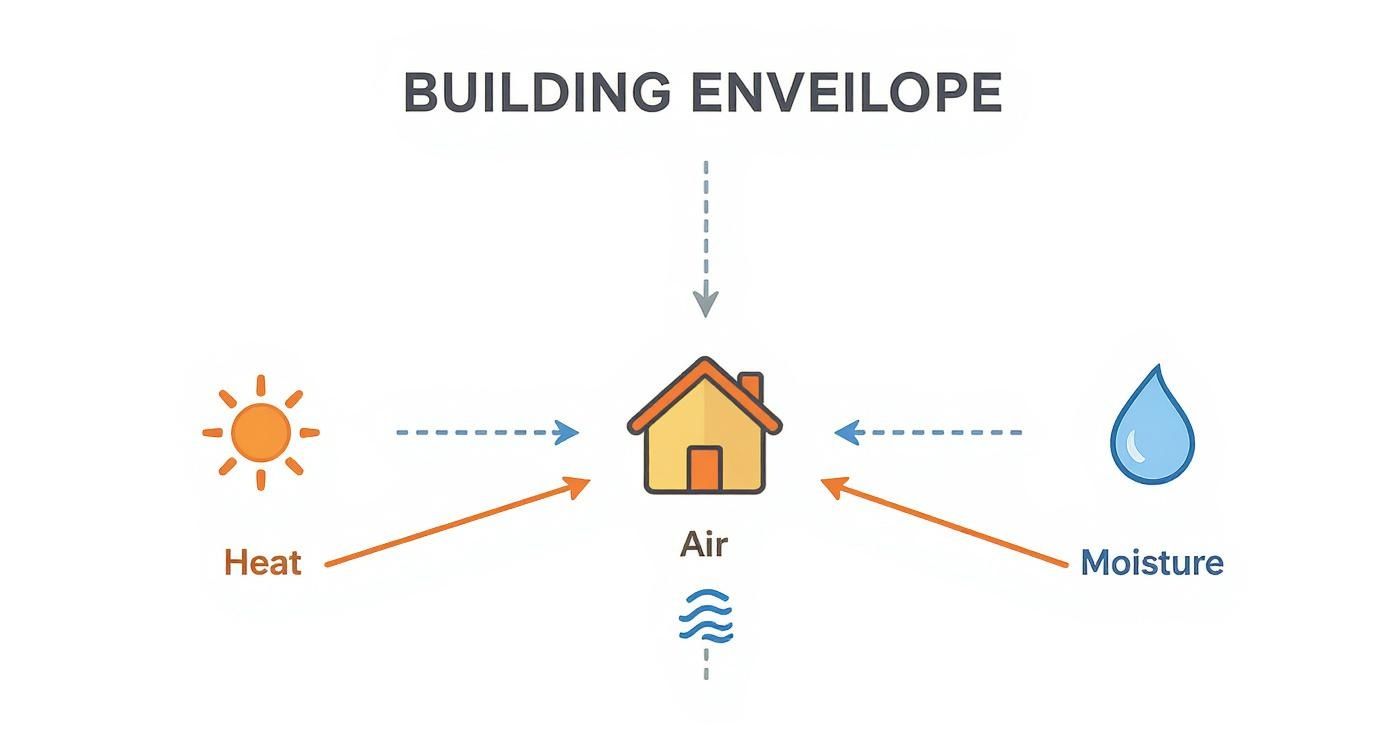
As you can see, a successful envelope creates a continuous, unbroken barrier against these three external forces, which is the key to a stable and protected indoor climate.
The Crucial Fenestration Components
"Fenestration" is the industry term for any openings in the envelope—your windows, doors, and skylights. While they give us light, views, and access, they have historically been the weakest links in the chain when it comes to energy loss.
Thankfully, modern advancements have transformed them from simple openings into high-performance, engineered components. Double or triple-glazed windows with thermally broken frames, for instance, are game-changers for reducing heat transfer. You can dive deeper into how energy-efficient windows can dramatically improve your home’s performance in our complete guide.
Of course, even the best window is useless without proper sealing around the frame to stop draughts in their tracks.
The Invisible Control Layers
Working silently behind your walls and under your floors are the control layers. You can’t see them, but they are arguably the most important elements for achieving a truly high-performance building envelope. These are specialised membranes and materials designed to manage specific environmental forces.
The real secret to an effective envelope lies in its continuity. Each control layer—for air, water, vapour, and heat—must connect seamlessly across every junction of the roof, walls, windows, and foundation without any gaps.
Let's pull back the curtain on these unsung heroes:
- Water Control Layer (Weather Barrier): This is the outermost shield, like a raincoat for your house. It sheds rain and prevents bulk water from ever getting into the wall assembly.
- Air Control Layer (Air Barrier): A critical layer that stops your expensive conditioned air from leaking out and unwanted unconditioned air from sneaking in. This is a massive factor in energy efficiency, as uncontrolled air leakage can account for up to 40% of a home's heating and cooling losses.
- Vapour Control Layer (Vapour Retarder): This clever layer manages the movement of water vapour (not liquid water) to prevent condensation from forming inside your walls and ceilings, which is a one-way ticket to mould and rot.
- Thermal Control Layer (Insulation): The cosy jumper for your home. This layer resists the flow of heat, keeping you warm in winter and cool in summer. Its effectiveness is measured by its R-value—the higher, the better.
The table below summarises how these different parts of the puzzle fit together to create a high-performance shell for your home.
Components of a High-Performance Building Envelope
Component | Primary Function | Performance Goal |
Foundation | Structural support & moisture barrier | Prevent heat loss to the ground and block rising damp. |
Walls | Structural integrity & thermal barrier | Resist wind, support the roof, and provide a cavity for insulation. |
Roof | Primary weather and solar protection | Shed water, reflect heat, and prevent air leakage. |
Windows & Doors | Light, access, and ventilation | Minimise heat transfer and air leaks while maximising natural light. |
Air Barrier | Control air leakage | Create a continuous, airtight seal across the entire envelope. |
Vapour Barrier | Manage moisture vapour diffusion | Prevent condensation inside wall and roof cavities. |
Insulation | Resist heat flow | Maintain a stable indoor temperature and reduce energy consumption. |
Together, these structural elements and invisible layers form the complete system that is your building envelope, working 24/7 to keep you safe, comfortable, and energy-efficient.
Why a High-Performance Envelope Is a Game Changer
Okay, so we know what a building envelope is. But understanding the 'what' is one thing; connecting it to your daily life is where the real magic happens. A high-performance envelope isn't just a builder's buzzword—it’s a fundamental upgrade to your quality of life, delivering benefits you can actually see and feel every single day.
It’s where the science of building translates directly into real-world comfort and savings. Imagine a home that stays perfectly pleasant all year round without you constantly fiddling with the thermostat. Picture a living space that feels like a quiet sanctuary, completely shielded from the noise of a busy street. This isn't some far-off luxury—it's the direct result of a meticulously designed and executed building envelope.
Superior Thermal Comfort
First and foremost, a well-built envelope creates an incredibly stable indoor climate. It acts as a brilliant buffer against the outside weather, meaning your home stays cooler during those scorching summer days and much warmer through chilly winter nights.
This is all about minimising unwanted heat transfer—keeping the conditioned air you've paid for inside, and the external temperatures outside. When this is done right, your heating and cooling systems can finally work smarter, not harder. The result is consistent, draft-free comfort, which is the holy grail that passive design principles aim to perfect. To see exactly how this works in practice, you can explore the fundamentals of Passive House design in our detailed guide.
Significant Energy Efficiency
This incredible comfort leads straight to the next major benefit: seriously lower energy bills. When your home’s climate control systems aren't constantly fighting a losing battle against air leaks and poor insulation, their energy consumption drops like a stone.
A high-performance building envelope is the absolute cornerstone of an energy-efficient home. It can slash heating and cooling costs by up to 50% or more compared to a standard build. That adds up to substantial savings over the life of your home and a much smaller carbon footprint.
A superior building envelope isn’t an expense; it's an investment. The upfront focus on quality materials and airtight construction pays for itself through reduced operational costs, enhanced durability, and a healthier living environment.
Moisture Control and Durability
A properly sealed and managed building envelope is your home's best line of defence against moisture getting in. This is critically important in Australia, where dampness and mould can quickly become serious problems. In fact, water damage is one of the leading causes of building defects, often stemming from poor envelope design and construction.
By controlling how water and vapour move, the envelope stops moisture from getting trapped inside your walls, which can lead to rot, structural decay, and unhealthy mould growth. This not only protects your family’s health but also safeguards the long-term integrity of your investment. On top of that, a well-sealed envelope provides fantastic acoustic insulation, creating a peaceful sanctuary by dampening noise from the outside world.
Designing for Superior Envelope Performance
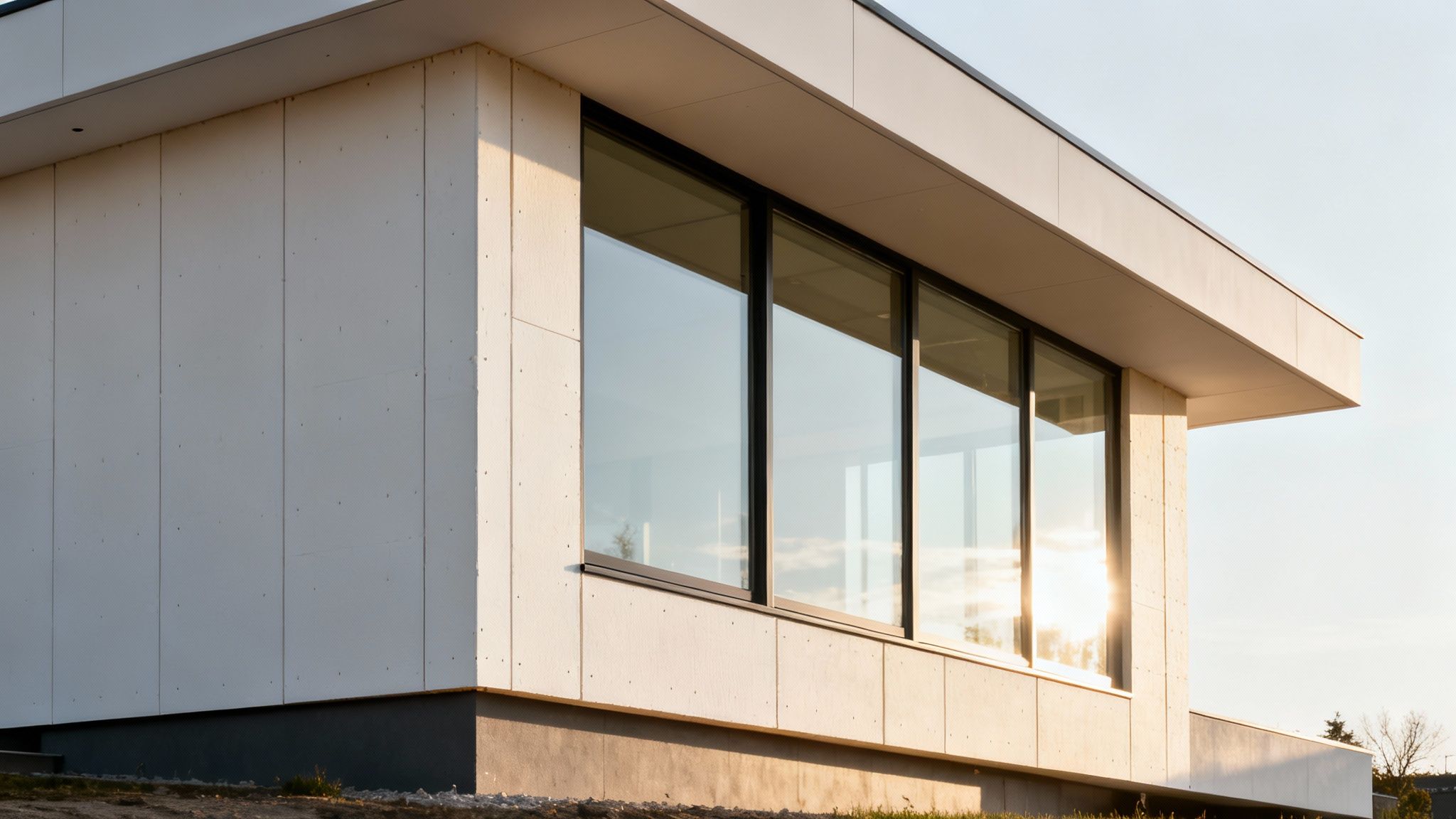
When it comes to custom homes, creating a high-performance building envelope is where the science of construction truly becomes an art form. This isn't about just meeting the minimum standards; it's about elevating your home's protective shield into a meticulously engineered system. It all comes down to a deliberate selection of advanced materials and intelligent design strategies that work together to achieve exceptional results.
This approach means thinking about how every single component will interact right from the drawing board. For example, instead of settling for standard double-glazing, a luxury build might specify triple-glazed windows. These units, with their three panes of glass and inert gas fills, offer incredible thermal performance and acoustic insulation. Suddenly, the noise from a busy street becomes a distant whisper.
Eliminating Thermal Bridges
A massive focus in high-performance design is stamping out thermal bridges. You can think of a thermal bridge as a superhighway for heat, giving it a shortcut to bypass your insulation and escape outside. These weak spots are often created by conductive materials, like steel beams or concrete slabs, that run uninterrupted from the inside of your home to the outside.
Designing these out from the get-go is non-negotiable for genuine energy efficiency. Key strategies include:
- Continuous Exterior Insulation: Literally wrapping the entire home in an unbroken layer of insulation, like a perfectly fitted jumper that leaves no gaps.
- Thermally Broken Components: Using window and door frames that are engineered with a non-conductive barrier built right into them, effectively slamming the door on heat transfer.
- Structural Insulated Panels (SIPs): These are high-tech building panels that combine the structural frame and high R-value insulation into one unit, minimising thermal bridging by their very nature.
By meticulously planning every junction and connection point, we can stop energy loss before it even has a chance to start, locking in comfort and efficiency for years to come.
The Power of Airtightness
Beyond just insulation, achieving superior airtightness is absolutely paramount. This involves a systematic, almost obsessive, approach to sealing every potential air leak—from the tiniest gap around a window frame to the penetrations made for pipes and wires. We often use blower door tests during construction, which pressurise the house to let us find and seal leaks with pinpoint accuracy.
A truly superior building envelope doesn't happen by accident. It is the result of an integrated design-build process where architectural vision and building science are fused from day one, making the envelope a cornerstone of the home’s value, comfort, and longevity.
This obsessive attention to detail is fast becoming a priority in the Australian market. The demand for energy-efficient homes is fuelling significant growth in advanced building envelope technologies. In a recent month, the value of total residential building approvals jumped by 7.4% to $10.11 billion, a trend that clearly reflects a shift toward new homes built for high performance. You can dig into these construction trends yourself over at the Australian Bureau of Statistics.
Ultimately, a focus on these advanced strategies is what separates a standard house from a truly modern home. For a deeper look at the principles behind these practices, check out our guide on energy-efficient house design. This integrated approach ensures the building envelope delivers unparalleled performance for decades.
Recognising the Signs of Envelope Failure
Even the most well-built homes can run into trouble over time. While your building envelope is a tough, resilient system, it isn't indestructible. Learning to spot the early warning signs of failure is crucial—it allows you to act fast and stop a small issue from snowballing into a major, expensive structural problem.
Think of yourself as a detective for your own home.
These clues often start small, showing up as minor irritations. But they're usually symptoms of a much deeper problem with one of the envelope's critical layers. If you ignore them, issues like water ingress or air leakage can cause progressive, hidden damage behind your walls.
Visible Signs of Moisture Problems
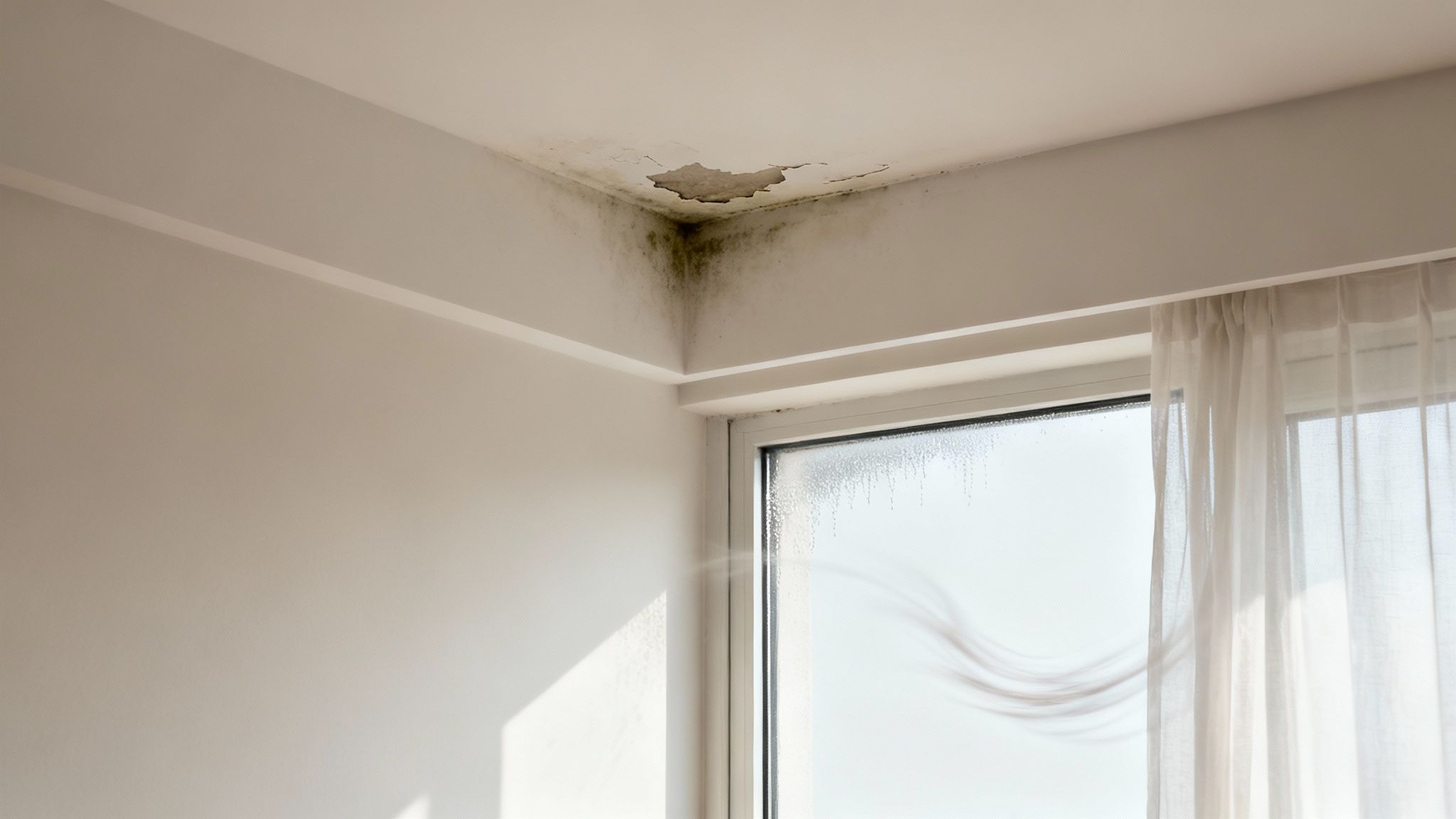
Water is, without a doubt, the number one enemy of a building’s structure. When the water or vapour control layers are compromised, the evidence often shows up in plain sight—if you know what to look for.
Keep a sharp eye out for these red flags:
- Water Stains: Discolouration on ceilings or walls, especially after it rains, is a classic sign of a leak from the roof or a breach in the wall's weather barrier.
- Peeling or Blistering Paint: When paint starts peeling off exterior or interior walls, it often means moisture is trapped behind it, literally pushing the paint away from the surface.
- Mould or Mildew: Any visible mould growth, particularly in corners, near windows, or in rooms with poor ventilation, points to a persistent moisture and condensation issue.
- Musty Smells: A lingering damp, earthy smell, especially in basements or cupboards, is a tell-tale indicator of hidden moisture and potential mould you can't even see.
Signs of Air and Thermal Leaks
Problems with your air barrier and insulation often reveal themselves in a different way—through changes in your home’s comfort levels and power bills, rather than obvious physical damage. These signs suggest your building envelope is no longer airtight or properly insulated.
A compromised building envelope forces your heating and cooling systems to work overtime, fighting a constant battle against the outdoors. Unexplained draughts and high energy bills are clear signals that your home's protective shield has been breached.
You might be dealing with envelope failure if you notice:
- Unexplained Draughts: Feeling cold air near windows, doors, or even power points is a dead giveaway that your air barrier has gaps, letting uncontrolled air flow into your home.
- Persistent Window Condensation: A little bit of condensation on a cold morning is normal. But if it's excessive, pools on the sills, or sticks around all day, it could mean failing window seals or significant thermal bridging.
- Inconsistent Temperatures: If some rooms are always colder or hotter than others, even with the thermostat set consistently, it often points to insulation gaps or air leaks in that particular area.
- Rising Energy Bills: A sudden, unexplained spike in your heating or cooling costs is a strong financial indicator that your home is losing expensive conditioned air to the outside. Catching these signs early is key to protecting your investment.
Protecting Your Investment with Proactive Maintenance
A high-performance building envelope isn't something you can just 'set and forget'. Think of it as a dynamic shield for your home—one that needs a little TLC to keep performing at its peak. This is all about being proactive, not reactive.
Regular, simple checks are the best way to protect your investment. By catching small issues before they spiral into big, expensive problems, you'll extend the lifespan of your home's most critical systems and sidestep costly future repairs. A little attention really does go a long way.
Your Essential Maintenance Checklist
You don't need to be a building expert to get started. Just weaving a few key tasks into your seasonal routine can make a world of difference to the health and performance of your home's protective shell.
- Clean Your Gutters and Drains: This is a classic for a reason. Clogged gutters force water to overflow, which can saturate your walls and even damage your foundation. Keeping them clear is a simple way to make sure rainwater goes where it's supposed to—away from your home.
- Inspect Seals and Caulking: The seals around your windows and doors are your front line against drafts and moisture. Give them a once-over each year to check for cracking or shrinking, and reapply caulk where needed to maintain that all-important airtight seal.
- Check the Roof After Storms: Your roof takes a real beating from the weather. After a big storm, it’s worth doing a quick visual check for any loose, missing, or damaged tiles or flashing that could be an open invitation for leaks.
- Ensure Vents Are Clear: Blocked vents in your attic or sub-floor are trouble waiting to happen. They can trap moisture and stale air, creating the perfect conditions for condensation and mould. Make sure they’re clear of leaves, nests, or other debris.
A consistent maintenance schedule is easily the most effective strategy for safeguarding your building envelope. It preserves the integrity of your home, protects its value, and ensures it continues to be a healthy, comfortable, and efficient place to live.
This proactive mindset is simply part of responsible homeownership. If you want a more structured way to tackle it, our comprehensive building inspection checklist offers a detailed guide to help you stay on top of your home's condition.
Your Building Envelope Questions, Answered
Even after getting your head around the concept of a building envelope, a few practical questions always pop up. We get it. Here are some of the most common queries we hear from Australian homeowners, with straightforward answers to help you out.
How Does the Envelope Affect My Home's Energy Rating?
In short, it’s everything. Your building envelope is the single biggest player when it comes to your home's Nationwide House Energy Rating Scheme (NatHERS) star rating. At its core, the rating is a measure of how well your home’s shell—its roof, walls, windows, and floors—copes with the climate.
A high-performance envelope, one that’s well-insulated and properly sealed, is a game-changer. It dramatically cuts down on unwanted heat gain in summer and stops precious warmth from escaping in winter. Your heating and cooling systems barely have to break a sweat, which means lower energy bills and a much higher star rating. Things like quality double-glazing and continuous, unbroken insulation are non-negotiable for hitting that coveted 7-star rating or higher.
Can I Improve the Envelope of My Existing Home?
Absolutely. While it’s always easier to get it perfect from the start in a new build, you can make a massive difference to an existing home’s building envelope. Retrofitting key areas often delivers one of the best returns on investment for both comfort and running costs.
Some of the most effective upgrades include:
- Boosting insulation in the ceiling, walls, and under the floor.
- Swapping out old, leaky single-pane windows for modern double-glazed units.
- Systematically sealing all the little gaps and cracks around doors, windows, and where pipes or wires come through the walls to improve airtightness.
A professional energy audit is a fantastic starting point. It’ll pinpoint exactly where your home is losing the most energy, so you can create a smart, targeted plan for your upgrades.
What Is Thermal Bridging and Why Is It Bad?
Think of a thermal bridge as a superhighway for heat, allowing it to sneak right past your insulation. It happens whenever a conductive material, like a steel beam or an uninterrupted concrete slab, creates a direct path from the inside of your home to the outside world.
Thermal bridging is the silent enemy of energy efficiency. It doesn't just waste energy; it creates cold spots on your walls and ceilings, which can lead to condensation and, eventually, mould. A well-designed envelope is meticulously planned to hunt down and eliminate these weak points.
This is exactly why modern building science is so focused on creating a continuous blanket of insulation and using things like thermally broken window frames. By closing off these energy leaks, we make sure your home stays comfortable, healthy, and genuinely efficient all year round.
At Envy Abode, we don't just build houses; we integrate building science into every design to ensure your home's envelope delivers exceptional performance and lasting value. Discover how our design-build process can create your perfect luxury home.